

The case for virtual reality in education has been made theoretically for decades. The immersive quality of VR experiences — the sense of presence in an environment that is not physically real — offers obvious educational applications: visiting historical sites, manipulating molecular structures, practicing surgical procedures, training for high-risk industrial environments.
What has changed recently is the evidence base. Early VR education pilots often measured engagement rather than learning outcomes. The growing body of rigorous research is producing more specific and actionable conclusions.
What the Research Shows
Controlled studies across medical education, vocational training, and secondary school science have produced consistent findings in specific domains. VR-based training in procedural skills — surgical techniques, equipment operation, emergency response — shows measurable improvements in skill acquisition speed and retention compared to traditional simulation.
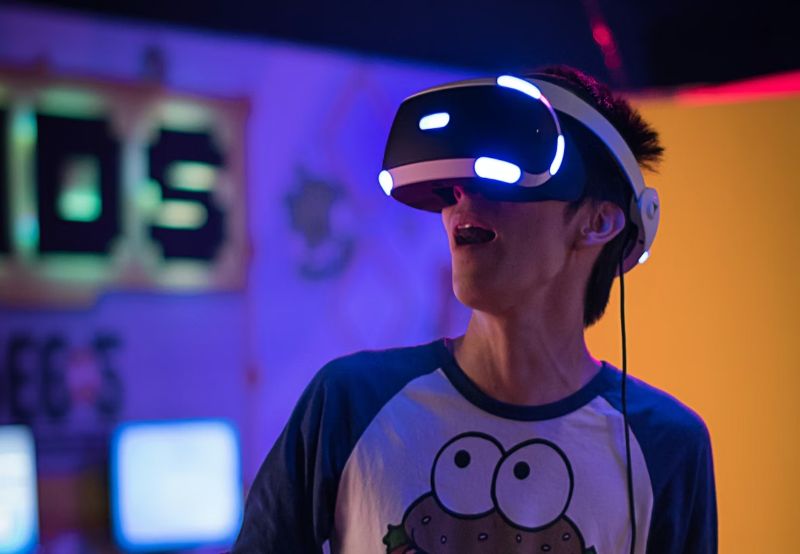
“Presence changes learning. When students feel they are in an environment rather than looking at it, the cognitive and emotional engagement is qualitatively different.”
Spatial understanding — a historically difficult concept to teach through two-dimensional media — shows strong VR outcomes. Anatomy students who learn using three-dimensional VR models consistently outperform peers using traditional materials on spatial reasoning assessments.
Where VR Has Limitations
The research is less supportive of VR as a general-purpose replacement for traditional instruction. For conceptual learning, reading comprehension, and abstract reasoning, the evidence for VR advantages over well-designed traditional approaches is weak or mixed.
The technology also introduces practical friction: headset hygiene in shared environments, the motion discomfort experienced by a significant minority of users, and the technical management burden on classroom teachers who are not inherently technology specialists.
Cost remains a barrier for most educational institutions, though headset prices have fallen significantly and continue to decline.
Current Deployment Patterns
Medical and nursing education has moved furthest toward mainstream VR integration. Surgical simulation, patient communication training, and emergency procedure practice are now components of curricula at hundreds of medical schools globally. The safety argument — that practicing complex procedures in VR before performing them on patients reduces error rates — has been compelling enough to drive adoption even at current cost levels.
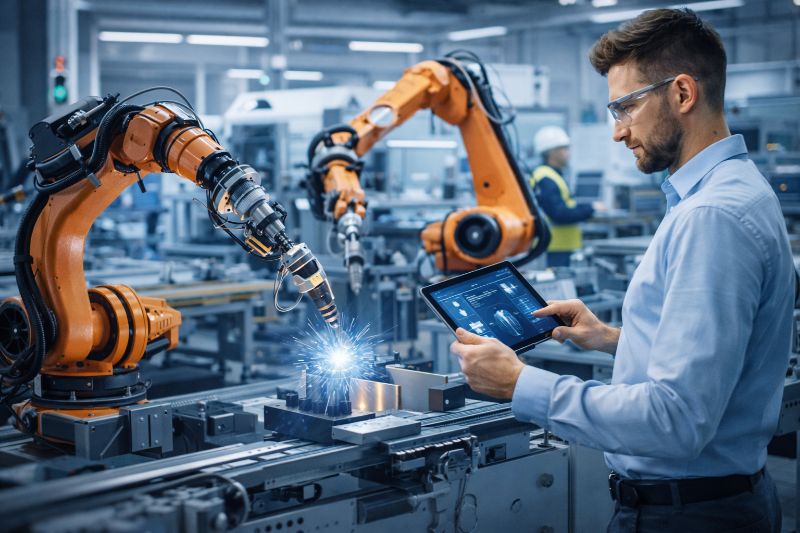
Vocational and technical education — trades training, industrial equipment operation, aviation — represents the second most active deployment area. The ability to train for scenarios that are dangerous or expensive to create in reality is a clear practical advantage.
Secondary and primary education deployments are more varied and less mature, with the most successful programs typically characterized by strong teacher training and specific curricular integration rather than general availability.
The Hardware Trajectory
Standalone headsets that require no external computing hardware have dramatically reduced the deployment complexity that plagued earlier classroom VR initiatives. Current generation devices are lighter, have longer battery life, and require less technical management than their predecessors.
The next generation of mixed reality devices — capable of overlaying virtual content on the physical environment — opens additional educational applications that pure VR does not support, particularly in laboratory and workshop contexts.
The Pedagogical Question
Technology adoption in education consistently runs ahead of pedagogical framework development. The most important question about VR in education is not whether the technology works in controlled conditions — the evidence suggests it does, in specific domains — but whether teachers have the training, curriculum integration support, and time to deploy it in ways that produce the measured benefits.
The hardware is increasingly ready. The institutional infrastructure around it is still catching up.