


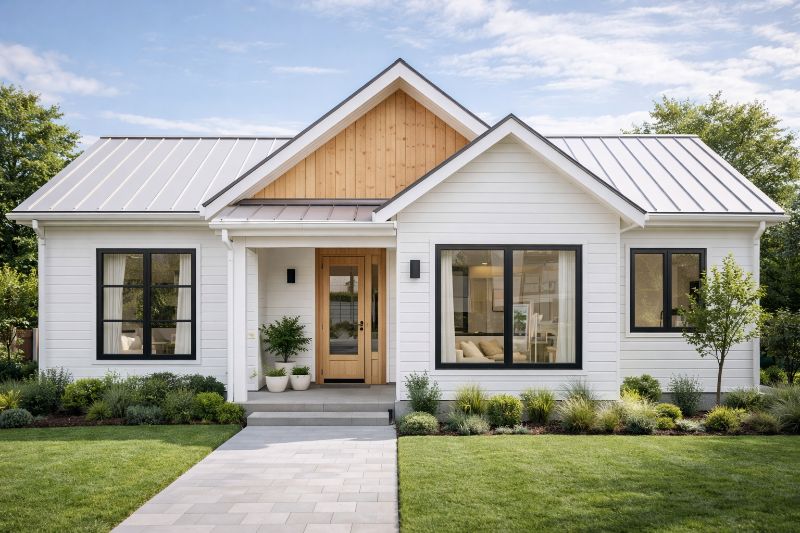
The visual culture of social media was supposed to accelerate maximalism indefinitely. More color, more pattern, more objects, more layers — the logic of the attention economy applied to interior design. And for a period, that’s exactly what happened. Cluttered, eclectic, personality-forward spaces dominated the aspirational imagery of platforms built on visual content.
Something is shifting.
The Numbers Behind the Trend
Search data, interior design commission reports, and materials procurement figures from architecture firms in the UK, Scandinavia, Germany, and Japan all point in the same direction: demand for minimalist residential design — characterized by reduced material palettes, clean geometries, and the deliberate absence of decorative excess — is rising sharply among buyers and renters aged 25 to 38.
“Our clients in their late twenties don’t want more. They want less — but they want it executed with precision. The tolerance for cheap minimalism is low. The demand for authentic material quality is very high.” — principal architect at a Berlin residential firm
Why Now?
The generational context matters. The cohort driving this shift grew up in digital environments defined by information overload, constant notification, and the cognitive taxation of perpetual stimulation. For many, the physical home has become the one space over which they exercise meaningful control — and the preference, increasingly, is for that space to be quiet.
There is also an economic dimension. Smaller urban living spaces, driven by property costs in major cities, are more functionally compatible with minimalist design principles. A 45-square-meter apartment does not accommodate maximalism gracefully.
What This Minimalism Actually Looks Like
The current iteration differs meaningfully from the stark, often cold minimalism associated with the early 2000s. Material warmth is central — raw oak, honed limestone, unglazed ceramics, and natural linen appear consistently across the projects defining the trend. The absence of clutter is balanced by the presence of texture.
Lighting design has become a primary expressive element in spaces where decorative objects are deliberately reduced. Architects working in this register speak of designing with “material honesty” — allowing structural elements and surface finishes to carry visual weight rather than layering objects over them.
The Craft Premium
One consequence of this aesthetic direction is a renewed appetite for craft-quality objects and finishes. If a space has fewer things in it, each thing bears more scrutiny. This has supported a resurgence of interest in ceramics, handmade furniture, and artisan textiles — categories that can justify premium pricing through visible quality and maker narrative.
Mass-market retailers have responded by introducing minimalist-adjacent lines that attempt to capture the aesthetic at accessible price points. The results are mixed: the visual language of minimalism can be replicated cheaply, but the material quality that makes the spaces genuinely inhabitable cannot.
Architecture Responding to Behavior
What is most interesting about this shift is what it implies about the relationship between designed environments and how people want to feel in them. The most widely shared images of minimalist interiors on design platforms are not sterile — they are calm. Orderly without being cold. Spare without being empty.
The generation now establishing their first adult homes has grown up in one of the most visually saturated periods in human history. It is perhaps unsurprising that they are turning, at home, toward quiet.