
Former Deputy President Rigathi Gachagua on Saturday intensified his attacks on President William Ruto’s administration, using the United Opposition’s tour of Mombasa to dismiss the President’s visit to Murang’a County as a stage-managed political exercise rather than a genuine development tour.
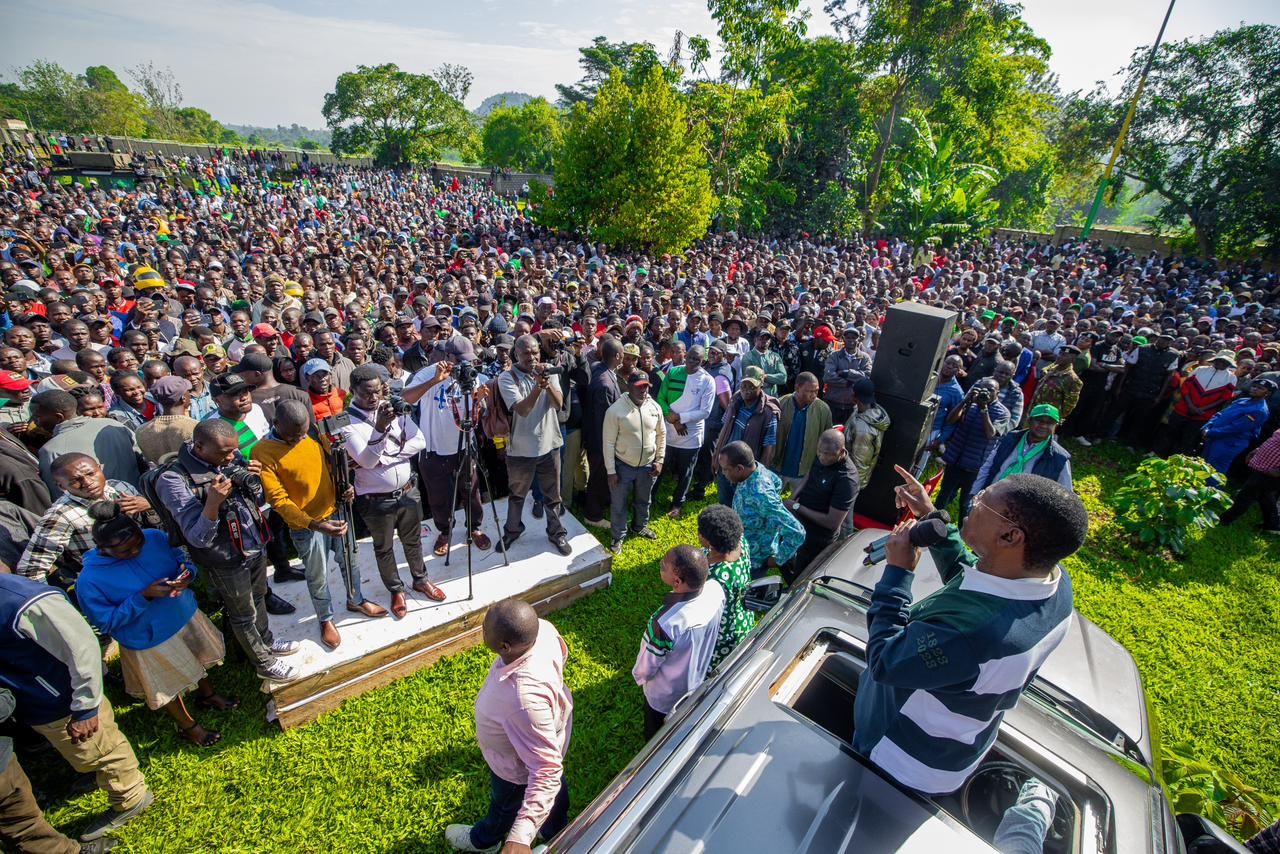
Speaking during a series of public engagements in Mombasa County, Gachagua accused the President of relying on political mobilisation and inducements to create the impression of public support. The former Deputy President claimed that the Murang’a tour was neither organic nor centred on development, but was instead designed to project political strength in a region where the President has faced growing criticism.
Gachagua made the remarks as the United Opposition, also referred to by its leaders as the United Alternative Government, continued its second day of mobilisation in the Coast region.
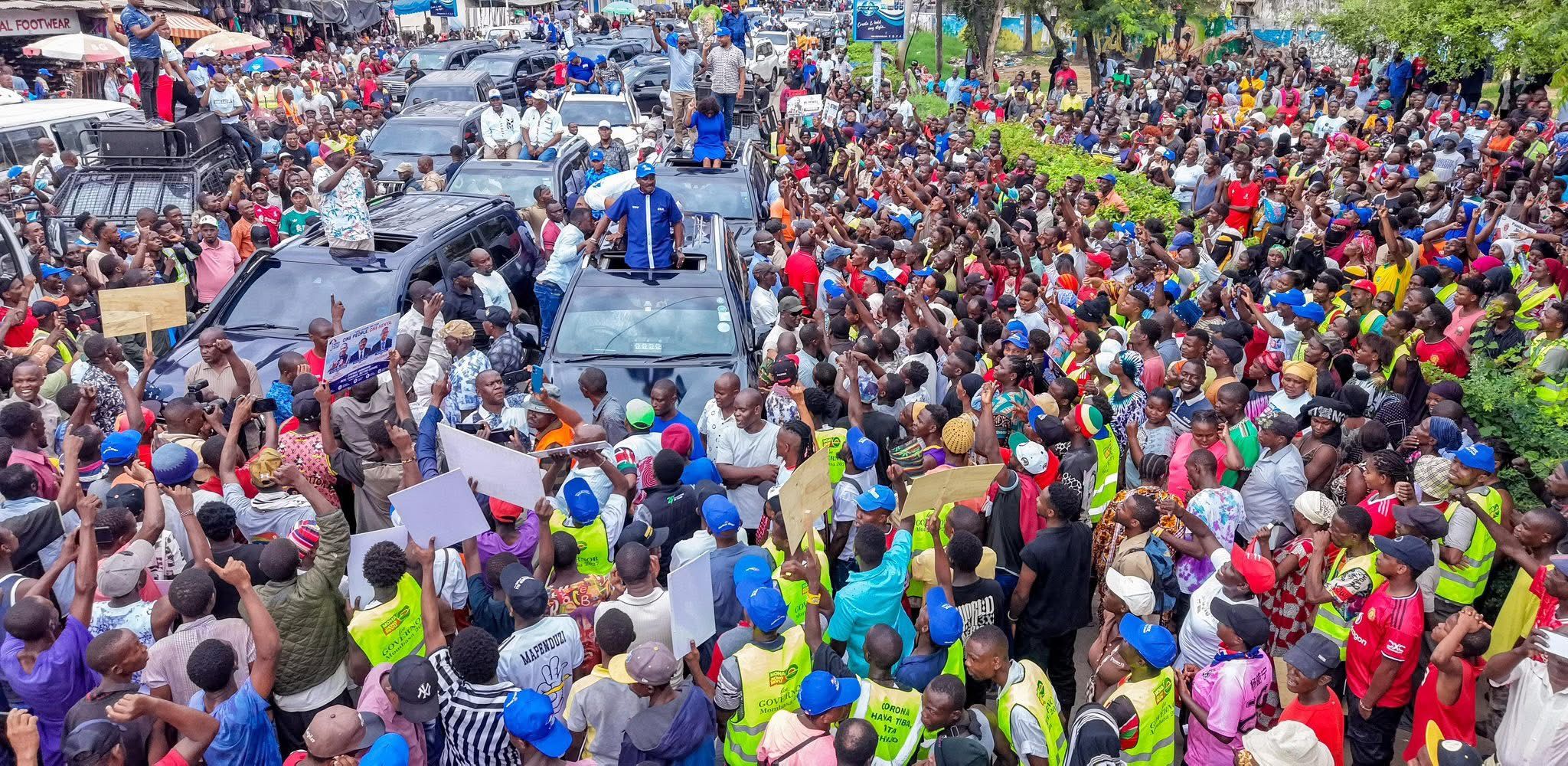
The leaders made stops at Kongowea Market, Kengeleni and later Tononoka grounds, where they addressed residents and traders as part of a broader push to consolidate support outside their traditional bases.
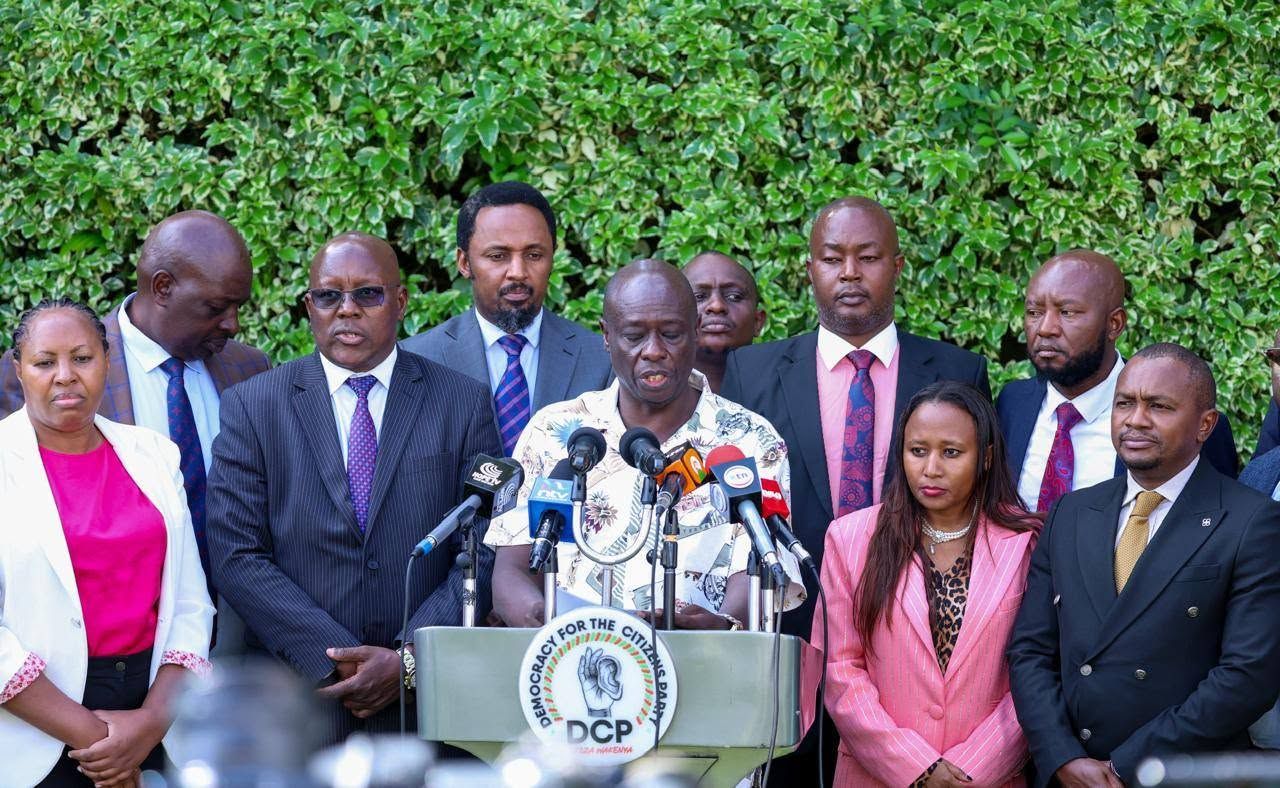
The Mombasa tour brought together several opposition figures, including Wiper leader Kalonzo Musyoka, Democratic Action Party of Kenya leader Eugene Wamalwa and former Attorney General Justin Muturi.
Their message was centred on the cost of living, youth unemployment, governance, political succession and what they described as the government’s misplaced priorities.
Gachagua, who has in recent months positioned himself as one of the fiercest critics of the administration he once served, claimed that President Ruto’s public engagements have increasingly become transactional. He alleged that people were being paid to attend rallies and show support for the Head of State.
According to him, such mobilisation does not reflect genuine public confidence in the government.
He argued that political leaders should not mistake crowds for legitimacy, saying citizens were more concerned about jobs, business opportunities, the cost of basic commodities and the fairness of government programmes.
His remarks appeared calculated to undermine the political message of President Ruto’s Murang’a tour, which has been seen as part of a wider effort by the President to steady his support in Central Kenya. Gachagua, who previously served as Ruto’s deputy and was a key figure in mobilising the region for the Kenya Kwanza campaign, has since turned into one of the administration’s most vocal opponents.
In Mombasa, he sought to link his criticism of the President to local grievances, particularly youth unemployment and the feeling of exclusion from government opportunities. He told residents that young people from the Coast had been used repeatedly during political seasons, only to be forgotten when jobs and appointments were being shared.
Gachagua said Mombasa’s youth deserved a fair chance in employment, especially in opportunities arising from projects and institutions within the coastal region. He accused the current administration of exploiting young people for political expediency while failing to prioritise them in meaningful economic opportunities.
The former Deputy President said an alternative government would ensure that young people from Mombasa and the wider Coast region are considered for jobs, attachments, tenders and other economic opportunities linked to the region.
His remarks were received with cheers from sections of the crowd, particularly at Kongowea Market, where traders and youth groups gathered to listen to the opposition leaders. The market stop gave the opposition team an opportunity to speak directly to small-scale traders, many of whom have been vocal about the high cost of doing business, taxation and reduced consumer spending.
The opposition leaders used the platform to portray themselves as closer to ordinary citizens than the current administration. They accused the government of focusing on political survival while Kenyans struggled with economic pressure.
Gachagua also ventured into the politically sensitive subject of the late Raila Odinga’s death, raising questions about the circumstances surrounding it. He alleged that Raila’s travel abroad for medical treatment had not been approved by his doctors and claimed that this raised concerns about the official account given to the public.
The former Deputy President also questioned the role of Raila’s Director of Communication, Dennis Onyango, in relaying information about the former Prime Minister’s death.
The claims, however, remain allegations by Gachagua and were not independently verified. No evidence was presented at the rally to support the assertions.
By invoking Raila’s name in Mombasa, Gachagua appeared to be speaking directly to a region that has historically been receptive to the former Prime Minister’s politics. Raila enjoyed significant support at the Coast over several election cycles, and his absence has opened a new political contest over who can inherit or mobilise that base.
That contest was made clearer by Wiper leader Kalonzo Musyoka, who used the Mombasa tour to defend his long political relationship with Raila and present himself as the opposition figure best placed to carry forward Raila’s political legacy in the Coast region.
Kalonzo said his association with Raila was built over many years of political cooperation, sacrifice and shared struggle. He argued that those ties gave him a legitimate claim to engage Raila’s supporters and appeal to regions that had previously backed the former Prime Minister.
The Wiper leader’s message reflected the delicate succession politics within the opposition, where several leaders are seeking to position themselves as natural heirs to Raila’s national and regional support blocs. The Coast, with its history of opposition-leaning politics, remains one of the most important battlegrounds in that realignment.
Kalonzo framed the opposition’s presence in Mombasa as a continuation of a broader democratic struggle. He said the region should not be taken for granted and urged residents to remain politically alert as the country moves toward the next electoral cycle.
Eugene Wamalwa and Justin Muturi also took aim at the government, accusing it of failing to respond to the needs of ordinary Kenyans. They argued that the administration had prioritised political mobilisation, foreign travel and elite interests while doing too little to address unemployment, poverty and the rising cost of living.
Wamalwa said the opposition would continue touring the country to listen to Kenyans and build a national movement around economic justice, accountability and constitutionalism. He accused the government of being out of touch with the daily struggles of citizens.
Muturi, on his part, said the country needed leadership that respects the Constitution, protects public institutions and listens to citizens. He warned against what he described as the shrinking of democratic space and the weakening of accountability structures.
The Mombasa rallies came at a time when opposition leaders are attempting to present a united front after months of shifting alliances and political uncertainty. The presence of Gachagua, Kalonzo, Wamalwa and Muturi on one platform signalled an attempt to build a broader anti-government coalition bringing together leaders from different regions and political backgrounds.
For Gachagua, the Coast tour also offered a chance to test his appeal beyond Central Kenya. Since falling out with President Ruto, he has worked to recast himself as a national opposition figure rather than a regional politician. His appearances in Mombasa, alongside established opposition leaders, appeared designed to broaden that image.
For Kalonzo, the tour reinforced his long-running bid to remain central in opposition politics. His direct appeal to Raila’s former support base suggested that the struggle for the Coast vote is likely to intensify in the coming months.
Mombasa has historically played an important role in national elections, not only because of its numbers but also because of its symbolism. As a commercial, cultural and political hub, the city often reflects wider coastal concerns around land, employment, infrastructure, tourism, port operations and historical marginalisation.
By choosing markets, public grounds and densely populated neighbourhoods as key stops, the United Opposition appeared keen to speak to working-class frustrations and present itself as a people-centred alternative.
The tour is expected to continue on Sunday, with the leaders scheduled to attend a church service in Bamburi before holding further engagements in the region.
As the opposition winds up its Coast tour, the political message is clear: the battle for public perception has moved from Parliament and press conferences to markets, churches and public grounds. For the United Opposition, Mombasa is not just another campaign stop. It is a test of whether a new anti-government alliance can convert public frustration into a coherent national movement.