
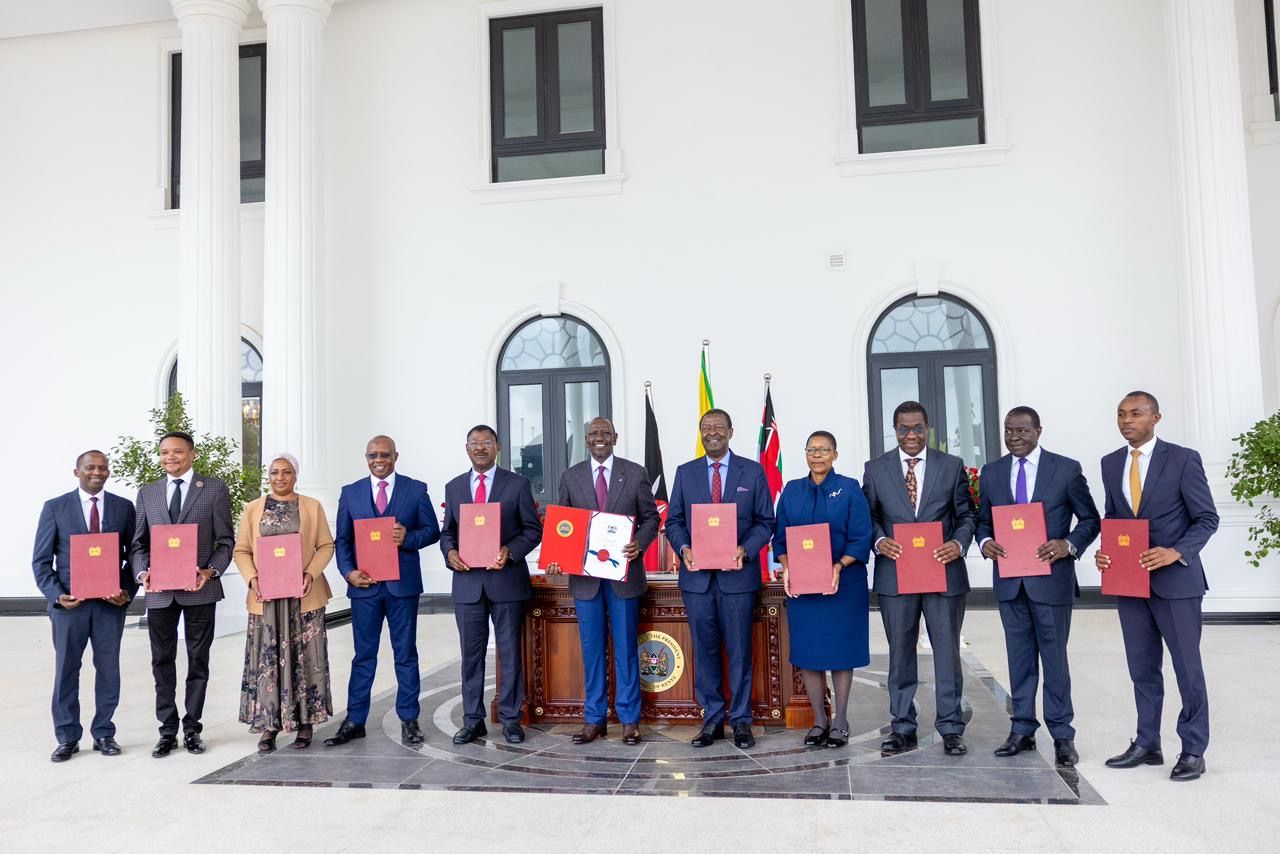
President William Ruto has signed into law the Value Added Tax (Amendment) Bill, 2026, temporarily cutting VAT on petroleum products from 16 per cent to 8 per cent in a bid to shield Kenyan consumers from a sharp rise in fuel prices triggered by the ongoing conflict in the Middle East.
The Bill was introduced in the National Assembly on April 16 and passed the same day without amendments, underscoring the urgency with which the state moved to respond to the latest energy price shock.
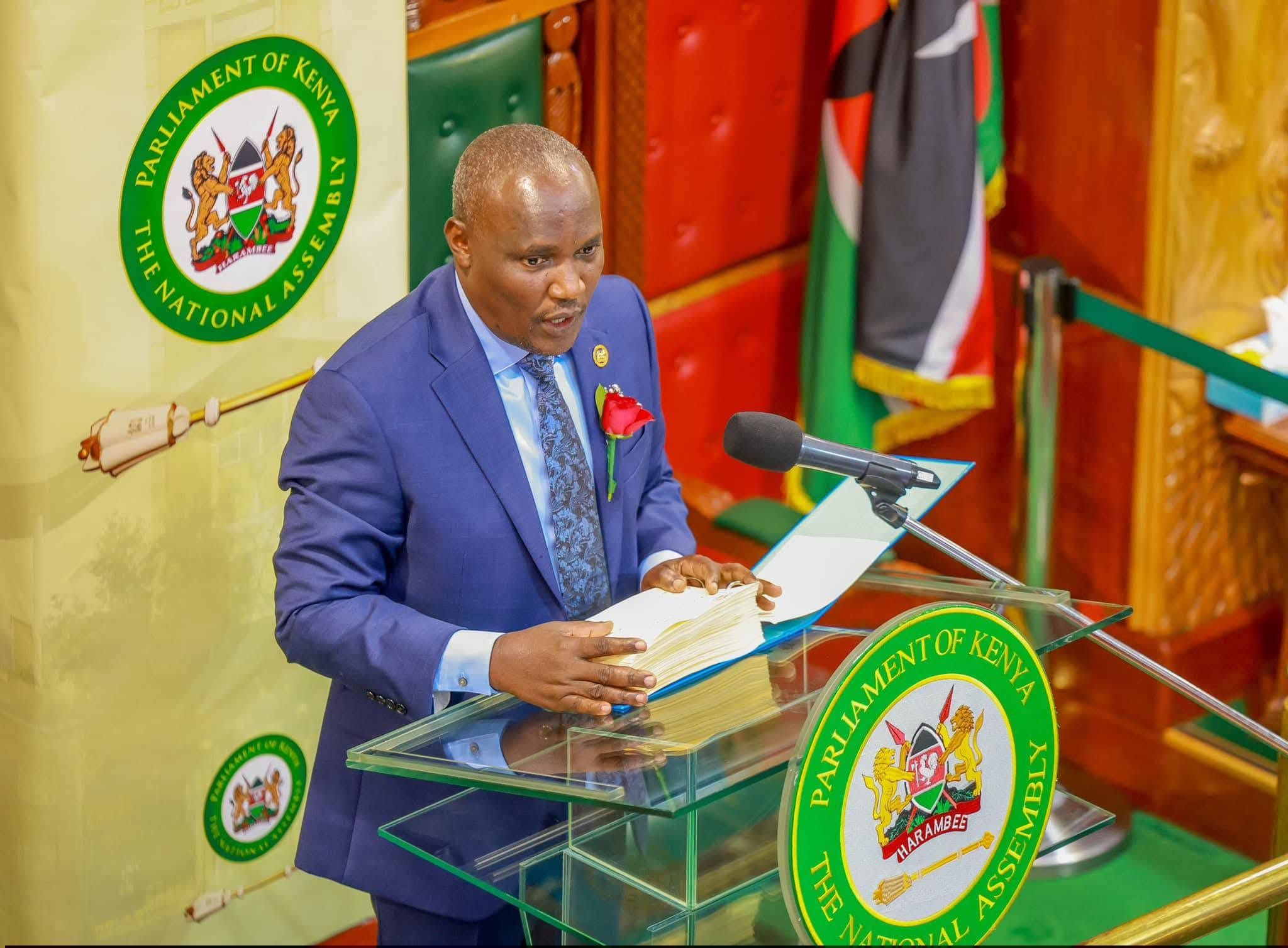
The legislation, formally known as the Value Added Tax (Amendment) Bill, National Assembly Bill No. 21 of 2026, was sponsored by the Majority Leader after the Executive requested Parliament to fast-track it. According to the brief forwarded to the President for assent, the amendment was necessitated by disruptions in the petroleum supply chain linked to the Middle East conflict, which has rattled global crude markets and pushed up import costs for fuel-dependent economies such as Kenya.
Kenya’s retail fuel prices surged this week after a steep increase in the landed cost of imported petroleum products, with EPRA attributing the jump to the external shock.
At the heart of the new law is a 50 per cent reduction in VAT on petroleum goods, lowering the rate from 16 per cent to 8 per cent for an initial 90 days. The amendment also gives Treasury Cabinet Secretary John Mbadi room to extend that relief for a further 90 days if market conditions remain adverse.
Parliament’s own summary of the bill says the change was necessary because Section 6 of the VAT Act only allows the Treasury CS to vary VAT by up to 25 per cent through administrative action, making fresh legislation necessary for a deeper cut.
The law is also designed to take effect retrospectively. The parliamentary brief states that once assented to, the reduction would be deemed to have started on Wednesday, April 15, 2026, the date contained in the President’s request to the House. That backdating is significant because it bridges the gap between the government’s public promise of relief and the legal mechanism needed to enforce it. It also explains the rapid sequence of events that saw the country move, within roughly 24 hours, from a VAT adjustment to 13 per cent under Treasury action to a legislative push for the full 8 per cent rate.
In practical terms, the government says the tax cut will trim the price of super petrol by Sh9.37 per litre and diesel by Sh10.21 per litre. In Nairobi, that would bring petrol down from Sh206.97 to about Sh197.60 per litre, while diesel would fall from Sh206.84 to around Sh196.63.
The official brief argues that the relief goes beyond motorists, saying fuel prices have a broad pass-through effect across the economy because transport costs shape the prices of food, manufactured goods and basic services.
That argument is captured clearly in the government’s own language.
“Noting that an escalation of the cost of fuel has a ‘knock-on’ effect on the cost of consumer goods and services, the reduction is meaningful and shall significantly ease the burden on Kenyan households with respect to transport costs and the cost of essential goods and services across the economy,” the brief says.
In political and economic terms, that statement is aimed squarely at a public already strained by a high cost of living and weary of repeated fuel-linked inflation cycles.
The significance of the move becomes clearer when placed in historical context. Kenya’s modern fuel VAT battles stretch back more than a decade. Under the VAT Act of 2013, petroleum products were slated to fall under the standard 16 per cent VAT regime, but implementation was repeatedly deferred amid fears of a consumer backlash. When the tax finally took effect on September 1, 2018, it triggered immediate public anger, commuter protests and a political storm over the rising cost of living. Reuters reported at the time that the levy was imposed despite lawmakers having voted to delay it, highlighting the long-running tension between revenue mobilisation and public affordability.
The uproar in 2018 forced then President Uhuru Kenyatta’s administration into a compromise, cutting the fuel VAT burden to 8 per cent rather than the full 16 per cent.
That concession became one of the defining tax reversals of the period and established 8 per cent as the politically tolerable benchmark for taxing fuel in Kenya. It is that same benchmark the Ruto administration has now temporarily returned to, suggesting that when fuel prices spike, the State still reaches for the same relief formula that proved workable eight years ago.
The equation changed again in 2023. President Ruto’s government, under pressure to expand revenue and confront Kenya’s debt obligations, backed the Finance Act, 2023, which restored VAT on petroleum products to 16 per cent.
EPRA said at the time that the revision from 8 per cent to 16 per cent would take effect on July 1, 2023, while Reuters later noted that the higher fuel VAT was part of the broader tax package defended by government as necessary for fiscal consolidation. The return to 16 per cent was deeply unpopular and became one of the clearest symbols of the administration’s tax-heavy approach to economic management.
The latest VAT amendment therefore amounts to both an economic intervention and a political retreat, albeit a temporary one. It signals that even an administration committed to raising domestic revenue is willing to suspend part of its tax posture when global events threaten to produce an immediate cost-of-living crisis. Kenya remains heavily reliant on imported fuel under government-to-government supply arrangements with Gulf-based firms, leaving it exposed when conflict or market disruption sends crude prices higher.
That vulnerability has repeatedly forced policymakers into hard choices between protecting consumers, maintaining tax revenues and limiting the budgetary cost of subsidies.
Still, the tax cut is unlikely to end the broader debate. While the government has framed the move as emergency relief, questions will remain over what happens after the initial 90-day window, whether the Treasury will extend the measure, and how the revenue shortfall will be absorbed if international oil markets remain volatile. There is also the larger issue of whether temporary tax relief can meaningfully offset a structurally import-dependent energy economy that remains vulnerable to geopolitical shocks far beyond its control.
For now, though, the message from State House and Parliament is unmistakable: after a week of public anger, pump-price pain and renewed anxiety over the cost of living, the government has chosen speed over caution. By cutting VAT on fuel back to 8 per cent, Ruto’s administration is betting that immediate relief at the pump will also cool pressure in the wider economy.
Whether that relief proves durable will depend less on Nairobi than on the trajectory of a conflict thousands of kilometres away, and on how long Kenya can afford to cushion its citizens from its consequences.