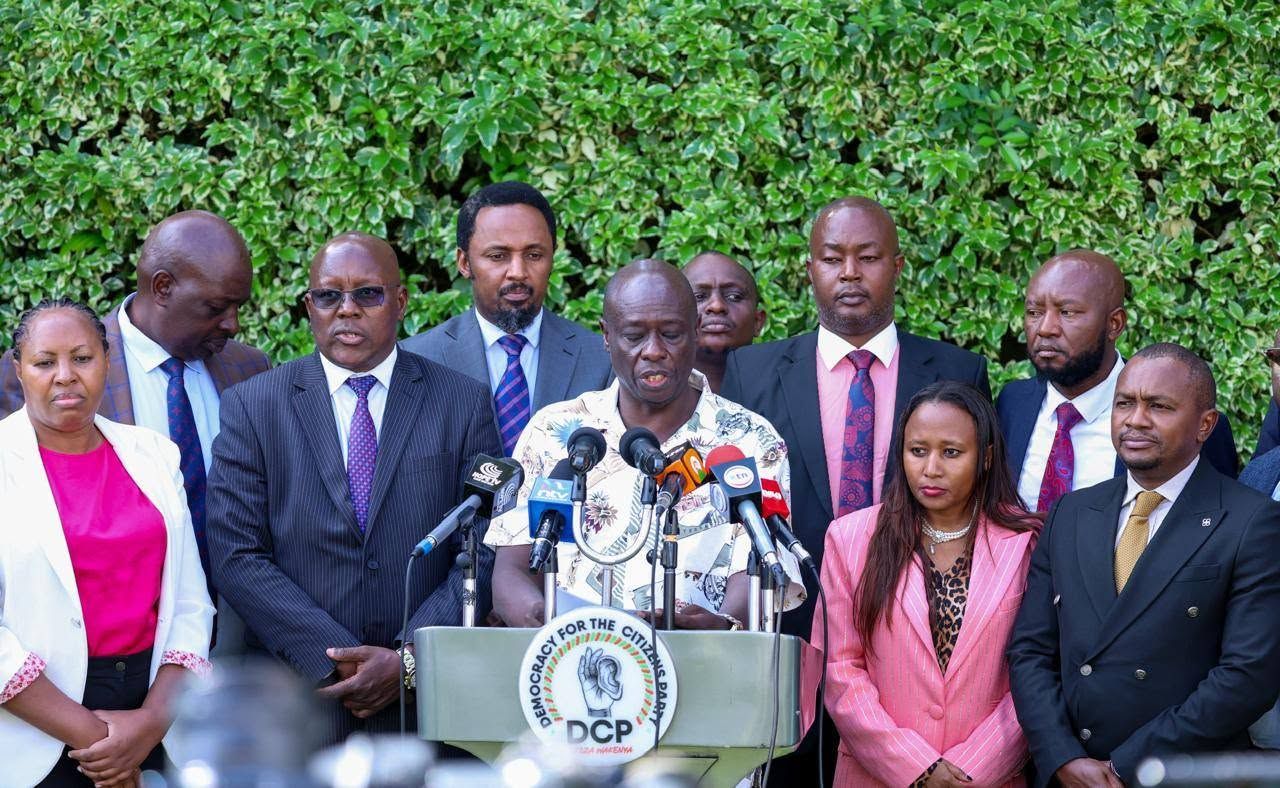

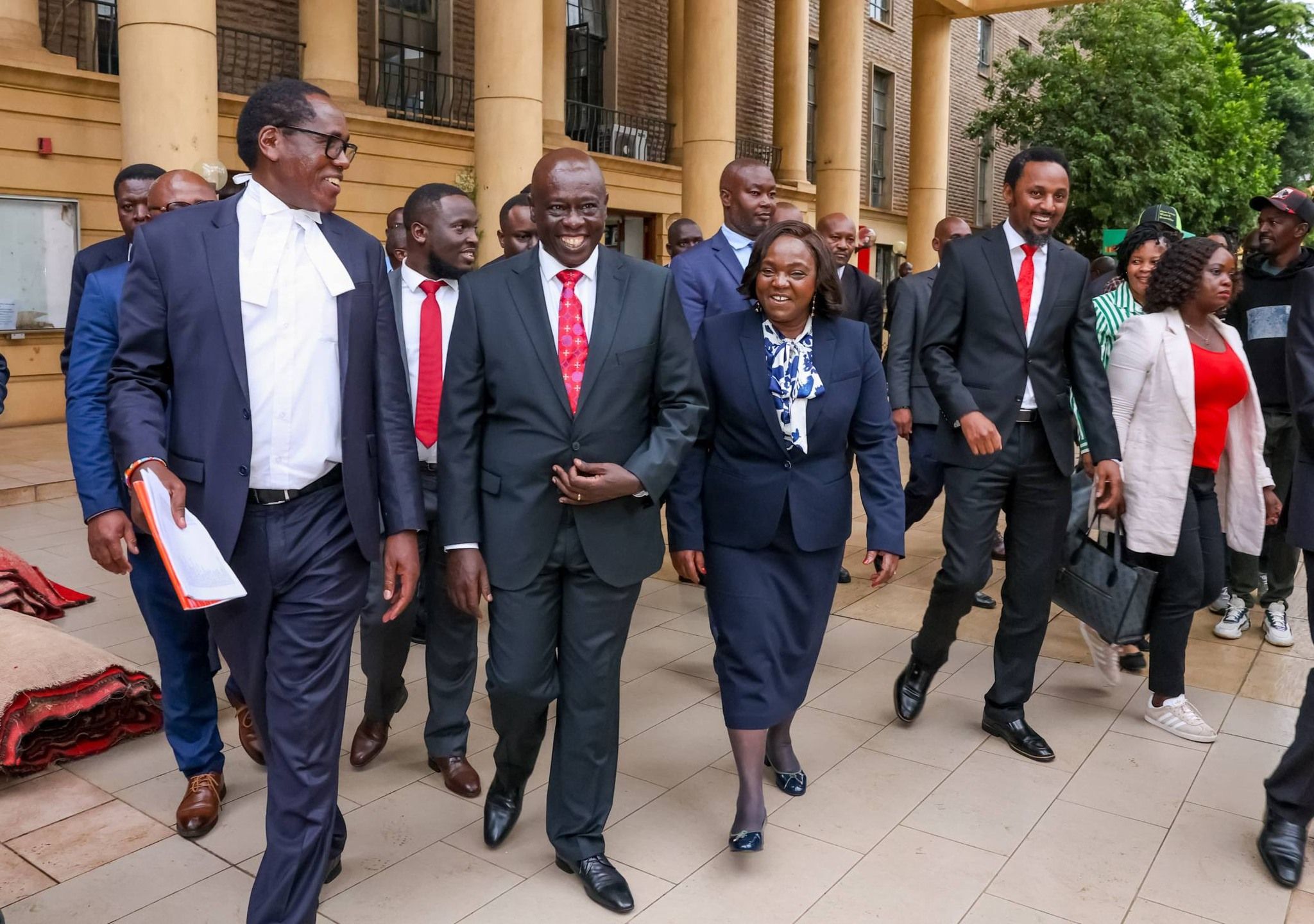
Former Deputy President Rigathi Gachagua has arrived at the High Court for the hearing of his petition challenging the impeachment process that led to his removal from office, in a case expected to test the limits of parliamentary power, constitutional procedure, and judicial oversight.
The matter is listed before a three-judge bench comprising Justices Eric Ogola, Anthony Mrima, and Freda Mugambi. The bench is expected to issue directions on several pending applications before proceeding to hear arguments touching on the substance of Gachagua’s petition.
Gachagua is challenging the legality and constitutionality of the impeachment process, arguing that his removal from office was unlawful, politically motivated, and conducted in violation of his constitutional rights. His legal team maintains that the proceedings before both the National Assembly and the Senate failed to meet the required threshold of fairness, due process, and procedural regularity.
The former Deputy President has consistently dismissed the impeachment as a political process disguised as a constitutional one. He argues that the charges brought against him were not only defective but were also pursued in a manner that denied him adequate opportunity to defend himself.
The case stems from the historic impeachment process that saw Gachagua removed from office after the Senate upheld some of the charges against him. The impeachment marked one of the most consequential political and constitutional moments under the 2010 Constitution, as it involved the removal of a sitting Deputy President through a parliamentary process.
At the heart of the petition is whether Parliament properly exercised its impeachment powers, and whether the courts can intervene where a political process is alleged to have violated constitutional safeguards. Gachagua’s lawyers are expected to argue that while Parliament has the authority to impeach certain state officers, that power is not absolute and must be exercised within the limits set by the Constitution.
The petition also raises questions on the role of the Senate in an impeachment trial, particularly whether the former Deputy President was given a fair and meaningful chance to respond to the accusations against him. His side is likely to argue that the process moved with unusual speed and that the political environment surrounding the impeachment compromised the fairness of the proceedings.
The court is also expected to consider several related applications filed by different parties. These include requests for conservatory orders, responses by state institutions, and submissions touching on the jurisdiction of the court to interrogate parliamentary decisions. Some parties are expected to defend Parliament’s role, arguing that impeachment is a constitutional mechanism vested in elected representatives and that courts should be cautious not to interfere with parliamentary functions unless a clear violation of the law is demonstrated.
The composition of the bench has also featured prominently in earlier stages of the litigation. Gachagua’s legal team previously challenged the empanelling of the three-judge bench, arguing over the authority under which it was constituted.
The renewed proceedings therefore come against a background of both legal and procedural contestation. For Gachagua, the court process offers an opportunity to challenge the legitimacy of his removal and to place on record his argument that the impeachment was driven more by political fallout than constitutional accountability.
For the state and other respondents, the hearing presents an opportunity to defend the actions of Parliament and the Senate, and to argue that the impeachment followed the constitutional path provided for the removal of a Deputy President.
The broader significance of the case goes beyond Gachagua’s personal political future. It is expected to clarify the extent to which courts can review impeachment proceedings, especially where questions of procedure, fairness, and constitutional compliance are raised. The outcome could also shape how future impeachment processes are conducted, particularly in relation to timelines, evidence, rights of the accused office holder, and the standard of scrutiny required before removal from office.
Gachagua’s impeachment also triggered a transition in the Office of the Deputy President. After his removal, President William Ruto nominated Kithure Kindiki as his replacement, and the High Court later lifted orders that had temporarily barred Kindiki’s swearing-in, with Justice Anthony Mrima noting that the office should not remain vacant.
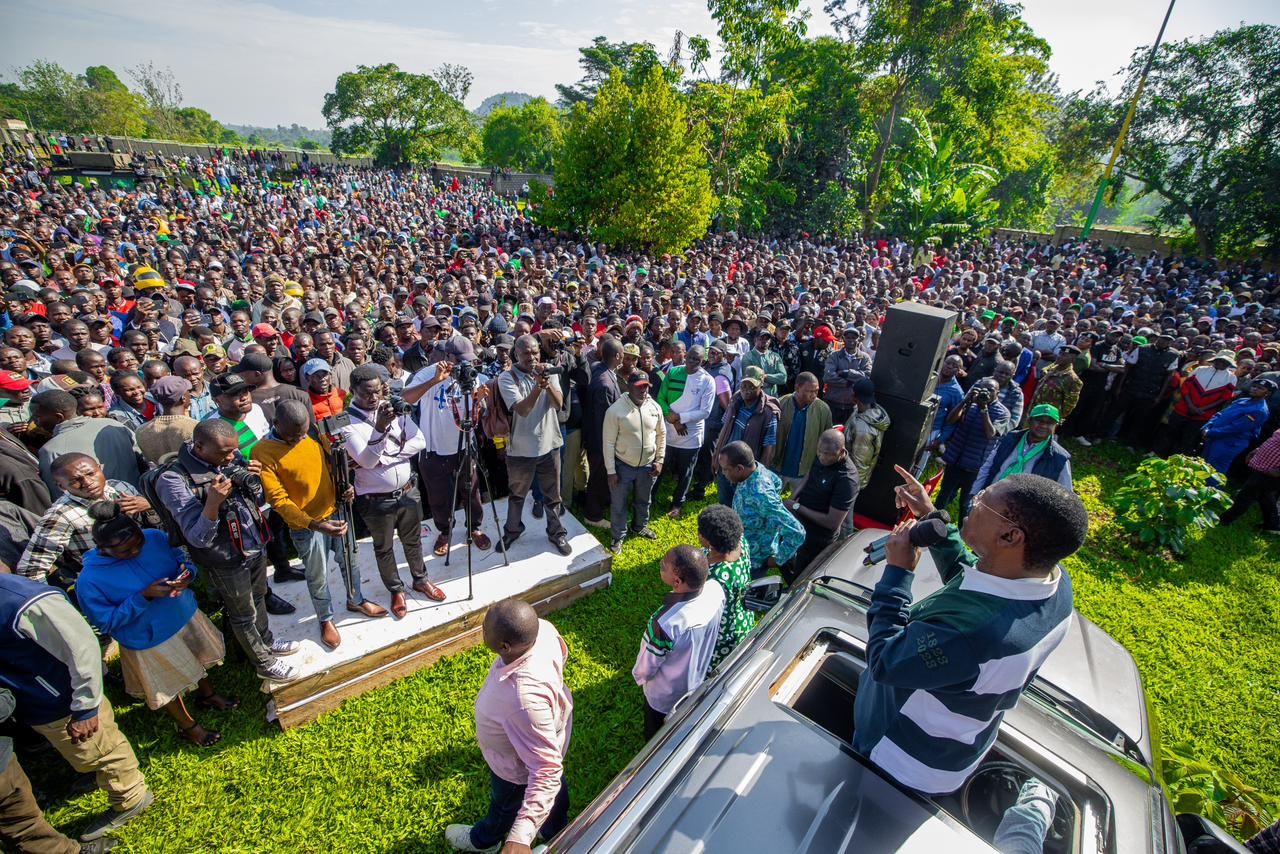
Outside the legal arguments, the political stakes remain high. Supporters and political leaders allied to Gachagua are present within the court precincts as the hearing begins, underscoring the public and political interest surrounding the case. His allies have framed the matter as a fight for constitutionalism and fairness, while his critics maintain that Parliament acted within its mandate.
The hearing is expected to proceed amid close national attention, with the court likely to determine whether the impeachment process met the standards required by the Constitution or whether Gachagua’s removal was tainted by procedural and legal flaws.
For now, the former Deputy President’s battle has shifted from the political arena to the courtroom, where the three-judge bench is set to decide how far judicial review can go in one of Kenya’s most consequential impeachment disputes.