
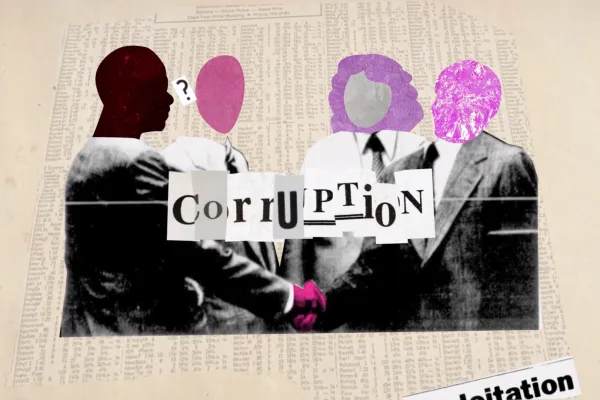
“There’s no money to steal” has long been one of the laziest excuses in Kenya’s corruption debate. It suggests that graft only matters when there is visible abundance, big projects, or spectacular scandals. But that argument no longer works, if it ever did. In a country under fiscal strain, where households are squeezed and the state keeps asking citizens to pay more, corruption is not less damaging because resources are scarce. It is more damaging. Transparency International’s 2025 Corruption Perceptions Index gave Kenya a score of 30 out of 100, down two points from the previous year, and ranked it 130th out of 182 countries.
That decline matters because corruption is not just about stolen cash in the abstract. It is about collapsing public trust, weak institutions and a growing public belief that accountability remains selective. Transparency International Kenya said corruption is rising across sub-Saharan Africa and noted Kenya’s decline in the latest index, reinforcing concerns that anti-graft rhetoric is not translating into stronger public integrity.
The old excuse also misunderstands how corruption works. When money is tight, every shilling diverted from health, education, infrastructure or social support hurts more. A struggling economy does not reduce the cost of graft. It increases it. Scarcity creates more pressure on procurement, more temptation in public offices, and more anger from citizens who are repeatedly told there is no money for services, salaries or development, but somehow there is always room for leakage, inflated contracts and impunity. This is an inference from Kenya’s worsening CPI standing and the broader governance concerns consistently raised by anti-corruption watchdogs.
Kenya’s anti-corruption fight therefore needs to move beyond speeches, arrests announced with fanfare, and periodic outrage after scandal breaks. What is needed is boring but serious institutional work: transparent procurement, stronger prosecution, protection for whistleblowers, better asset recovery, and real consequences for politically connected offenders. Transparency International’s global findings for 2025 warned that shrinking civic space and weaker accountability systems allow corruption to flourish. That warning is highly relevant to Kenya, where public confidence often falls not because citizens do not understand the law, but because they rarely see consistent enforcement.
The public mood has clearly shifted. Kenyans are less willing to accept corruption as background noise and less convinced by claims that the problem is exaggerated or unavoidable. In that sense, “there’s no money to steal” is no longer an excuse. It is an indictment. If the state says resources are limited, then integrity should matter even more. And if leaders want the public to believe the graft fight is real, they will have to prove it in systems, in prosecutions and in outcomes, not in slogans.