

There is a particular kind of exhaustion that no amount of sleep can fix. It is the fatigue of constant stimulation, relentless productivity pressure, and the nagging sense that you are always behind — behind on messages, behind on goals, behind on becoming whoever it is you are supposed to become.
For millions of people, the answer has not been another life hack or optimization framework. It has been less.
What Slow Living Actually Means
Despite what Instagram might suggest, slow living is not about expensive linen, artisanal coffee, and countryside cottages. At its core, it is a philosophical reorientation: a decision to be deliberate about how time, attention, and energy are spent.
It is about asking why before how. It is about choosing depth over breadth, presence over productivity, and sufficiency over accumulation.
The Italian origins of the Slow Food Movement in the 1980s — a direct protest against the opening of a McDonald’s near Rome’s Spanish Steps — planted a seed that has since grown into a much broader cultural conversation about pace, quality, and meaning.
The Data Behind the Feeling
The evidence that modern pace is unsustainable is not anecdotal. Burnout was classified as an occupational phenomenon by the WHO. Anxiety disorders are among the most common mental health conditions globally. Sleep deprivation costs the US economy an estimated $411 billion per year in lost productivity — a deeply ironic statistic.
Meanwhile, research on what actually drives human wellbeing consistently points toward factors that fast living crowds out: deep social connection, time in nature, adequate rest, creative engagement, and a sense of meaning and agency.
What the Shift Looks Like in Practice
For some, slow living means leaving high-paying jobs in demanding cities for roles with lower ceilings but better boundaries. For others, it means introducing analog rituals — handwritten journaling, cooking from scratch, walking without headphones — into lives that have become almost entirely screen-mediated.
The digital detox industry, valued at over $800 million globally, reflects how desperately people are seeking permission to disconnect. Retreats in Portugal, Japan, and Scandinavia are booked months in advance. Waiting lists for off-grid cabins in Scotland stretch to 18 months.
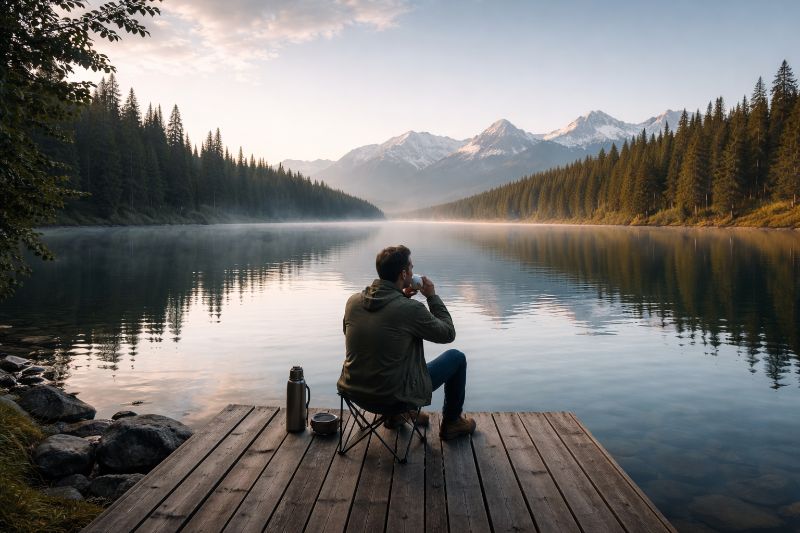
“I stopped trying to optimize my morning and started just drinking my coffee by the window. It changed everything.” — Reader letter, The Gentlewoman
The Class Problem Nobody Wants to Acknowledge
Slow living has a privilege problem. Choosing to work less, buy less, and demand less from life is a luxury largely unavailable to people living paycheck to paycheck. The aesthetics of minimalism — clean, white, empty — often require considerable spending to achieve.
A genuine slow living movement must grapple with this contradiction. Slowing down cannot only be for those who can afford it.
Finding Your Own Pace
You do not need to quit your job, move to the countryside, or delete Instagram. Slow living begins with a single question, repeated regularly: Is this how I actually want to spend this time?
The answer will not always be no. But asking it — really asking it — has a way of rearranging priorities that no productivity system ever could.