

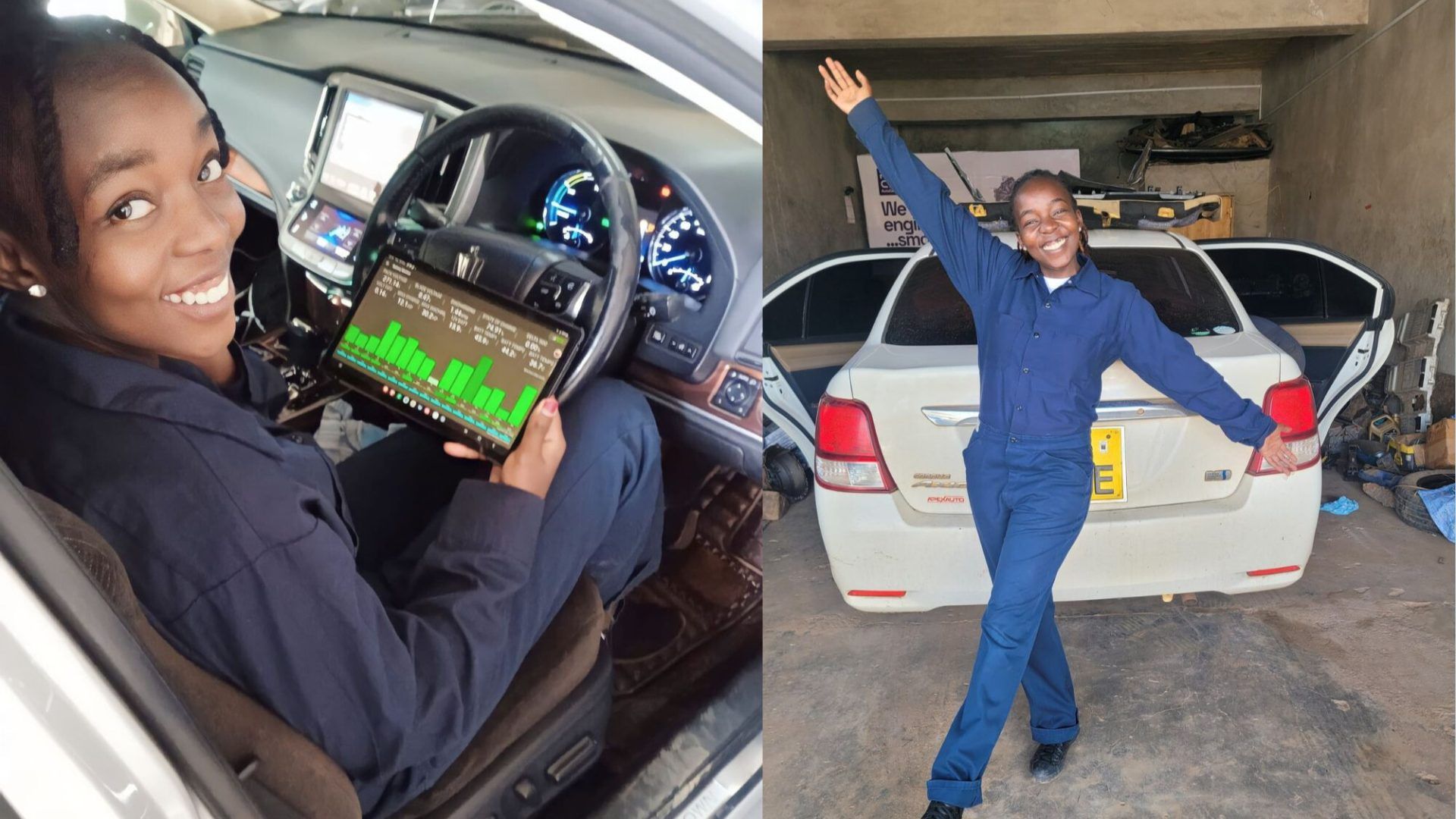
Nyambura Wambui is steadily building a name for herself in Kenya’s automotive industry, standing out in a field long dominated by men as one of the country’s most visible specialists in hybrid and electric vehicle maintenance. At a time when hybrid cars are becoming more common on Kenyan roads, her work is placing her at the centre of a shift in how motorists think about car ownership, fuel efficiency and modern vehicle servicing.
Wambui, a technician at Feca Auto Care, a garage she co-owns with her brother, has carved out a niche in servicing hybrid and electric vehicles, an area that remains relatively specialised in Kenya. Her rise reflects both personal determination and the changing nature of the local auto market, where demand is growing for mechanics who understand the increasingly complex systems found in fuel-efficient vehicles.
Her profile has attracted attention because she represents more than just technical skill. In an industry where female mechanics are still relatively rare, Wambui is part of a wider but still gradual shift that is seeing more women enter automotive spaces as technicians, business owners and specialists. Business Daily reported in 2024 that women are increasingly becoming more visible and assertive across Kenya’s motoring sector, challenging long-held stereotypes about who belongs in garages and workshops.
The timing of her emergence is significant. Hybrid vehicles are gaining ground in Kenya as more consumers look for cars that offer better fuel economy amid high fuel costs and rising awareness about cleaner transport options. Standard reporting on the Mitsubishi Outlander, one of the hybrid models in the local market, noted that the plug-in hybrid version offers stronger fuel economy than the non-hybrid option, underscoring why more buyers are paying attention to such vehicles.
That shift is creating new demand for specialised knowledge. Unlike conventional cars, hybrids require mechanics who understand battery systems, electric components and integrated drivetrain technology. This means technicians like Wambui are not only repairing vehicles, but also helping build trust in a category of cars that some Kenyan buyers still view with caution. This is an inference based on the growing hybrid market and the technical demands described in reporting on hybrid vehicles and specialists like Wambui.
Her journey also speaks to a broader story about innovation and resilience in Kenya’s informal and technical sectors, where young people are constantly adapting to economic and technological change. As the country’s car market evolves, Wambui’s work suggests that the future of mobility in Kenya may not only be greener, but also more inclusive. For motorists and aspiring female technicians alike, the “mechanic queen” is becoming a symbol of both expertise and possibility.