

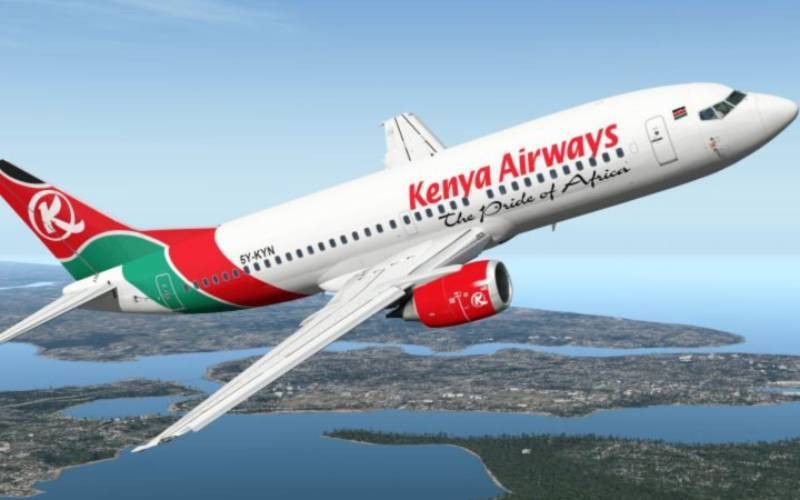
Kenya Airways has reported a KSh 17.93 billion pre-tax loss for the year ended December 2025, blaming the sharp reversal on aircraft shortages, lower capacity and global supply chain disruptions that weighed heavily on revenue and operations. The loss marks a significant setback for the national carrier, which had posted its first pre-tax profit in more than a decade in 2024.
The airline said total revenue fell 14 percent to KSh 161.47 billion in 2025, reflecting an 18 percent reduction in capacity as parts of its fleet were taken out of service. A major factor in the disruption was the temporary grounding of three Boeing 787-8 Dreamliners, which Kenya Airways said had been affected by global supply chain constraints that delayed maintenance and availability.
The fleet constraints hit at a time when the airline was trying to build on the gains of 2024, when it returned to profitability after years of losses. That 2024 rebound had been supported by strong foreign exchange gains as the Kenyan shilling strengthened against the US dollar, cushioning the business and helping deliver a pre-tax profit of KSh 5.53 billion. In contrast, the 2025 performance exposed the airline’s continued vulnerability to operational shocks and limited fleet flexibility.
Kenya Airways executives said the shortage of available aircraft reduced the carrier’s ability to fully meet passenger demand across key routes, contributing to weaker earnings for the year. The airline, which operates a fleet of roughly 40 aircraft, now says restoring and expanding capacity is central to its recovery strategy.
In response, the airline plans to deploy an additional aircraft on its London Heathrow route from July and add Boeing 777 freighters to increase cargo capacity by 250 tonnes by the end of 2026. Management says these moves are intended to improve network reliability, recover lost revenue opportunities and strengthen the airline’s position in both passenger and cargo markets.
Even so, Kenya Airways has pointed to some positive demand signals. The carrier said seat demand has recently risen due to travel disruptions linked to conflict in the Middle East, with more passengers from Europe, the United States and Asia rerouting through Nairobi instead of Gulf hubs. The airline hopes that this shifting travel pattern, combined with fleet restoration, will help improve performance going forward.
For Kenya Airways, the latest results underline the fragile nature of its recovery. While external demand remains present, the airline’s 2025 loss shows that aircraft availability and supply chain reliability remain critical to whether the national carrier can sustain a turnaround in the years ahead.