
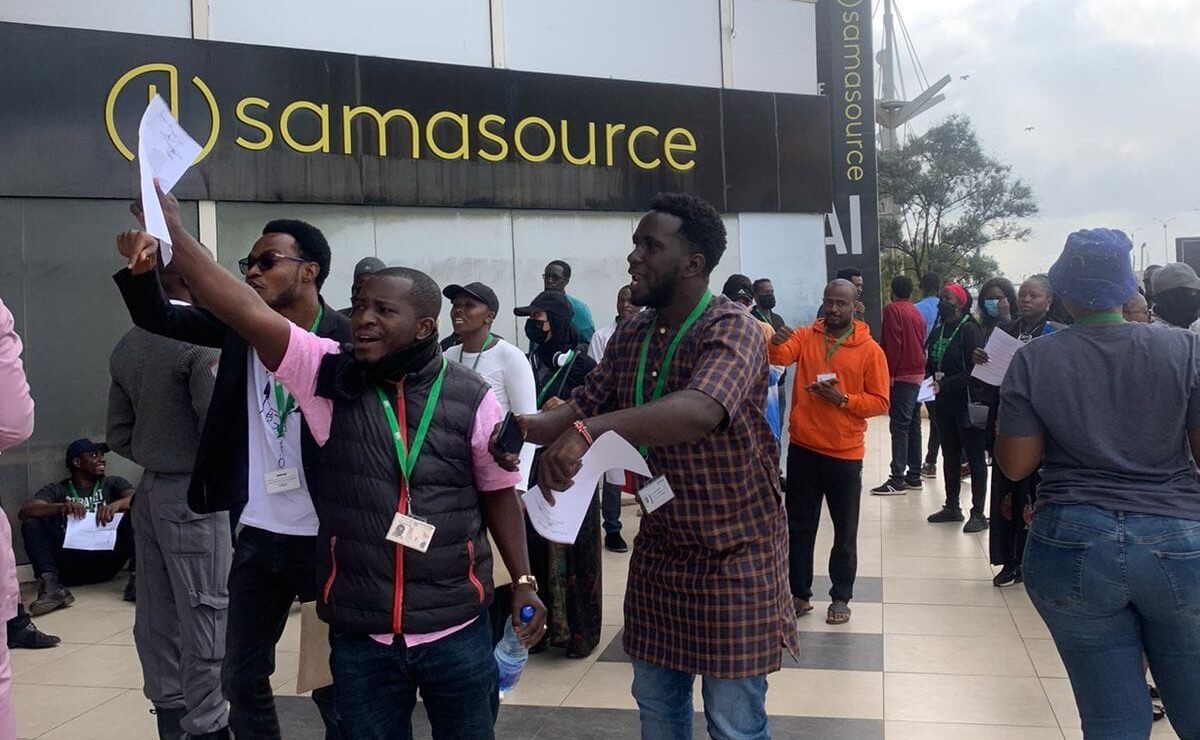
Sama, the Nairobi-based outsourcing firm known for providing data annotation and digital support services to global technology companies, is set to lay off 1,108 employees after Meta declined to renew a major contract at its Kenyan office.
The redundancies are expected to take effect later this month, in what is shaping up to be one of the most significant job losses in Kenya’s business process outsourcing and AI support sector this year.
In a statement issued on Thursday, Sama said the decision followed communication from Meta terminating the contract, a move that directly affected a large workstream in Nairobi.
The company said it had held discussions with the client in a bid to protect jobs in the Nairobi delivery centre and across its wider business, but those efforts did not succeed. Sama Country Lead and Vice President for Global Delivery Annepeace Alwala said the firm’s immediate focus was to support affected staff and maintain continuity in its broader operations.
The layoffs throw a sharp spotlight on the fragile economics of outsourced digital labour in Kenya, where thousands of young workers have found jobs in content moderation, data labelling, machine learning support and other back-end tasks that power some of the world’s largest tech platforms.
Over the last few years, Nairobi has increasingly positioned itself as a regional hub for this kind of work, helped by a youthful English-speaking workforce, expanding digital infrastructure and competitive labour costs. Sama is seen as part of Kenya’s emergence as a centre for outsourced AI support services, with workers handling image, video and other data-intensive tasks for global clients.
Yet the latest cuts also expose the risks of a business model heavily tied to a small number of foreign clients.
When a multinational technology company reviews costs, restructures operations or shifts strategy, the impact can be swift and severe for local workers. In Sama’s case, the loss of a single major client has now translated into more than a thousand threatened jobs in Nairobi.
The development also revives questions around labour protections in Kenya’s growing digital outsourcing economy. Sama has previously been at the centre of high-profile legal and public scrutiny linked to its past work for Meta, especially around content moderation.
Court records and prior reporting show that the company’s earlier Meta-linked operations in Nairobi triggered a long-running labour dispute involving former moderators, unionization claims and arguments over the responsibilities of global tech firms toward outsourced workers in Kenya.
In 2024, the Court of Appeal dealt with consolidated appeals arising from that dispute, underlining how deeply contested the sector has become.
For Kenya, the Sama layoffs arrive at an awkward moment. Policymakers and industry players have pitched the country as a destination for digital work and AI-related services, but the promise of that future is increasingly being tested by concerns over job security, worker welfare and dependence on contracts controlled abroad.
Sama says affected employees will be supported through the transition, and has stressed that its teams have received wages, benefits and wellness support.
Still, for the 1,108 workers now facing uncertainty, the announcement is a reminder that in the global AI economy, the most visible innovation often rests on labour that remains highly exposed and easily dispensable.