
By Abisalom Oluoch
This reflection is offered as a matter of pastoral concern. It speaks not from a place of partisanship, but from a burden for the soul of our community. At its core, it questions the effectiveness of the current demands by a few ODM leaders - demands that appear either driven by self-interest, detached from the realities of the people, or misaligned with the broader interests of the region.
One must ask: do these leaders, who have taken hardline positions even before meaningful engagement with UDA, fully appreciate the implications of their stance? Are they weighing their demands against the opportunities presently before the region?
The President has made a clear and public commitment - to bring Nyanza fully into the fold of government and to address long-standing inequalities. This is not a small promise; it is a defining moment. As a community, we must discern the times with wisdom. I therefore urge ODM leaders to approach this moment with humility and openness, recognising that through leadership, God may indeed be restoring what was lost through years of marginalisation.
As it is written in Joel 2:25: “I will restore to you the years that the locust has eaten…” This is not merely scripture - it is a call to recognise divine seasons of restoration when they arise.
The central question before us is not whether there should be zoning arrangements between ODM and UDA, nor whether positions such as Deputy President should be demanded. Rather, the deeper question is this: how do we secure fairness, inclusion, and dignity for our region in a sustainable and meaningful way?
From a theological and leadership perspective, shaped by years of service in the church, I submit that negotiations must rise above personal survival. Leadership must be anchored in stewardship, not self-preservation.
There is little to be gained by simply imposing preferred candidates for parliamentary, senatorial, or gubernatorial seats. The true priority must be the welfare of the entire community - not the rigid positions of partisan loyalty or the ambitions of a few.
It is deeply concerning that some of the tensions we are witnessing today stem from narrow, self-serving demands that risk dividing leadership from the very people they are meant to serve. This is especially troubling in a moment when many within the community are open to engaging constructively with the current administration.
Equally troubling is the posture adopted by some leaders - on one hand resisting the community’s shifting stance towards engagement with the President, while on the other hand positioning themselves as arbiters of
accountability for re-election. This contradiction raises serious questions about sincerity and responsibility.
Indeed, such conduct suggests that, for some, public service has become performative rather than purposeful. It reflects a failure to fully acknowledge the tangible development gains already underway in the region - many of which have been deliberately coordinated to ensure that Nyanza is not left behind.
It is important to recognise the role played by leaders such as Raymond Omollo, whose efforts have helped translate national commitment into real development on the ground. To dismiss such progress through broad, ungrounded criticism is to overlook both sacrifice and substance.
At present, there is also a structural concern. The ongoing discussions about the region’s political future appear to be dominated by a narrow group of actors. This is neither representative nor sustainable. It is dangerous to entrust the destiny of an entire region to a single political wing that may be vulnerable to personal political and economic interests.
History reminds us - particularly through flawed party nomination processes - that such concentration of power can fail the people at critical moments.
Let it be clearly stated: this reflection does not dismiss or diminish the historic role of ODM in shaping the political consciousness and aspirations of the region. That contribution remains significant and respected.
However, the future must be broader than the past. The voice of the community cannot be confined to politicians alone. It must include the church, professionals, elders, and all those who have walked the journey of this region - many of whom rose from humble beginnings, walking barefoot to school, carrying the weight of hope for a better tomorrow. Such voices bring wisdom, memory, and moral clarity.
Therefore, we must move away from rigid “irreducible minimums” and instead embrace contextual, inclusive, and forward-looking negotiations. This moment calls for a leadership that listens deeply, acts selflessly, and places the collective good above individual ambition.
Let our leaders hear this clearly: the mandate is not yours alone - it belongs to the people. And above all, may wisdom guide every decision, for where there is no wisdom, even opportunity can be lost.
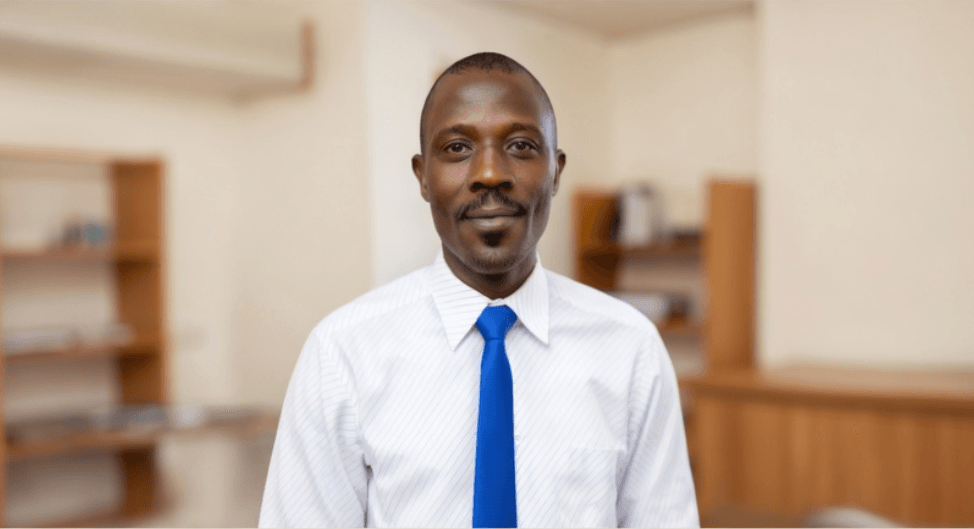
Pastor Abisalom Oluoch is a member of the Nationcal Council of Churches of Kenya in Homa Bay county
Follow our social media pages for breaking news updates, in-depth stories and videos.
news@nairobilens.ke