


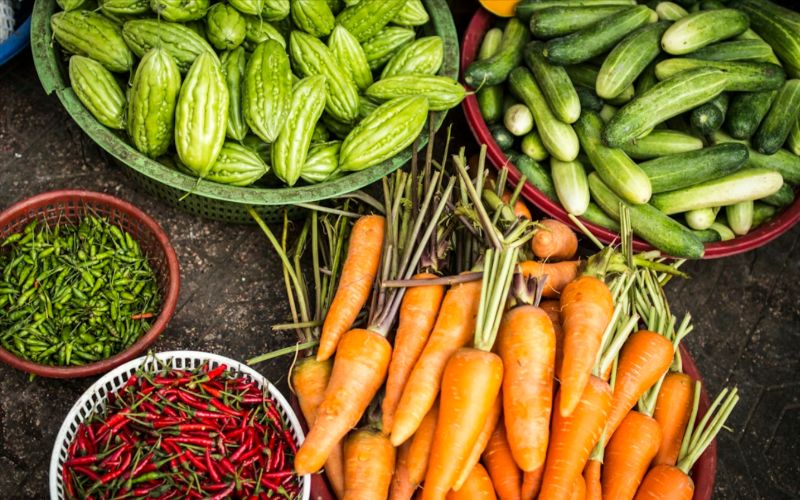
The average meal travels over 1,500 miles before it reaches a dinner table in a developed country. That journey — from soil to supermarket shelf — involves dozens of decisions, each carrying environmental, economic, and ethical weight. Understanding the food system is the first step toward changing it.
What “Farm to Fork” Actually Means
The farm-to-fork concept describes the complete journey of food: cultivation, processing, packaging, distribution, retail, and consumption. Sustainable food practices aim to minimize harm at every stage — reducing emissions, preserving soil health, protecting water sources, and ensuring fair compensation for agricultural workers.
“We do not inherit the earth from our ancestors; we borrow it from our children. The food system either honors that debt or deepens it.”
Most food systems today were designed for efficiency and scale, not sustainability. The consequences — soil degradation, water depletion, biodiversity loss, and significant greenhouse gas emissions — are now impossible to ignore.
The Hidden Cost of Cheap Food
Industrial agriculture has made food cheaper in absolute terms than at any point in human history. But those low prices externalize enormous costs: pesticide runoff into waterways, carbon emissions from synthetic fertilizer production, and the consolidation of farming into fewer and fewer hands.
Small-scale farmers, who produce a disproportionate share of the world’s food despite farming less land, are often the first casualties of a system optimized for commodity pricing.
Sustainable Practices That Work
Several approaches have demonstrated measurable improvements in both environmental outcomes and farm profitability:
- Regenerative agriculture — practices like cover cropping and reduced tillage rebuild soil organic matter, sequestering carbon and improving water retention.
- Integrated pest management — reduces chemical inputs by using biological controls and crop rotation to manage pests naturally.
- Short supply chains — farmers’ markets, community-supported agriculture (CSA), and local distribution reduce transport emissions and keep more value with producers.
- Reduced food waste — roughly one-third of all food produced globally is lost or wasted. Reducing waste at the consumer level has outsized impact.
The Consumer’s Role
Individual choices, at scale, reshape markets. The growth of organic agriculture, the mainstreaming of plant-based proteins, and the resurgence of interest in heirloom varieties are all consumer-driven shifts.
Choosing seasonal produce, reducing meat consumption — particularly beef — and supporting producers with transparent supply chains are among the highest-impact actions available to individuals.
Policy and Systemic Change
Consumer behavior alone cannot transform an industrial food system. Policy plays a critical role: subsidy structures, trade rules, and food safety regulations all shape what gets grown, how, and at what cost.
Countries that have reformed agricultural subsidies to reward environmental outcomes rather than volume production have seen measurable improvements in soil health and biodiversity. The challenge is scaling those models globally, against the lobbying power of agribusiness.
A Different Kind of Progress
Sustainable food is sometimes framed as a step backward — slower, smaller, less efficient. But efficiency measured only in yield per acre misses most of what matters. A food system that depletes its own foundation is not efficient; it is simply deferring collapse.
The goal is not to feed the world by 2050 using yesterday’s methods. It is to build a food system capable of feeding the world indefinitely.