

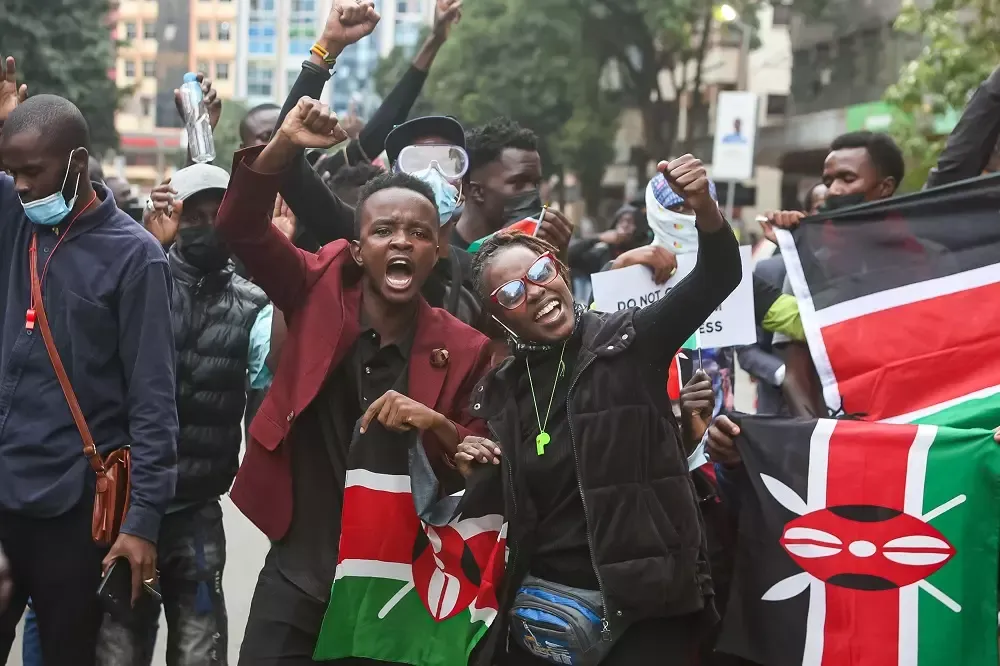
Youth-led groups are marking the second anniversary of the June 2024 anti-Finance Bill protests with renewed calls for justice, accountability and institutional reform, keeping public attention on one of the most consequential protest movements in Kenya’s recent history. The commemorations come as activists, families of victims and civil society organisations continue to demand answers over deaths, injuries, abductions and arrests linked to the demonstrations that erupted against the Finance Bill 2024.
The protests, driven largely by Gen Z organisers and amplified through social media, began in June 2024 as opposition to new tax proposals but quickly grew into a broader national outcry over the cost of living, governance, corruption and police brutality. The movement reached a dramatic peak on June 25, 2024, when thousands of protesters breached Parliament grounds in Nairobi as lawmakers passed the controversial bill, prompting a violent security response that drew condemnation from rights groups in Kenya and abroad.
Human rights monitors say the human cost of the crackdown remains central to this year’s anniversary events. The Kenya National Commission on Human Rights said that by July 1, 2024, at least 39 people had been killed and 361 injured in connection with the protests. Later assessments cited in the US State Department’s 2024 human rights report said the KNCHR recorded 60 deaths during the June and July unrest, underlining the scale of the violence and the continuing dispute over the final toll.
For many youth groups, the anniversary is not only about remembrance but also about unfinished demands. Organisers say the protests exposed deep frustration among young Kenyans who felt locked out of economic opportunity and ignored by political leaders. Even after President William Ruto declined to sign the Finance Bill following the unrest, calls for reform did not fade, with campaigners insisting that accountability for victims must go hand in hand with wider changes in policing, public finance and democratic participation.
Commemorative events are expected to include memorial gatherings, public discussions and renewed online mobilisation under themes of justice and reform. The anniversary is also likely to revive debate over how the state responded to a youth-led civic movement that many analysts say reshaped Kenya’s political conversation. As families of those killed and injured continue to seek justice, Gen Z organisers are using the moment to insist that the events of June 2024 should not be reduced to a single protest cycle, but remembered as a turning point in the country’s struggle over accountability and citizen power.