
President William Ruto has expressed confidence that Kenya can attain upper middle-income status within the next 10 years, saying the country must adopt a clear national vision to drive economic growth, job creation and improved public services.
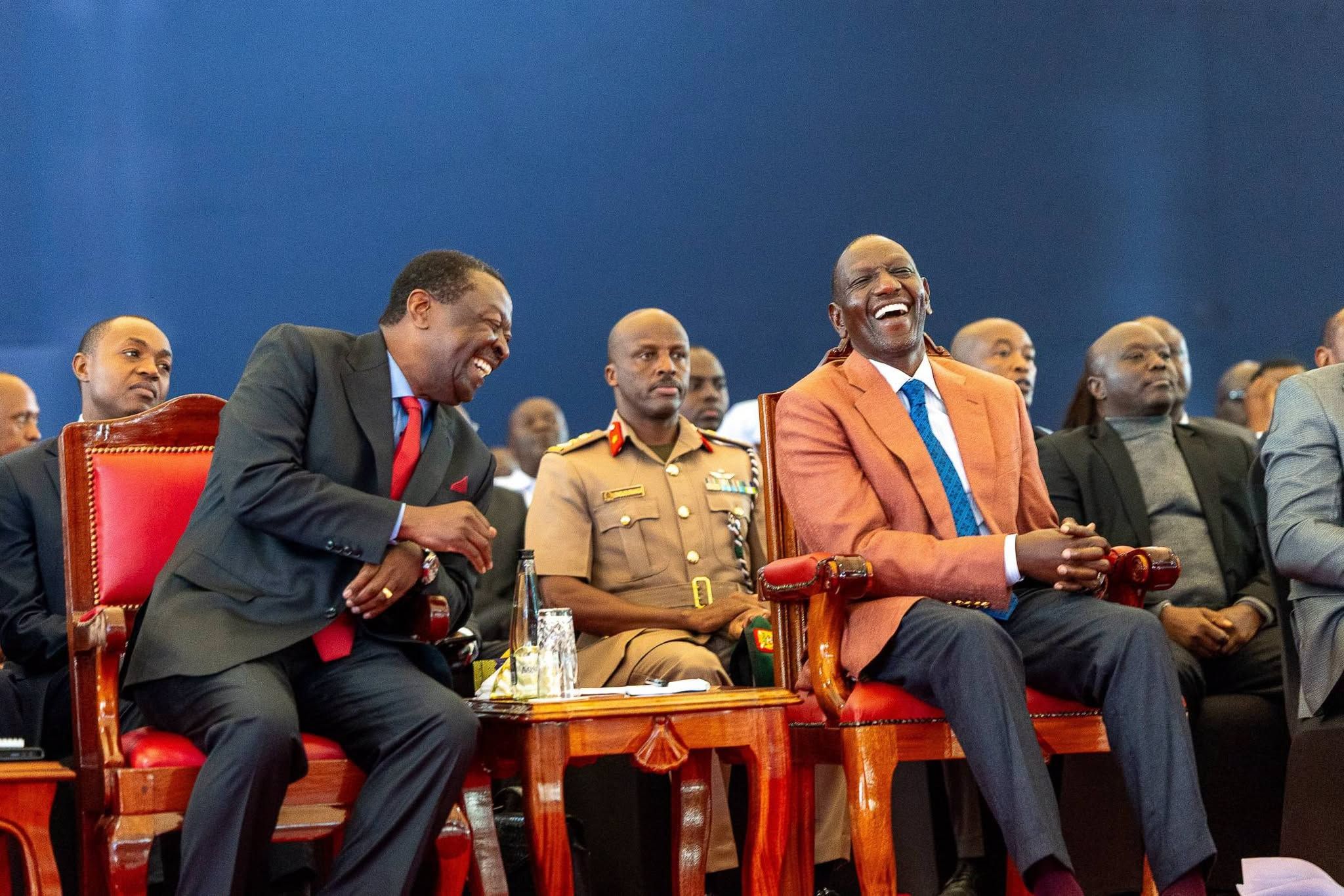
Speaking during a meeting with members of the Friends Church, also known as the Quakers, at State House, Nairobi, on Monday, Ruto said Kenya was not yet where it should be economically and must aspire to become a first-world economy within one generation.
He said achieving that ambition would enable the country to create millions of jobs, produce enough food for local consumption and export, and provide universal healthcare to all citizens.
“Without a national vision, Kenya will continue with the game of guesswork,” Ruto said.
The President proposed that the national development vision be subjected to broad public consultation, similar to the process that led to the adoption of the 2010 Constitution.
He argued that Kenya needed a long-term development framework that would remain in place beyond individual administrations and election cycles.
Ruto cited South Korea and China as examples of countries that were once at the same economic level as Kenya, or behind it, but later achieved rapid growth through deliberate planning and investment.
He said that while Kenya had established itself as a strong democracy, it must now focus on becoming a wealthy and prosperous nation.
The President defended his administration’s record, saying reforms implemented over the past four years had demonstrated that meaningful transformation was possible.
“We have implemented affordable housing, universal healthcare and a new funding model for higher education. We have also hired 100,000 teachers, with an additional 20,000 expected to be recruited this year,” he said.
Ruto maintained that Kenya was in a stronger economic and social position than it was in 2022 despite the challenges the country had faced.
“We have fixed the economy. We have expanded programmes in health, housing and education, among others, and it is time, as Kenyans, to plan a better destiny for our country,” he said.
The President also defended the affordable housing programme, saying access to adequate housing was a constitutional right.
He said the government’s development agenda was anchored in constitutional provisions requiring the State to progressively provide access to housing, healthcare, education and adequate food.
“The work we have done in the past two years can be seen. The roads can be seen. The teachers we have employed can be seen. The transformation in agriculture can be seen. The houses, markets and hostels can be seen,” Ruto said.
His administration has, however, faced criticism over the cost of living, taxation, public debt and the implementation of some of its flagship programmes.
Opposition leaders have also questioned whether the government’s economic policies have translated into tangible relief for ordinary households.
Turning to the 2027 General Election, Ruto urged voters to assess leaders based on their development record, policy proposals and delivery of public services rather than political rhetoric.
“Everyone should show the work they have done. The Bible says faith without works is dead,” he said.
Prime Cabinet Secretary Musalia Mudavadi warned against ethnic mobilization, saying elections should focus on national interests.
“Our democracy should not be reduced to an ethnic poll. It should be about the 55 million Kenyans,” Mudavadi said.
Friends Church of Kenya Presiding Clerk Stephen Magwilu also condemned the use of young people to cause violence at political events.
“Our youth should not be misused by politicians to engage in goonism to achieve their selfish ends,” Magwilu said.
The meeting was attended by several national and county leaders, including Bungoma Governor Ken Lusaka, Kakamega Deputy Governor Ayub Savula and MPs from Western Kenya.
Follow our social media pages for breaking news updates, in-depth stories and videos.
news@nairobilens.ke