
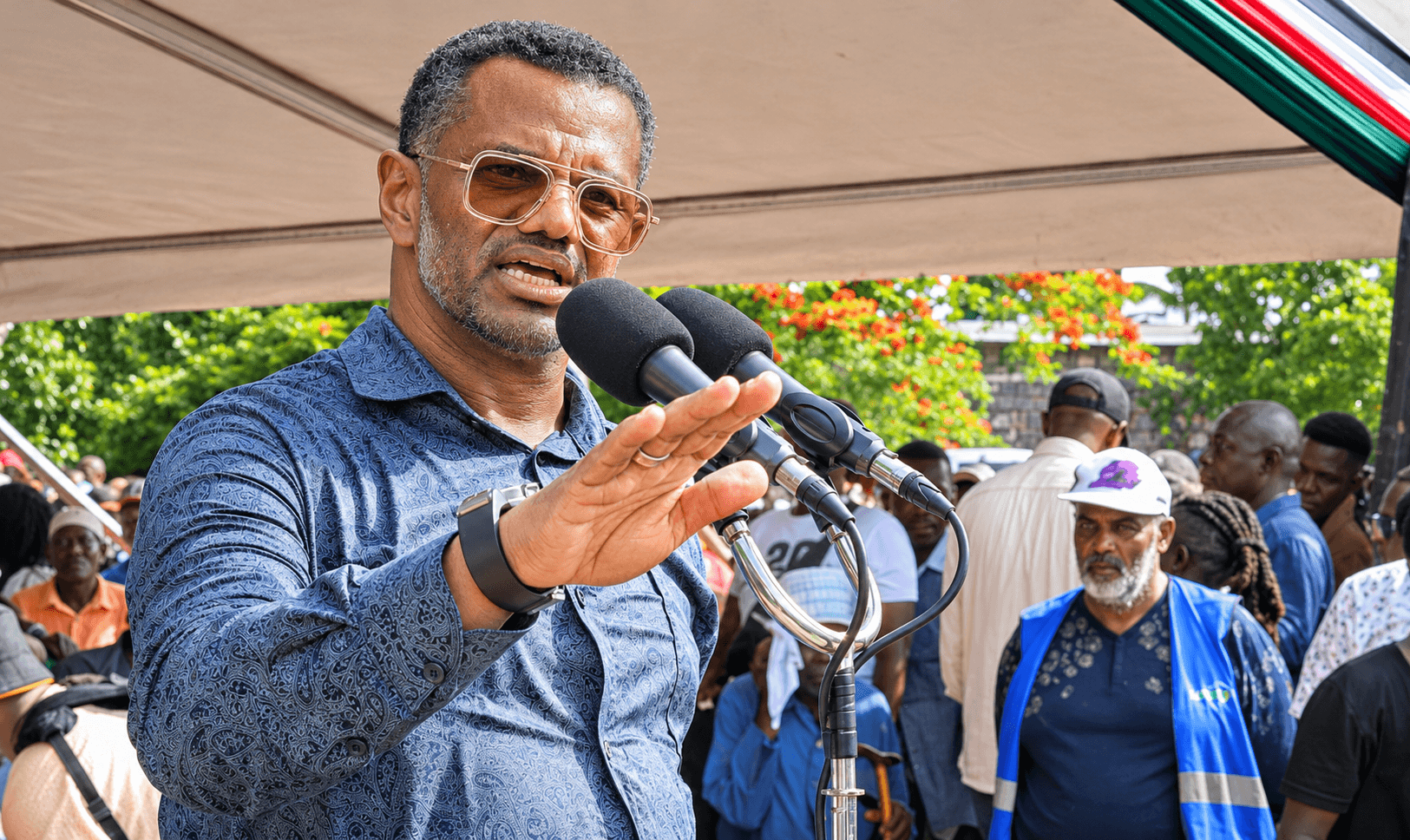
United Democratic Alliance (UDA) Secretary-General Hassan Omar has been issued with a formal warning by the Independent Electoral and Boundaries Commission (IEBC) after being found in breach of the Electoral Code of Conduct over controversial remarks made during a political rally in Mombasa.
In a determination announced on Wednesday, November 4, 2026, the electoral body's Code of Conduct Enforcement Committee found that Omar's remarks, which referred to the use of a deceased person's biometric details to facilitate voting, violated provisions of the electoral code.
The committee concluded that the remarks breached paragraphs 6(k)(i) and 6(l) of the code, despite considering the senator's explanation that his words were figurative and intended to encourage voter registration and participation.
Omar was consequently issued with a "formal and strict warning and severe caution" under paragraph 7(a)(i) of the Electoral Code of Conduct.
The commission also directed him to refrain from making statements that could be interpreted as encouraging electoral malpractice or undermining confidence in the credibility of elections.
The ruling follows a complaint arising from remarks Omar allegedly made during a public rally in Mombasa on September 11, 2026.
He was summoned before the enforcement committee on October 21, where he appeared in person accompanied by his legal counsel.
According to the IEBC, Omar, who is eyeing the Mombasa gubernatorial seat in the 2027 General Election, was given an opportunity to respond to the allegations and present his defence before the committee reached its decision.
The committee considered the context of the remarks, Omar's subsequent clarification and the absence of evidence linking his statements to an actual electoral incident.
However, it ruled that the ordinary meaning of his words, particularly when considered in their original Kiswahili form, raised concerns about the integrity of the electoral process.
The committee found that the remarks invoked the use of a deceased person's biometric identifier to facilitate voting in that person's name.
It said such language was inconsistent with the obligation of political leaders to reassure voters about the integrity of the ballot.
The IEBC warned that any repeat violation would attract tougher sanctions under the electoral code and applicable law.
"Any subsequent breach shall attract a more severe sanction under the Electoral Code of Conduct and the applicable law," the commission said.
The decision puts Omar on notice as political activity intensifies ahead of the 2027 polls.
During the October 21 hearing, Omar defended his remarks, arguing that they had been taken out of context and were meant to emphasize the importance of voter participation.
His lawyers maintained that the statements were figurative rather than an invitation to manipulate election results.
The IEBC, however, maintained that political leaders must exercise restraint when making public statements that could raise doubts about the credibility of elections.
In a statement signed by IEBC Chairperson Erastus Ethekon, the commission acknowledged that politicians have a constitutional right to campaign, criticize opponents and participate in political debate.
It stressed, however, that freedom of expression does not extend to conduct that could undermine public confidence in the electoral process.
The commission said legitimate political competition would continue to be protected, but warned that statements appearing to encourage electoral malpractice would face scrutiny.
With the 2027 elections approaching, the IEBC urged political parties, candidates and their supporters to exercise responsibility in their public utterances.
"The Commission will continue to enforce the law firmly, fairly and without fear or favour," the statement concluded.
Follow our social media pages for breaking news updates, in-depth stories and videos.
news@nairobilens.ke