
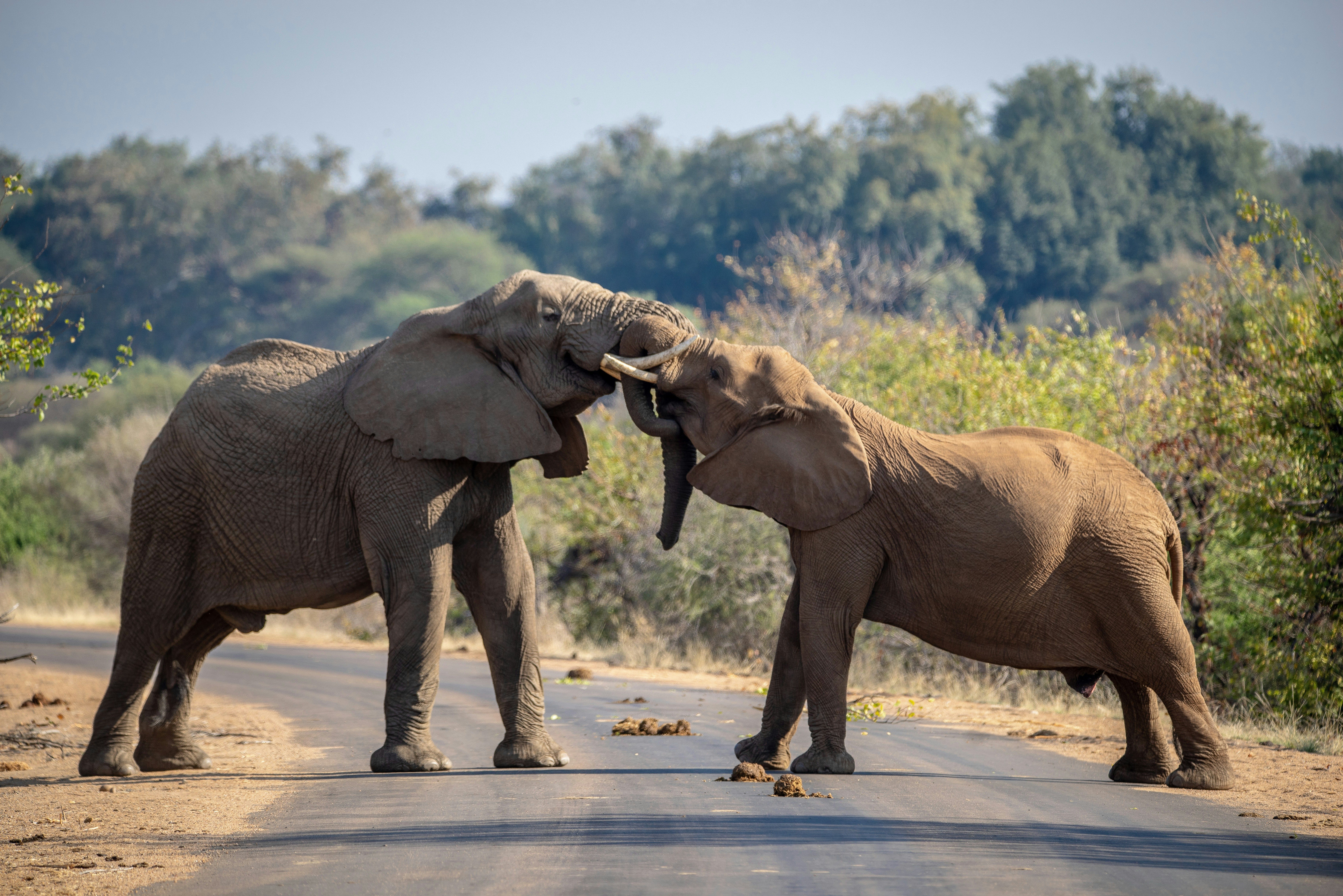
In Kenya’s drylands, climate change is no longer an abstract environmental warning. It is arriving at the homestead, the farm, the school path and the grazing field, often in the shape of an elephant, hyena, leopard or buffalo searching for water, pasture and food.
Across parts of Kajiado, Laikipia, Samburu, Meru and other wildlife landscapes, human-wildlife conflict is becoming one of the clearest signs of a changing climate. Prolonged drought, below-average rainfall, shrinking grazing land, expanding settlements and blocked migration routes are forcing people and animals into the same strained spaces.
Recent incidents have brought the crisis into sharp focus. In December 2025, protests erupted after roaming elephants killed four people in a week, with experts linking the attacks to scarcity of vegetation and competition for resources.
The Kenya Wildlife Service urged calm and said it would “strengthen prevention measures, improve early response and reduce the risk of future incidents.”
The pressure is not only on communities. Wildlife is also being squeezed. Conservationists have warned that Kenya’s growing towns and infrastructure are narrowing traditional corridors used by elephants and other animals.
In Oldonyiro, northern Kenya, Save the Elephants’ Benjamin Loloju described how settlement growth has disrupted routes that wildlife used for generations.
“My work is to ensure that corridors are open in northern Kenya and to maintain connectivity, so that wildlife, livestock and people can move from one area to another,” Loloju said. “So much has changed in this area in the last 30 years… It was virgin land.”
His warning cuts to the heart of the crisis. Human-wildlife conflict is often reported as a security problem, but it is increasingly a climate and land-use problem. Animals are moving because water and food are shifting. People are moving because drought is weakening livelihoods. When both groups converge, conflict becomes almost inevitable.
In February 2026, drought had spread beyond Kenya’s traditionally arid north into Kajiado, where pastoralist families were losing livestock in large numbers. One family had lost more than 100 cattle and 300 goats since August, while surviving animals were too weak to produce milk.
“A cow that was being sold for 60,000 or 70,000 Kenyan shillings… is being sold for 5,000 shillings,” said Emmanuel Loshipae, a local.
Local administrator Lemaiyan Samuel Kureko added: “There have been droughts before in the region but this one is the worst.”
When livestock and wildlife compete for the same shrinking pasture and water, the result is deadly. Farms are destroyed, livestock is killed, children walk to school in fear, and communities that once tolerated wildlife begin to see it as a threat rather than a national asset.
Globally, WWF has warned that climate change is pushing people and wildlife into closer contact as both search for scarce natural resources. Its 2025 Climate Crowd analysis, based on more than 3,000 interviews near biodiversity hotspots, found that one-quarter of interviews mentioned human-wildlife conflict as a climate impact.
WWF noted that 36 per cent of respondents reported more crop damage from wildlife, while 35 percent said people were moving deeper into wildlife habitats to find land or water.
Kenya’s response must therefore move beyond compensation alone. Compensation is important, especially for families who lose relatives, livestock, crops or property. President William Ruto has said the government is digitizing the compensation scheme to reduce delays.
“We want to ensure Kenyans are paid within the shortest time possible. This is why we have migrated the scheme from a manual to a digital platform,” president William Ruto said in May 2025, adding that “citizens must see the benefits of wildlife.”
The state has also released new funds for victims. In March 2026, the government announced Sh950 million for compensation, while officials in Meru said KWS was constructing a 42-kilometre electric fence around Meru National Park to reduce elephant movement into residential areas.
But Kenya cannot compensate its way out of the crisis. The real solution lies in prevention.
First, wildlife corridors must be protected in county spatial plans before settlements, roads, fences and private developments cut them off completely.
Second, water must be planned for both people and wildlife. WWF has highlighted rainwater harvesting systems, rehabilitated water pans and community-led water projects in Kenya as practical ways to reduce direct encounters between wildlife, livestock and households.
Third, communities living near parks and conservancies must benefit directly from conservation. This means revenue-sharing, local employment, compensation that is fast and transparent, support for community conservancies, and livelihood options that reduce pressure on fragile ecosystems.
Fourth, early-warning systems should be strengthened. Communities need timely alerts on wildlife movement, while KWS response teams must be adequately resourced to intervene before fear turns into retaliation.
Finally, restoration must be treated as conflict prevention. In Baringo, a WWF-supported solar water pump and restoration project has been linked to reduced human-wildlife conflict. “This solar water pump is not just about water, it is about sustaining restoration, reducing human-wildlife conflict, and securing livelihoods for generations,” BCCA CEO Susan Jepkemoi said.
The lesson is clear. Human-wildlife conflict is not solved only at the point of attack. It is solved in land planning offices, water projects, conservancy meetings, climate adaptation budgets, school safety routes and community compensation systems.
Kenya’s wildlife is a national treasure, but for communities living closest to it, conservation must also mean safety, dignity and economic value. Without that balance, climate change will continue turning shared landscapes into conflict zones.
Follow our social media pages for breaking news updates, in-depth stories and videos.
news@nairobilens.ke