
Kenya unveiled a Sh4.82 trillion budget for the 2026/27 financial year, setting the stage for a delicate fiscal balancing act as the government seeks to fund key services, settle pending bills and respond to public pressure over the cost of living while keeping a lid on debt.
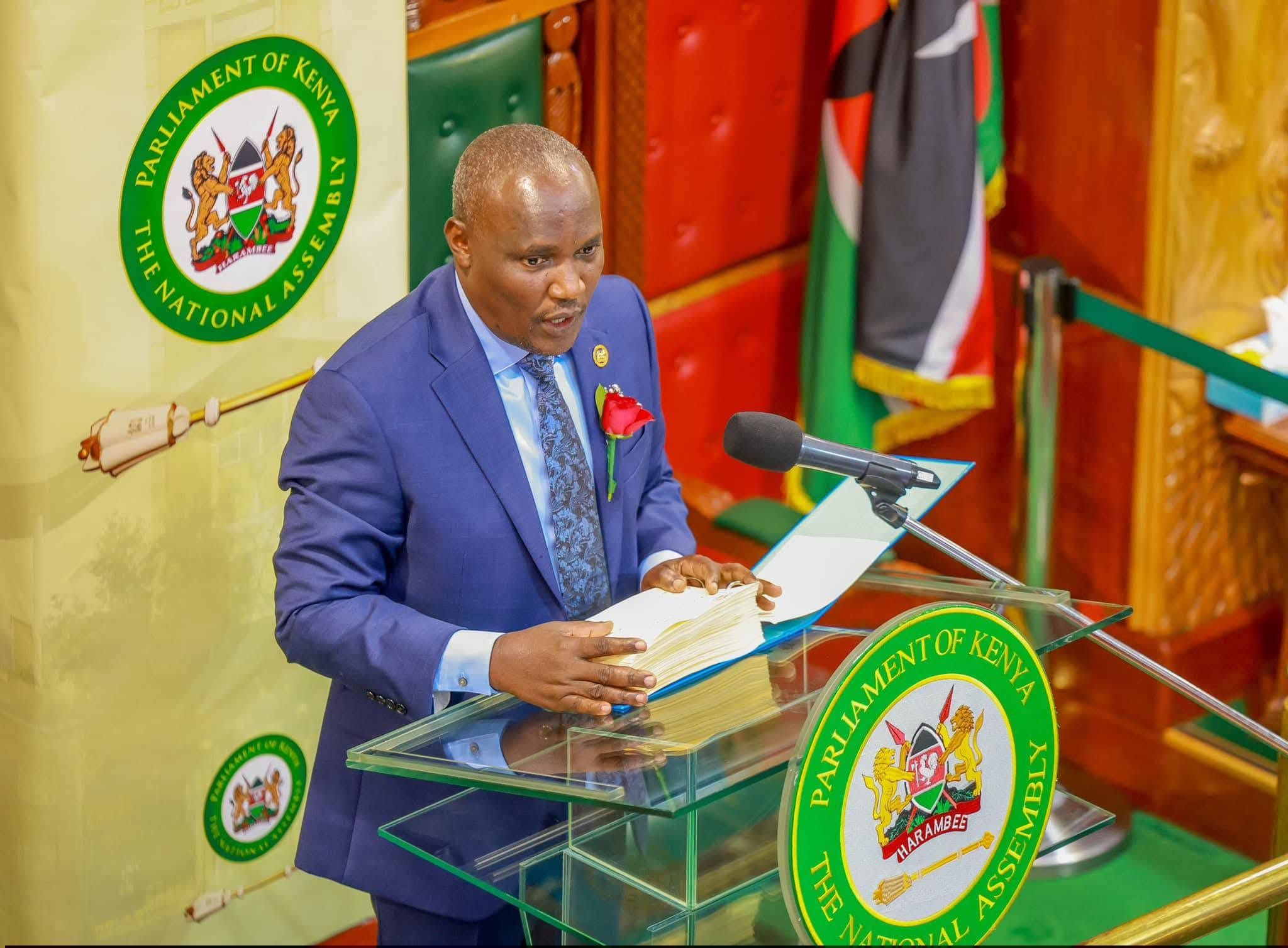
Treasury Cabinet Secretary John Mbadi presented the spending plan in parliament, outlining a budget that will be financed through Sh3.631 trillion in total revenue, grants and borrowing. Of the projected revenues, ordinary revenue is expected to contribute Sh2.986 trillion, while Appropriations-in-Aid will account for Sh644.8 billion. Grants are projected at Sh43.6 billion.
The budget leaves the government with a Sh1.146 trillion deficit, which Treasury plans to finance largely through domestic borrowing. Local borrowing is projected at Sh1.03 trillion, while external borrowing is expected to contribute Sh116.2 billion. The heavy reliance on domestic borrowing is likely to attract scrutiny from businesses and analysts, amid concerns that aggressive government borrowing from the local market could crowd out private sector credit.
“Mr. Speaker, our tasks is therefore clear – to solve the many problems facing Kenyans by sustaining targeted interventions and a better in order to accelerate job creation for our youth, grow investment and trade, and deepen economic resilience,” said CS Mbadi.
In expenditure, recurrent spending will take the lion’s share at Sh3.568 trillion, underlining the continued pressure of salaries, debt service and routine government operations on the national budget. Development expenditure has been set at Sh750 billion, a figure Treasury says will support infrastructure, housing, agriculture, health, education and other growth-enabling sectors.
Mbadi framed the budget as one designed to support economic recovery, protect essential services and restore discipline in public finance. But the numbers also expose the tough choices facing the government at a time when Kenyans are demanding relief from high food prices, transport costs, taxes and the general cost of living.
Counties have been allocated Sh428 billion as equitable share, following prolonged negotiations between the National Assembly and senate. Conditional transfers to counties have been set at Sh74 billion. The allocation will be critical for devolved services, especially healthcare, agriculture, water and local infrastructure, but counties are still expected to face pressure from pending bills, wage costs and rising demand for services.
“Funding to county governments has steadily increased, with equitable share to counties increasing from 370 billion shillings in financial year 2022-23 budget to 428 billion Kenya shillings in the financial year 2026-27 budget,” said CS Mbadi.
“Total county allocations that include shareable revenue and additional allocations from the national government. Allocations as well as donor proceeds as therefore increased from 392 billion to 502 billion over the same period,”
In one of the most significant public finance reforms, the National Treasury announced that it will expand implementation of the Treasury Single Account to counties effective July 1, 2026. The move is expected to overhaul county government requisitions and payments, giving Treasury greater visibility over cash flows and improving control over public funds.
The reform could improve transparency and reduce idle cash balances across government accounts, but it may also trigger concern from governors who have previously resisted measures seen as limiting county financial autonomy.
“Mr. Speaker, this budget, as I said earlier, has been prepared amidst heightened uncertainties associated with ongoing conflict in the Middle East.
The conflict has disrupted critical energy infrastructure, major shipping routes, including the strait of Hormuz, thereby exerting pressure, upward pressure on prices of energy, and food,” the National Treasury CS quipped.
Treasury also moved to calm concerns around the Finance Bill 2026 proposal on income tax filing schedules. Mbadi said the amendment to section 52 of the Income Tax Act has been adjusted. Under the revised proposal, only taxpayers whose income is taxed at source, including PAYE and final tax, will be required to file returns within four months after the end of their year of income. Other taxpayers will retain the June 30 deadline, while nil filers will be expected to file within the first month after the end of their year of income.
The clarification is likely to be welcomed by taxpayers and tax practitioners who had raised concerns over confusion and compliance pressure under the earlier proposal.
In another key shift, Treasury has revised its proposal on the VAT treatment of digital payments. The government now says it will exempt core financial service providers, effectively calming fears that mobile money and other digital financial transactions could attract 16 percent VAT. The clarification appears to settle the debate around M-Pesa and digital payment charges, which had sparked public concern over the possibility of higher transaction costs.
Pending bills also featured prominently in the budget statement. Treasury plans to settle Sh155 billion worth of verified claims over the next two years using a combination of exchequer allocations and securitization. The move is expected to offer relief to suppliers, contractors and small businesses that have been starved of cash due to delayed government payments.
However, the success of the plan will depend on strict verification and timely release of funds. Pending bills have long been a drag on businesses, with many suppliers forced into debt, layoffs or closure after delays in government payments.
“Government borrows to build to enhance the use of the public-private partnership and the recently established. National infrastructure fund.
In funding priority infrastructure, through private sector finances. Infrastructure. Mr. Speaker, the Rironi-Nakuru Mau Summit expressway stands as proof,” added Mbadi.
Treasury also announced further reforms to the Integrated Financial Management Information System, IFMIS. A National Assets and Inventory Valuation Module has been introduced in IFMIS to provide a clearer picture of all assets owned by the State. The reform is aimed at improving accountability, reducing asset leakages and strengthening public sector balance sheet management.
The budget also maintains focus on education, health, affordable housing and infrastructure as key priority areas. Education remains one of the largest spending items, reflecting the government’s continued investment in teachers, higher education financing and basic learning. Health allocations are expected to support primary healthcare, social health financing and critical care programmes.
Still, the political and economic test for Mbadi’s budget will be implementation. Kenyans will be watching whether the government can raise the projected revenues without imposing fresh pain on households, settle pending bills without creating new arrears, and reduce waste while protecting essential services.
Follow our social media pages for breaking news updates, in-depth stories and videos.
news@nairobilens.ke