
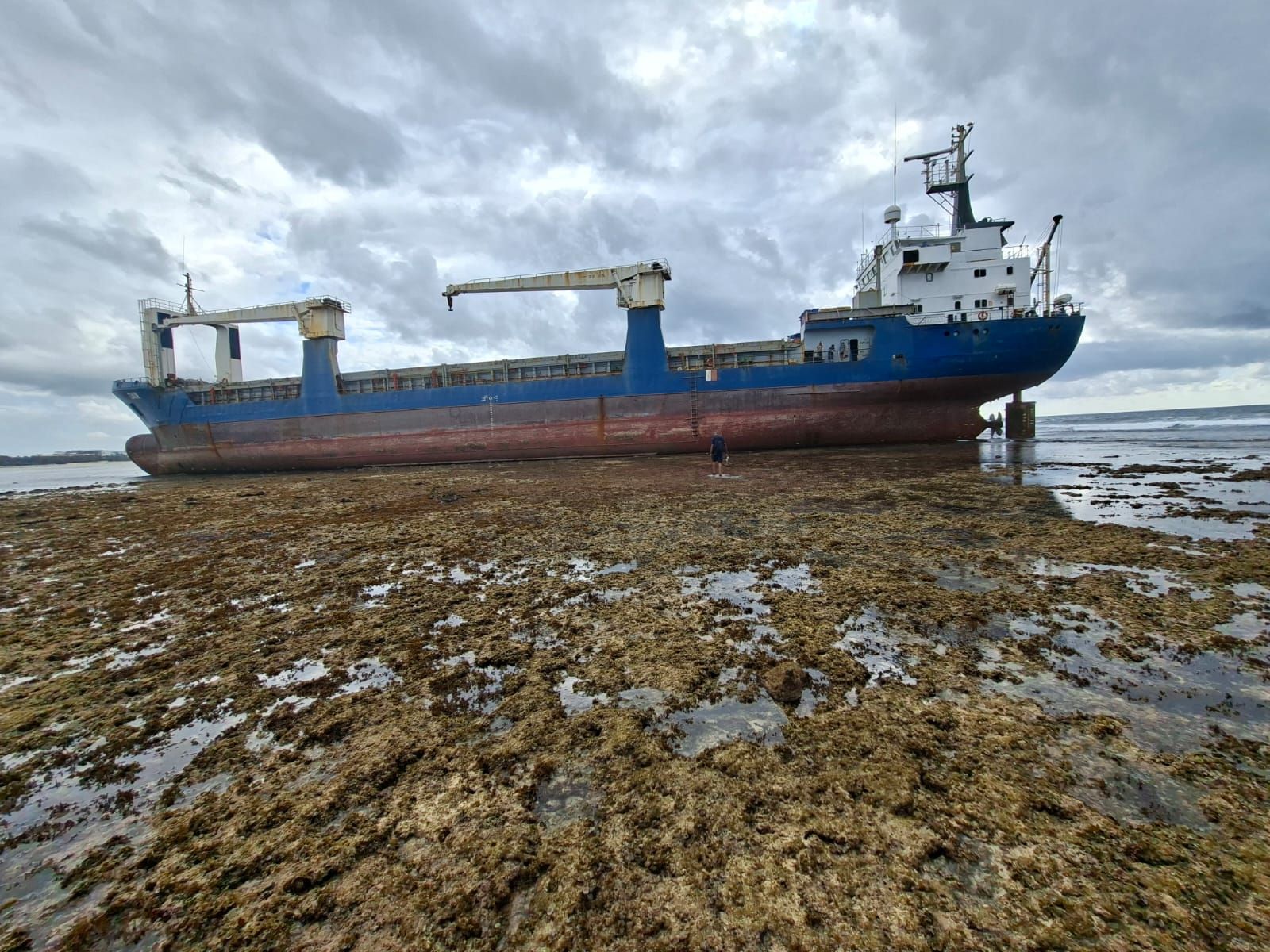
A ship flying an international flag has reportedly drifted and run aground on a coral reef near the Serena Beach area and the entrance to Mtwapa Creek in Mombasa county, raising concerns over possible environmental damage, marine pollution and disruption to coastal livelihoods.
The vessel is resting on a sensitive coral reef ecosystem along the North Coast, an area that supports tourism, fishing and marine biodiversity.
While the full extent of the damage has not yet been established, the incident has triggered concern over the risk of an oil spill should the ship suffer structural damage or a hull breach. The Kenya Maritime Authority, KMA is expected to address the matter promptly.
Environmental experts warn that if the vessel’s fuel tanks are damaged, oil could leak into the surrounding waters, contaminating beaches, fishing grounds and marine habitats. Such a spill could lead to the temporary closure of beaches and swimming areas, affecting hotels, tour operators, water-sport businesses and other tourism activities along the North Coast.
The area around Serena Beach and Mtwapa Creek is important to both the tourism economy and coastal communities. A pollution incident could disrupt hotel operations, force the cancellation of marine recreation activities and reduce income for fishermen, fish traders and small businesses that rely on coastal and marine resources.
The grounding also poses a direct threat to coral reefs, which are highly sensitive and slow to recover from physical damage. The weight and movement of the vessel could crush coral structures, destroy fish habitats and reduce biodiversity.
Damage to the reef may also weaken its natural role in protecting the coastline from wave action and erosion.
There are also concerns that pollution from the vessel could spread to nearby mangroves and seagrass beds. These habitats are critical breeding and nursery grounds for fish, turtles and other marine species.
Contamination of Mtwapa Creek and adjacent coastal waters could have long-term ecological consequences and affect food security for communities that depend on fishing.
Local marine traffic may also be affected. The stranded ship could pose a safety risk to small fishing boats, tourist vessels and water-sport operators using the area. It may also complicate emergency response operations if the vessel shifts position or deteriorates further.
Authorities are expected to urgently assess the condition of the vessel, including whether its hull, fuel tanks or cargo areas have been compromised. Maritime and environmental agencies will also be required to confirm the quantity of fuel and the nature of any cargo on board.
Experts have recommended immediate deployment of pollution prevention and containment equipment as a precaution. They have also called for continuous environmental monitoring around the site, assessment of coral reef damage and coordination between maritime authorities, environmental agencies, the county government and local stakeholders.
The incident highlights the vulnerability of Kenya’s coastal ecosystems to maritime accidents and the need for rapid response systems to protect marine resources, tourism assets and the livelihoods of communities along the coast.
This incident comes hot on the heels of the 11th ‘Our Ocean’ conference that was held in Mombasa last week, the first time it was being held on African soil.
Follow our social media pages for breaking news updates, in-depth stories and videos.
news@nairobilens.ke