
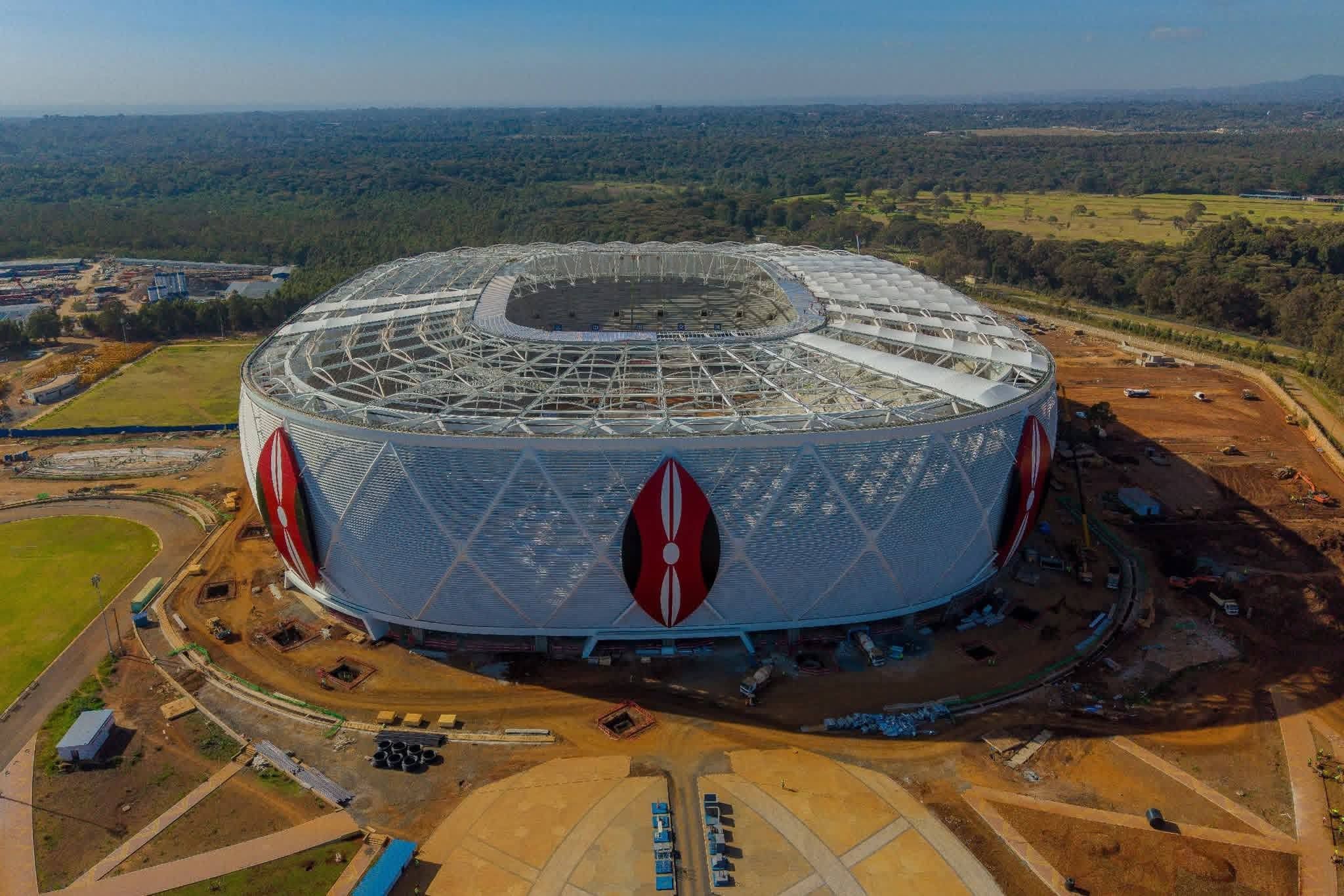
Bulldozers have moved into a section of Ngong Road Forest to clear land for a proposed road linking Talanta Stadium to Bomas of Kenya, reigniting criticism that the government is increasingly sacrificing protected forests and green spaces for infrastructure projects.
Heavy machinery was reported inside the forest earlier this month, with the clearance expected to pave the way for the link road between the two major state projects. Conservation groups have previously raised alarm over plans to take about 10 hectares of the forest for the road.
The development has sharpened scrutiny of the government’s environmental record, particularly as president William Ruto’s administration simultaneously pursues an ambitious programme to plant 15 billion trees by 2032.
Environmentalists argue that newly planted trees cannot compensate for the destruction of mature forests, which provide established habitats, water catchments and carbon storage.
“We cannot plant millions of trees while destroying the forests we already have,” Friends of Karura Forest chairman Prof Karanja Njoroge said recently.
“A mature indigenous forest is not merely a collection of trees, but a living ecosystem that supports biodiversity, protects water catchments, stores carbon, regulates temperatures and sustains livelihoods.”
The Ngong Road Forest controversy comes amid another dispute involving Nairobi National Park, where conservationists have moved to court over plans linked to the expansion of Bomas of Kenya.
Court documents show that the disputed development includes relocation of the Nairobi Animal Orphanage and construction of a parking facility for about 1,300 vehicles, occupying approximately eight acres, together with an access road and pedestrian bridge within the park.
A coalition of thousands of citizens is challenging the project, alleging inadequate public participation and unlawful conversion of protected land.
The government, however, has positioned the projects as strategic investments. Talanta Stadium is being developed as a key venue for the 2027 Africa Cup of Nations, while the Bomas International Convention Centre is intended to strengthen Kenya’s position in the meetings, conferences and exhibitions tourism market.
Similar development-versus-conservation battles have emerged elsewhere.
Plans to expand Kiambu Road previously triggered opposition over the proposed acquisition of about 51 acres of Karura Forest, while the allocation of land in Suam Forest for a housing project also drew protests from environmental groups.
In the Aberdare ecosystem, conservationists challenged plans for the Ihithe-Ndunyu Njeru road, which would cut through sections of closed-canopy forest and water catchment areas.
Supporters argued the road would shorten travel between Nyeri and Nyandarua and boost trade, while environmentalists warned of damage to wildlife habitats and water resources.
The growing disputes have put the government under pressure to demonstrate that major infrastructure projects can proceed without steadily eroding the country’s remaining protected ecosystems.
“We are not against development,” Prof Njoroge said. “We are asking that development be planned responsibly. There is other land available. Forests should not be the first option.”
Follow our social media pages for breaking news updates, in-depth stories and videos.
news@nairobilens.ke