
President William Ruto has announced a nationwide public participation process to develop Kenya’s next long-term development blueprint, saying the country must agree on a common economic and social agenda before Vision 2030 reaches its end.
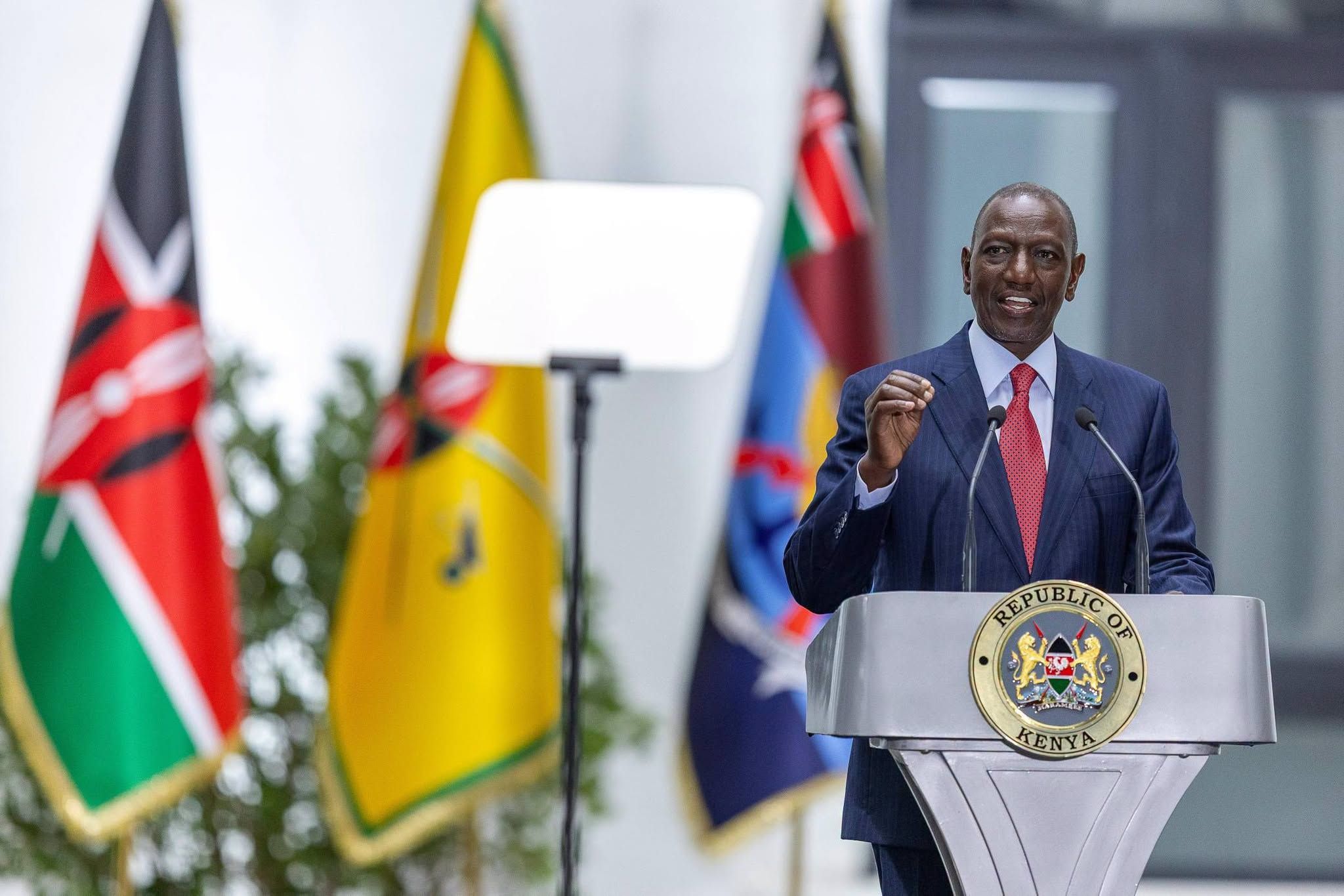
In a special national address from State House on Thursday evening, Ruto said the National Conversation on Kenya’s Future Beyond Vision 2030 will be formally launched on August 12, bringing together national and county institutions, political parties, businesses, workers, universities, faith organisations, professionals, civil society, creatives and young people.
The President described the initiative as the most significant national reflection exercise since the adoption of the 2010 Constitution. He said the process should produce a development charter that survives changes of government and electoral cycles, instead of becoming another policy document owned by the administration of the day.
“The future of Kenya is too important to be left to politicians alone,” Ruto said, arguing that farmers, workers, entrepreneurs, researchers, professionals and young people must have a direct role in determining the country’s development priorities.
The proposed charter is expected to succeed Vision 2030, the long-term blueprint adopted in 2008 with the goal of transforming Kenya into an industrializing, middle-income country offering a high quality of life by 2030.
Ruto credited Vision 2030 with guiding public policy, attracting investment and creating a culture of long-term national planning. However, he acknowledged that Kenya is unlikely to meet one of its central ambitions, becoming an upper-middle-income country by 2030.
“We are off target,” he said, adding that the failure to meet some of the plan’s goals should provide lessons for the next phase rather than be treated as a rejection of Vision 2030.
The President used comparisons with Asian and African economies to illustrate what he described as decades of missed opportunities. He said Kenya and South Korea had similar income levels in the 1960s, but South Korea’s gross domestic product per person now exceeds $36,000, compared with about $2,400 for Kenya.
He also cited China, Vietnam, Ghana and Zimbabwe, saying countries that once had lower or comparable income levels had overtaken Kenya after adopting sustained economic reforms, expanding manufacturing, attracting investment and growing exports.
The figures and economic assessments were presented by the President as part of his case for a new national strategy. His address did not provide detailed targets for the proposed charter or explain how competing public priorities would be reconciled during the consultation process.
Ruto argued that the timing was favourable because his administration had restored macroeconomic stability after years of global and domestic economic pressure. He cited a more stable currency, lower inflation and borrowing costs, foreign exchange reserves of more than $15 billion and improved investor confidence.
He further said Kenya attracted a record $3.2 billion in foreign direct investment last year and was ranked Africa’s most competitive economy in the 2025 IMD World Competitiveness Ranking.
The President said recently established institutions, including the National Infrastructure Fund and Sovereign Wealth Fund, would support long-term investment and protect wealth for future generations.
He identified Africa’s growing population, renewable energy resources, strategic minerals, agricultural potential and expanding markets as a major opportunity for Kenya.
According to Ruto, the continent could become the centre of the next wave of global economic transformation after Kenya failed to fully benefit from earlier periods of rapid industrialisation in Asia.
A central theme of the address was the need to translate the economic and social rights in the Constitution into measurable development outcomes. Ruto cited Article 43, which guarantees rights to healthcare, housing, sanitation, food, water, social security and education.
He said the new charter should define what those guarantees mean in practical terms and establish standards for measuring whether the State is improving citizens’ lives.
The President said the process would be informed by proposals prepared by a team led by Professor Hiroyuki Hino and Kisumu Governor Professor Anyang’ Nyong’o. He received the team’s recommendations last week after asking them to examine Kenya’s options beyond Vision 2030.
Their proposals, he said, suggest Kenya can become a prosperous, high-income, industrialized and globally competitive country within one generation, provided the country maintains unity, disciplined implementation and a long-term national focus.
Ruto did not specify how long the public consultations will run, how they will be financed, who will oversee them or whether the final charter will be anchored in legislation. Those details are expected to become clearer when the process is launched.
Follow our social media pages for breaking news updates, in-depth stories and videos.
news@nairobilens.ke