

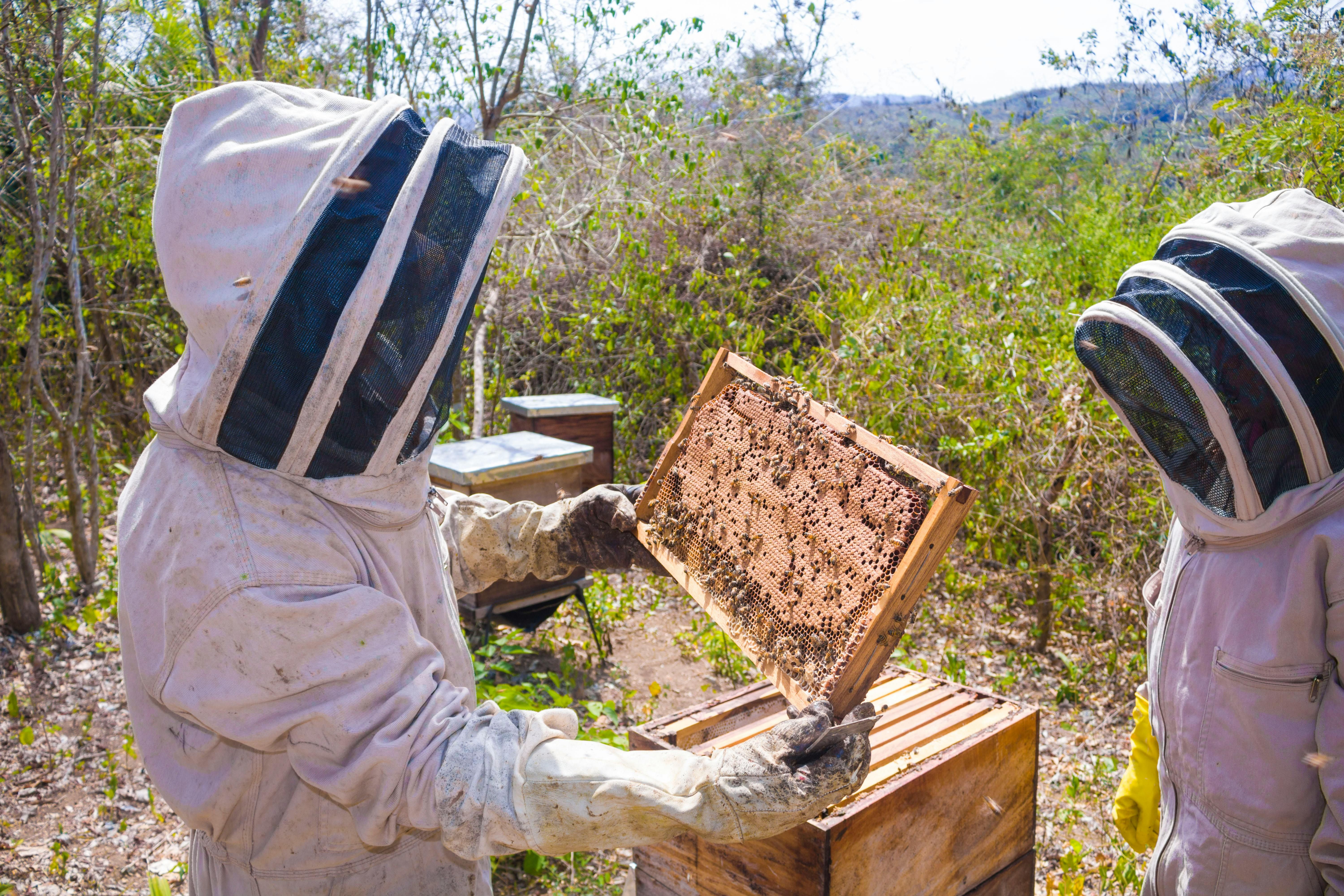
By Surjit Singh Flora
A hive can look busy and still bring in little honey if the land around it offers poor forage. In the dry and hot season, that problem grows faster because heat, dry spells, and heavy crop spraying can weaken a colony from the outside.
For honey beekeeping to do well in Kenya, a beekeeper has to read the whole environment, not only the hive box. Flowering crops, fruit trees, wild herbs, weather, and nearby animals all shape honey yield. In some areas, nectar flow drops, so colonies stay stronger when forage is planned and threats are reduced.
Bees work best when nectar and pollen are close. Long flights burn energy, wear out foragers, and reduce the amount of honey brought back to the hive. Because of that, summer apiaries do better when they sit near mixed forage within a short flying distance.
A smart site has more than one bloom source. Crops may peak for a few weeks, while trees, shrubs, and herbs fill the gaps. That steady pattern matters more in hot weather, when one missed bloom can slow brood rearing and honey storage.
Sunflower is one of the best summer bee crops because each large flower head offers both nectar and pollen. When many plants bloom together, bees can gather food fast and spend less time searching. That makes colonies more efficient during hot months.
In Kenya, sunflower growing is common in counties such as Nakuru, Bungoma, Kakamega, Meru, Homa Bay, and Taita Taveta. Some farmers plant hybrids like Sunbeam, Kenya Fedha, and Kenya Shaba, which often mature in about three to four months. For beekeepers, that timing matters. If hives are placed near fields as flowering starts, bees can ride a strong nectar flow and store more honey.
Sunflowers help, but a single crop never carries the whole season. Fruit trees and hardy plants help colonies hold their strength when fields thin out. Mango, berry, guava, and neem all give bees useful forage during summer. Coriander, sesame, and cotton can also feed bees well when flowers are open and pesticide risk is low.
This mix helps because bloom times don't match exactly. One plant starts as another fades, so the colony keeps finding pollen for brood and nectar for honey.
Hives placed near trees and shrubs also gain some shelter from wind and heat. That small reduction in stress can help bees stay active for longer hours.
Many farms already have free forage on field edges, paths, and rough ground.
Marigold, Kashani, bitter gourd, and acacia bloom in summer and give bees extra pollen when crop flowers are scarce. A beekeeper who protects these plants often gets more bee traffic without extra feed costs.
Herbs matter too. Basil and mint flowers are excellent summer forage, and honey from these plants is often valued for its stronger medicinal character. Planting such herbs around homes, fences, and kitchen gardens keeps bees working close to the apiary. Over time, that simple habit can lift both colony health and honey quality.
Good forage alone isn't enough. The summer also brings more predators, more hiding places for pests, and more farm chemicals. A clean apiary and careful hive placement cut losses before they start.
Hives should sit off the ground, stay clear of weeds, and face an open flight path. Short grass and clean stands leave fewer places for animals and insects to hide.
Small entrance openings also make it easier for guard bees to defend the colony.
Several animals trouble bees in the summer. The honeybee eater catches flying bees and is most active during warm months. Lizards and frogs wait near hive doors and pick off bees that land low. Spiders trap bees in webs, while moths and some large bumblebee species can disturb weak colonies.
Simple prevention helps. Hive doors shouldn't be too large, especially when colonies are small. The area around the hive should stay clean and dry, with no scrap wood, tall weeds, or clutter where pests can hide. If webs appear near the entrance, they should be removed at once. These are small tasks, but they lower stress and daily bee losses.
The dry season often brings more spraying on cotton, vegetables, and other crops. That puts foraging bees at risk, even when the hive itself looks safe. Organophosphate and neonicotinoid pesticides are especially harmful because they can weaken a bee's memory and sense of direction. A forager may leave the hive and fail to find the way back.
The best fix is cooperation. Farmers should spray in the evening, after bees return to the hive. They should also warn nearby beekeepers early enough for hives to be moved if needed. When apiaries stand near cotton or vegetable fields, communication matters as much as location.
A productive summer apiary usually has one thing in common: the land around it works with the bees. Shade, water, and mixed planting make a hard season easier.
Heat slows bees down. If hives sit in direct sun all day, bees spend more time cooling the colony and less time foraging. Neem trees help in two ways. They give light shade, and they also provide forage. Other shade trees can do the same job when they don't block flight paths.
Clean water is just as important. Bees need it to cool the hive and thin stored food for brood. A shallow container with stones or sticks gives them a safe landing place. Nearby flowering plants also stretch the season. Bougainvillea, rose, queen of the night, and lantana keep blooming through summer in many areas, so bees find food even when larger crops stop.
Not every insect near the apiary is a threat. Butterflies and other pollinators help flowers set seed and fruit, which supports future bee forage. Ladybird beetles and lacewing moths also help because they feed on crop pests that damage flowering plants.
When a farm keeps this natural balance, bees gain more than food. Fewer pest outbreaks often mean less spraying, and less spraying means safer foraging. A beekeeper who protects the wider ecosystem usually protects the colony at the same time.
Honey production during the dry season improves when a beekeeper reads the land as carefully as the hive. Good forage nearby, mixed flowering plants, clean water, shade, and lower pest pressure all add up to stronger colonies.
The best summer results usually come from simple choices made early. Place hives near reliable blooms, keep the apiary clean, work with farmers on safe spraying, and protect the natural balance around the bees. When nature is handled with care, honey beekeeping becomes steadier and more rewarding.
Surjit Singh Flora is a veteran journalist and freelance writer based in Brampton, Canada.
Follow our social media pages for breaking news updates, in-depth stories and videos.
news@nairobilens.ke