
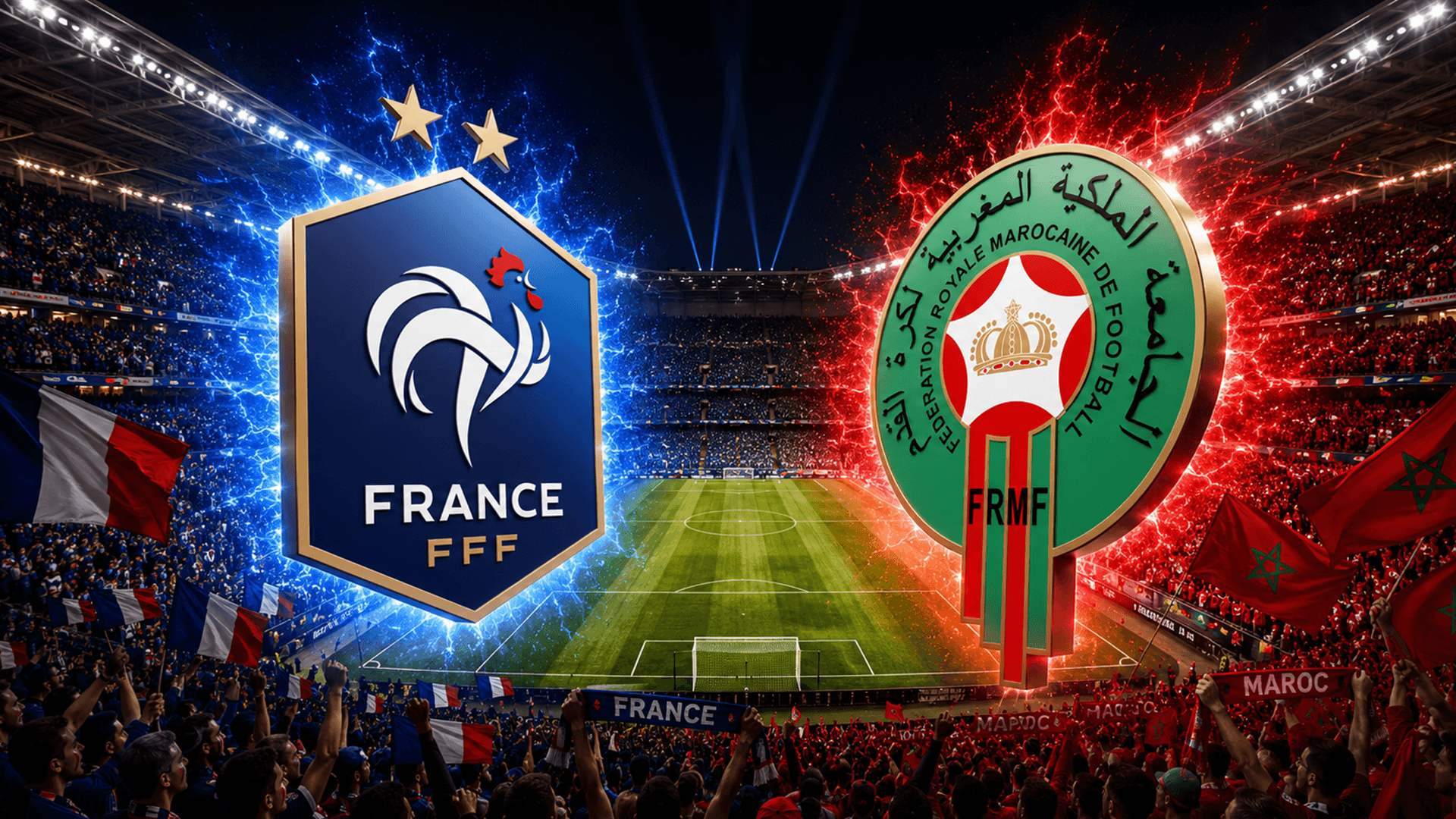
France will begin the 2026 FIFA World Cup quarterfinals as favourites when they face Morocco at Boston Stadium on Thursday, but the Atlas Lions arrive with enough structure, confidence and African momentum to make this one of the most tactically intriguing ties of the last eight.
It is a fixture loaded with recent World Cup history. France ended Morocco’s historic 2022 run with a 2-0 semifinal win in Qatar, denying the Atlas Lions a place in the final after they had become the first African team to reach the last four. Four years later, Morocco have another chance to challenge one of world football’s most powerful tournament teams.
France reached this stage after a narrow 1-0 win over Paraguay, settled by a second-half Kylian Mbappé penalty. It was not their most fluent performance, but it underlined their tournament know-how. When the rhythm was broken and chances were limited, Didier Deschamps’ side still found a way through.
Morocco’s path has carried more emotional weight. Mohamed Ouahbi’s side edged past the Netherlands on penalties in the Round of 32 before producing a commanding 3-0 win over co-hosts Canada in the Round of 16. That result reinforced their reputation as a team capable of defending with discipline and striking with precision.
The attacking battle will naturally centre on Mbappé. France’s captain remains their most decisive player, not only because of his finishing but because of the fear he creates when he isolates defenders on the left.
Morocco’s right side, led by Achraf Hakimi, will be central to containing him. Hakimi knows Mbappé well and has the pace to compete, but the wider question is whether Morocco can stop France from creating the one-v-one situations that Mbappé thrives on.
France also carry threat through Ousmane Dembélé, Michael Olise and Bradley Barcola, giving them several routes to goal. If Morocco overcommit to stopping Mbappé, France have enough quality on the opposite flank and between the lines to punish them.
For Morocco, the attacking focus will be on Real Madrid star Brahim Díaz, Soufiane Rahimi and the availability of Ismael Saibari. If Saibari is not fully fit, Morocco will need Rahimi’s movement and Díaz’s creativity to provide an outlet in transition. They are unlikely to dominate possession for long spells, so their efficiency on the break will be crucial.
Midfield could decide the match. France need control, tempo and protection against counters. Aurélien Tchouaméni’s fitness will be important, but if he is unavailable, Manu Koné may again be required to bring energy and ball-winning power alongside Adrien Rabiot. France’s midfield must prevent Morocco from turning defensive recoveries into quick attacks.
Morocco’s midfield challenge is equally demanding. Sofyan Amrabat, Azzedine Ounahi and Bilal El Khannouss give them a mix of aggression, press resistance and forward passing. Ounahi, in particular, has the ability to carry the ball through pressure and connect Morocco’s defensive block to their attackers. If he escapes France’s press, Morocco can hurt Les Bleus in transition.
Defensively, France will look to William Saliba, Dayot Upamecano, Jules Koundé and goalkeeper Mike Maignan to manage Morocco’s counters and set-piece threat. Their biggest danger will come if the full-backs push high and leave space behind.
Morocco’s defensive battle is more complex. Hakimi and Noussair Mazraoui must balance their attacking instincts with the responsibility of dealing with France’s wide forwards.
Yassine Bounou’s experience in goal will also be vital, especially if the match becomes tight and extends deep into the second half.
France have the stronger squad, greater depth and more proven match-winners. But Morocco have shown across two World Cups that they are not intimidated by elite opposition.
Follow our social media pages for breaking news updates, in-depth stories and videos.
news@nairobilens.ke