
Sixteen years after Kenya adopted one of the continent’s most progressive constitutions, the country is taking stock of its gains and confronting a harder question – Has the promise of the 2010 Constitution translated into the everyday lives of Kenyans?
That question dominated discussions in Nairobi on Thursday as civil society organisations, human rights defenders, governance actors and youth representatives gathered to mark the anniversary of the promulgation of the Constitution under the theme, “The People’s Power, Constitutionalism and Democracy Ahead of 2027.”
The discussions reflected a Constitution that has fundamentally reshaped Kenya’s political and governance landscape through devolution, a stronger Bill of Rights, institutional checks and balances and expanded avenues for citizens to challenge the abuse of public power.
However, 16 years later, participants said major gaps remain between what the Constitution promises on paper and what Kenyans experience in practice.
President William Ruto said the supreme law had strengthened checks and balances, protected fundamental freedoms and given citizens remedies against abuse of power.
At the same time, he acknowledged the continuing tension between the State’s responsibility to maintain order and its duty to protect fundamental rights, particularly amid increased public demonstrations and political dissent.
“Peaceful protests, criticism and dissent are essential to democracy. Yet, protests also presented a profound constitutional question: How do we protect citizens' right to protest while at the same time fulfilling the State's obligation to preserve constitutional order?” Ruto posed.
The right to protest and the shrinking civic space have increasingly become central to Kenya’s constitutional debate, particularly following youth-led demonstrations and growing public scrutiny of government decisions.
For civil society groups, the issue goes beyond whether constitutional rights exist in law. The concern is whether institutions entrusted with protecting those rights consistently uphold them when citizens challenge those in power.
Ruto said constitutionalism must ultimately be judged by whether citizens can feel its impact in their daily lives.
He pointed to healthcare, education, adequate housing, food, clean water and social security as economic and social rights that the State is constitutionally required to progressively realise.
The Judiciary also emerged as a major focus of the anniversary discussions, with questions around its independence, institutional capacity and funding.
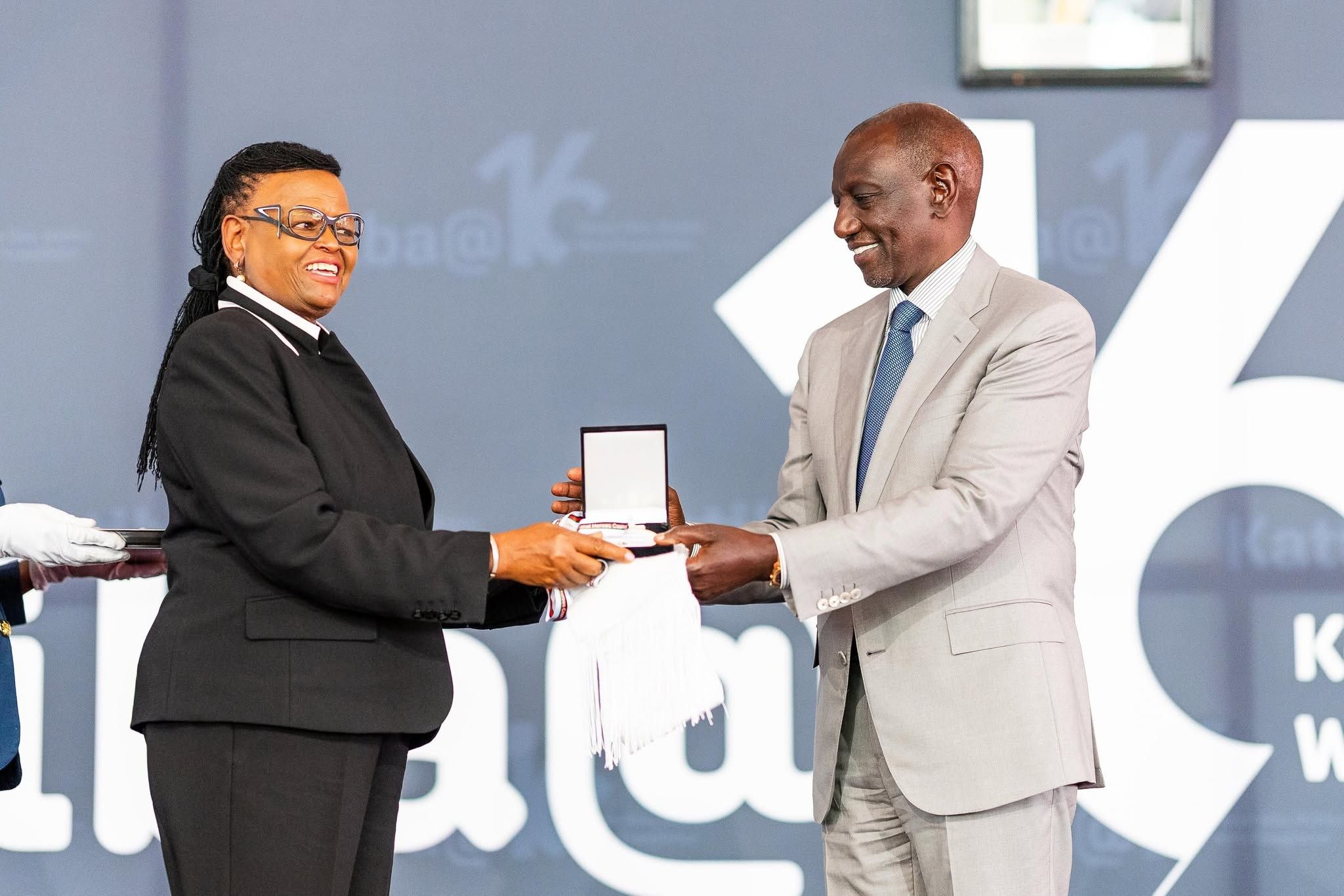
Ruto reaffirmed the importance of judicial independence, while Chief Justice Martha Koome drew attention to the financial and infrastructure constraints facing the Judiciary.
“In the Judiciary, you can see the Supreme Court. It looks very dilapidated. Your Excellency, you renovated State House recently. Look at the Supreme Court,” Koome said.
Her remarks underscored a broader debate over whether institutions established or strengthened by the Constitution have been given sufficient resources and space to discharge their mandates independently.
At the civil society forum, participants were also assessing Kenya’s record on human rights, accountability, public participation, institutional independence and the constitutional principle that all sovereign power belongs to the people.
Among the organisations represented were the Centre for the Financial and Fiscal Accountability, Kituo Cha Sheria, Katiba Institute, Uraia Trust, Kenya Human Rights Commission, KAYPAT, Article 19 Eastern Africa, The Institute for Social Accountability, Transparency International Kenya, Act! and the Independent Medico-Legal Unit.
Another unresolved issue is the two-thirds gender principle.
Sixteen years after promulgation, Parliament has yet to enact a framework fully giving effect to the constitutional requirement that not more than two-thirds of members of elective or appointive bodies should be of the same gender.
Parliament was blamed for failing to resolve the long-running constitutional question, and it was cited as one of the clearest examples of provisions that remain unimplemented years after the Constitution came into force.
The debate is now increasingly turning towards the 2027 General Election.
But civil society actors are cautioning against reducing constitutionalism to elections and changes in political leadership.
Follow our social media pages for breaking news updates, in-depth stories and videos.
news@nairobilens.ke