
President William Ruto has hit out at people he accused of trying to frustrate the Sh2 trillion Dangote East Africa Refinery, as construction of what is expected to become Kenya’s largest private investment formally kicked off in Lamu.
Speaking during the groundbreaking ceremony in Mokowe, Lamu County, on Wednesday, September 30, Ruto defended the decision to locate the massive refinery in Lamu and warned against attempts to frustrate or extort investors behind the project.
The President said the scale of the investment should not be dismissed simply because it is being developed outside Kenya’s traditional commercial centres, arguing that Lamu had the potential to emerge as a major industrial hub.
At the same time, he sought to reassure residents who have raised concerns over land, jobs, fishing livelihoods and the environment, telling them they were entitled to demand answers.
“Lamu people, you are entitled to ask what this means for you,” Ruto said in his prepared remarks.
“Who will get the jobs? Will local businesses win contracts? What will happen to our land? Will our fishermen keep their livelihoods? How will our water, our coastline, our mangroves, and our heritage be protected?”
“These questions are not obstacles to development. They are questions responsible development must answer,” he added.
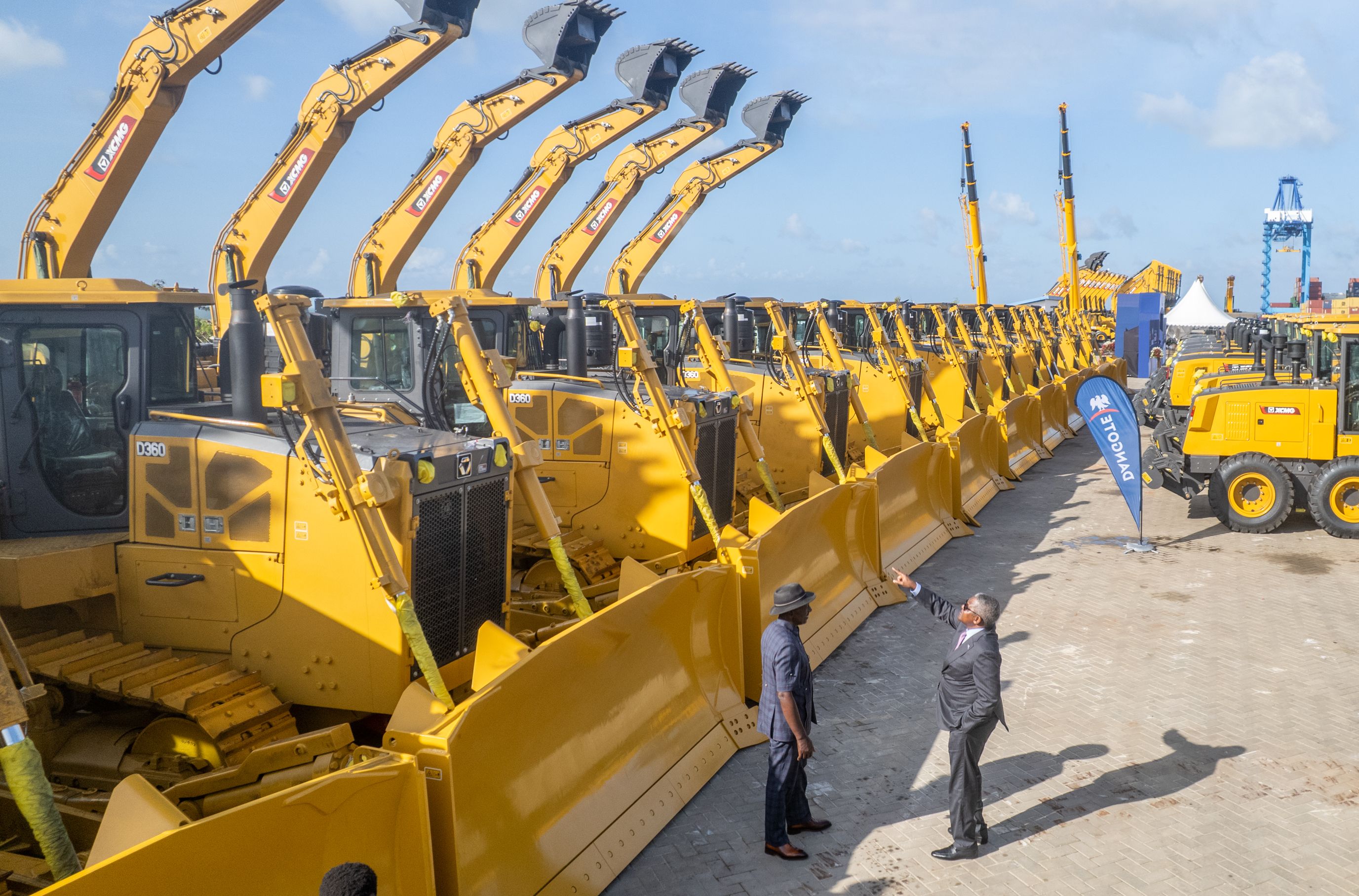
The comments came as Ruto and Nigerian billionaire Aliko Dangote broke ground on the $16 billion — about Sh2 trillion — refinery, which is designed to process up to 700,000 barrels of crude oil per day.
According to the President’s speech, the petrochemical complex will also include power generation capacity of up to 1,000 megawatts and is intended to serve Kenya and the wider East African market.
Reuters reported that the facility is scheduled for completion in 2030 and that regional governments have been offered a combined 30 per cent stake. The refinery is also expected to eventually list its shares on the Nairobi Securities Exchange.
Ruto described the project as more than an oil processing plant, framing it as part of a broader push to cut Africa’s dependence on imported finished products.
“This is bigger than a refinery. It is an investment in energy security, industrialization, and regional integration,” he said.
The President said Kenya spent Sh530 billion importing petroleum products last year, although he acknowledged that building a refinery would not immediately eliminate that bill because crude oil would still have to be purchased and processed competitively.
“A corridor without commerce is just a road. A port without industry is just a harbour,” he said.
“The refinery will be the anchor. Around it, we will work with transporters and engineers, contractors, and service providers. Petrochemicals and manufacturing will follow because the economics make sense.”
But the groundbreaking comes against the backdrop of a land dispute and environmental concerns.
A Kenyan court has ordered the status quo to be maintained on parts of the project site as residents pursue a case involving land rights. Environmental campaigners have also raised concerns over the potential impact of the project on Lamu’s fragile coastal ecosystem and its proximity to Lamu Old Town, a UNESCO World Heritage Site.
Ruto said land matters would be handled lawfully and fairly and promised rigorous environmental and social assessments.
“Your interests will be taken care of. Your rights will be protected. Your voice will be heard, from today until the day this refinery runs, and beyond,” he said.
Dangote also sought to reassure residents, saying the refinery should be developed with the community rather than simply within it.
“We have not come merely to build in your community. We want to build with your community,” he said.
The businessman announced plans to establish a training school in Lamu to prepare 1,000 people for technical and engineering opportunities linked to the refinery.
“We are coming here to set up a training school that will train 1,000 of your people,” Dangote said.
He went further, promising opportunities for Kenyans with relevant engineering qualifications.
“Anyone who has an engineering degree, diploma or other relevant qualification, tell them they have a job. Their jobs are guaranteed.”
The refinery is expected to generate tens of thousands of direct and indirect jobs during construction.
Ruto’s prepared remarks put the estimate at up to 60,000 jobs, with the government also expecting local enterprises to benefit from demand for transport, accommodation, food, construction materials, maintenance, logistics and professional services.
Dangote similarly promised to bring local businesses into the supply chain.
“We want local businesses to become suppliers. We want entrepreneurs to emerge around this project,” he said.
The refinery is expected to serve markets across East and Central Africa, including Kenya, Uganda, Ethiopia, Rwanda, Tanzania, South Sudan, the Democratic Republic of Congo, Zambia and Mozambique. Dangote said its broader goal was to reduce the region’s reliance on imported refined petroleum products.
Ruto said the project should ultimately be judged not only by the amount of fuel it processes or the capital invested, but by whether communities benefit.
“This refinery’s scale will be measured in barrels and dollars. Its success must be measured in skills gained, enterprises built, livelihoods protected and public trust earned,” he said.
Dangote struck a similar note, saying industrialisation should translate into tangible gains for ordinary people.
“For me, the true measure of this project will not be the height of its towers or the number of barrels it processes. It will be the difference it makes in people’s lives,” he said.
Despite the court challenge, Dangote has maintained that the project will proceed.
Follow our social media pages for breaking news updates, in-depth stories and videos.
news@nairobilens.ke