
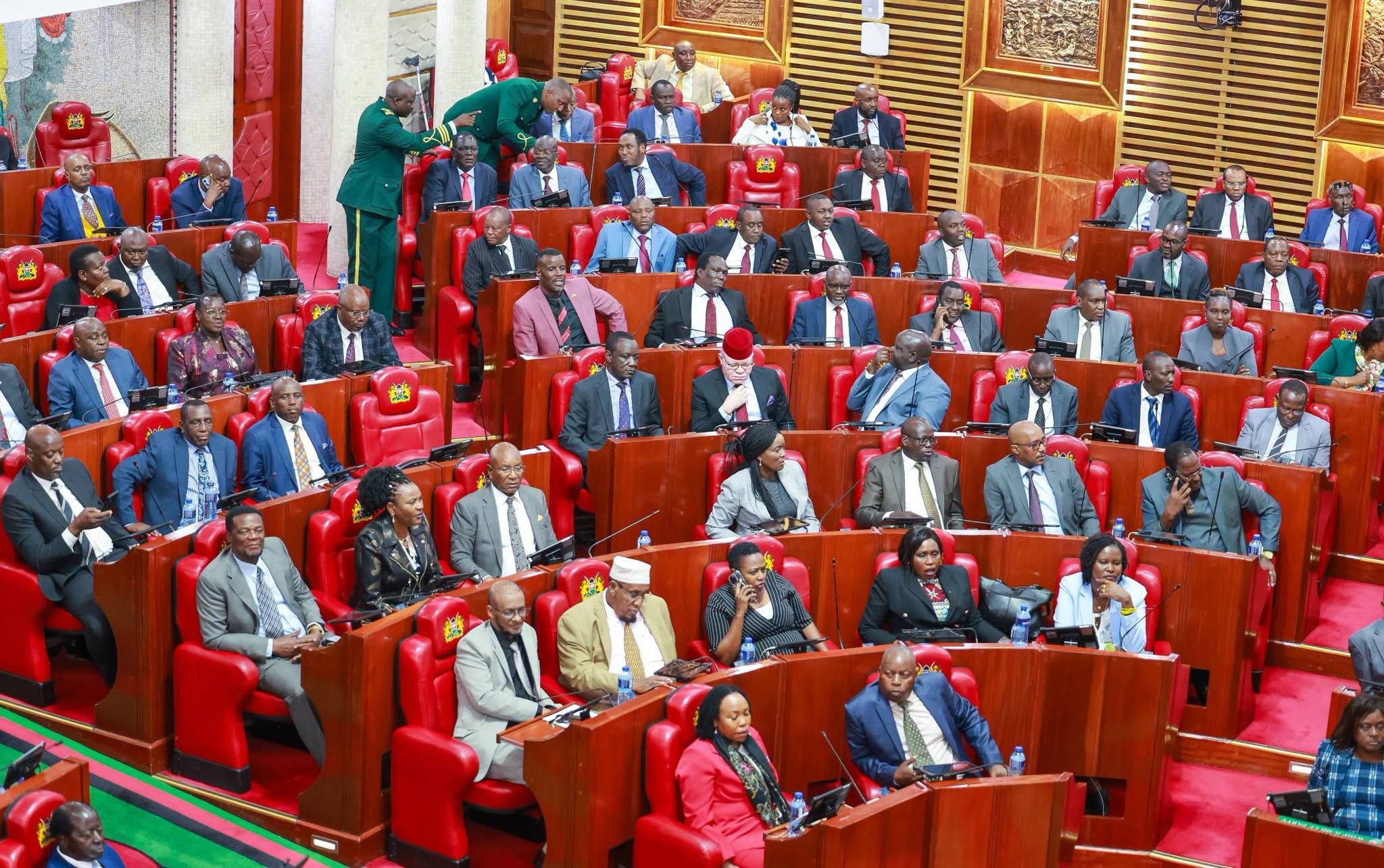
Kenyan MPs are facing accusations of betraying the public's trust after passing a controversial election amendment Bill that has sparked a legal challenge and threats of nationwide protests over fears that it could undermine transparency in the 2027 General Election.
A fresh legal battle has erupted over proposed changes to Kenya’s election laws after the High Court certified as urgent a petition challenging the Elections (Amendment) (No. 2) Bill, 2024, amid growing concerns over the livestreaming of presidential election results ahead of the 2027 General Election.
The petition, filed by advocate John Njomo, questions the proposed removal of the legal requirement compelling the Independent Electoral and Boundaries Commission (IEBC) to livestream election results from polling stations.
The development comes barely a day after the National Assembly passed the Bill on Thursday, October 22, triggering criticism from civil society organisations and political leaders over its potential implications for electoral transparency.
Human rights organisation VOCAL Africa has rejected the proposed changes, warning that weakening public access to election results could undermine confidence in the electoral process.
The organization’s Chief Executive Officer, Hussein Khalid, has urged President William Ruto not to assent to the legislation, citing concerns over transparency and accountability.
Khalid drew parallels with the disputed 2007 presidential election, when controversies surrounding the tallying and announcement of results contributed to widespread post-election violence.
He warned against changes that could erode public trust in the electoral system, particularly as Kenya prepares for another highly contested General Election.
The human rights defender further warned that VOCAL Africa could mobilize nationwide demonstrations should the controversial provisions be retained.
However, the National Assembly has moved to counter claims that lawmakers abolished mandatory livestreaming of election results.
In an explainer issued on Friday, October 23, Parliament dismissed reports suggesting the requirement had been removed as "false and misleading."
"Contrary to the false reports, the amendment passed by the National Assembly retain the requirement on the IEBC to establish a mechanism for the livestreaming of election results," the statement reads.
Parliament explained that Clause 22 of the Bill initially submitted by the Senate proposed deleting and replacing Section 39 of the Elections Act, which governs the determination, declaration and transmission of election results.
However, the National Assembly maintains that it deleted the controversial clause following guidance from the High Court, thereby preserving the existing legal framework.
The statement cited a September 22, 2026, High Court judgment in Okoiti & another v Independent Electoral and Boundaries Commission & 5 others, which addressed the constitutionality of provisions governing election results.
According to Parliament, the court upheld Section 39 of the Elections Act and Regulation 83(2) of the Elections (General) Regulations.
The Assembly said its decision to delete Clause 22 ensured the retention of the existing livestreaming requirement under Section 39(1G).
The clarification contrasts with earlier interpretations of the published Bill, which proposed removing the express obligation on the IEBC to livestream polling station results.
The competing accounts have raised questions over the exact wording of the amendments approved by lawmakers.
Beyond livestreaming, the Bill proposes changes to voter registration, political party nominations, the recall of Members of Parliament and the resolution of electoral disputes.
Among its provisions is a requirement to make the voter register available for public inspection, except during designated periods before an election or referendum.
The proposed legislation also seeks to restrict the suspension of voter registration during by-elections to affected electoral areas.
Parliament has confirmed that the amended legislation will be returned to the Senate for consideration under Article 110(4) of the Constitution.
With the 2027 General Election approaching, the controversy places renewed scrutiny on Parliament and the IEBC over safeguards intended to ensure credible, transparent and verifiable election results.
Follow our social media pages for breaking news updates, in-depth stories and videos.
news@nairobilens.ke