
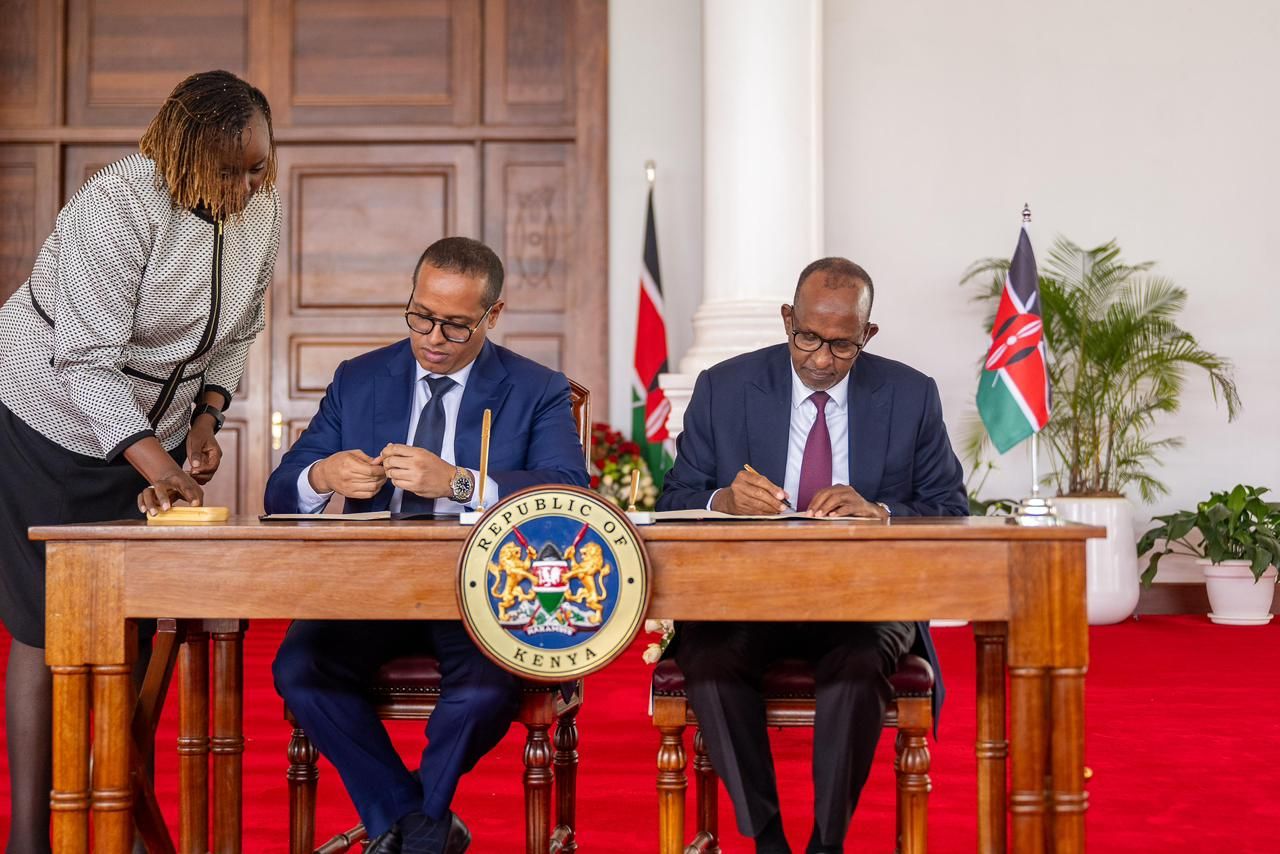
President William Ruto has announced a Sh4.5 billion deal to build 10 specialized mother and baby hospitals across nine counties, in a major push to reduce maternal and newborn deaths in underserved parts of the country.
The project, signed between the government and AMSONS Group, will see new facilities established in Nairobi, Kwale, Kisumu, Uasin Gishu, West Pokot, Mombasa, Garissa, Embu and Nakuru counties.
Nairobi will host two of the hospitals, while each of the other eight counties will get one facility. The counties were selected based on the level of need and existing gaps in access to specialized maternal and newborn healthcare.
Speaking at State House, Nairobi, on Wednesday after witnessing the signing of the agreement, President Ruto said the investment was part of the government’s wider plan to strengthen healthcare delivery and protect mothers and children from preventable deaths.
“We have partnered with AMSONS Group to strengthen maternal and newborn healthcare to safeguard the lives of mothers and children,” Ruto said.
The proposed hospitals will have antenatal units, maternal intensive care units, labour wards, delivery and recovery rooms, and two operating theatres each. AMSONS Group will provide 250 beds for the facilities, while the government will equip them with the remaining medical equipment.
The President said the project is intended to decentralize specialized maternal care and reduce the long distances many expectant mothers travel to access emergency obstetric services.
In several parts of the country, he said, mothers and newborns continue to face life-threatening risks because of limited infrastructure, shortage of health workers, weak referral systems and gaps in service delivery.
“Today, we are taking decisive action to change this reality,” Ruto said.
He described the agreement as a major intervention in closing long-standing gaps in maternal and newborn health, adding that the project goes beyond construction of hospitals.
According to the President, the initiative is part of a broader effort to build a health system that is equitable, integrated and responsive to the needs of Kenyans, especially those in remote and underserved regions.
Ruto also announced that the government is exploring further partnerships to deliver an additional 14 hospitals as part of efforts to expand access to healthcare across the country.
He said reducing maternal and child deaths remains a top national priority, insisting that no mother or child should lose their life during childbirth because of lack of proper medical care.
“Many mothers and children still die in hospitals. This is unacceptable,” he said.
The President praised AMSONS Group for choosing to invest in Kenya, saying its focus on mothers and children aligns with the government’s health transformation agenda.
“We will continue expanding availability of such services until they are accessible to all those who need them,” he said.
Ruto said the government will continue mobilizing resources for the Primary Healthcare Fund and the Emergency and Critical Healthcare Fund to ensure that essential services are affordable and accessible to all Kenyans.
He added that quality healthcare is a constitutional right and called for joint action between the national government, counties, private sector and communities to ensure the new facilities deliver tangible results.
“It is a shared responsibility to build, equip, staff and sustain these facilities, and to ensure they deliver real outcomes for mothers and children,” he said.
The programme is anchored in the government’s Universal Health Coverage agenda, which places emphasis on primary healthcare and early intervention at the community level.
The president said the more than 100,000 Community Health Promoters recruited by county governments and supported by both national and county governments will play a central role in early detection, referral and continuity of care.
He said the government is building a system that begins at the household level and connects seamlessly to higher levels of care.
Under the plan, Level 4 hospitals will be strengthened to provide secondary care at the county level, while a model Level 5 hospital will offer specialized services closer to the people.
Ruto said targeted investments in healthcare are necessary to ensure that no community is left behind in accessing quality, affordable and reliable services.
Follow our social media pages for breaking news updates, in-depth stories and videos.
news@nairobilens.ke