
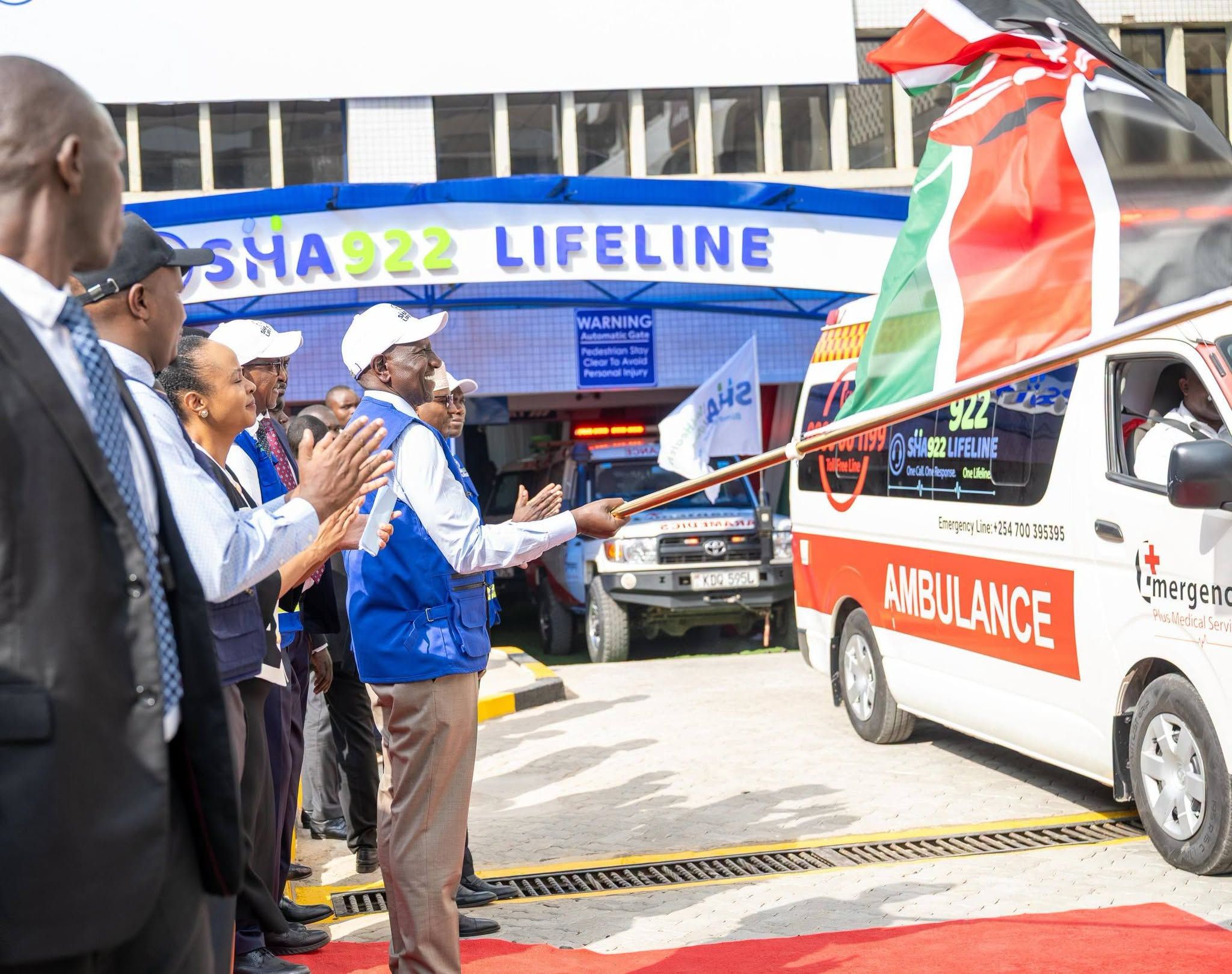
President William Ruto has launched a national emergency medical hotline that will allow Kenyans to access ambulance services and urgent treatment through a single toll-free number.
The SHA 922 Lifeline and National Ambulance Dispatch Centre, launched in Nairobi on Wednesday, will receive free emergency calls across all mobile networks and coordinate the deployment of ambulances to patients countrywide.
Under the programme, ambulance evacuation and the first 24 hours of emergency treatment will be covered, regardless of whether a patient is registered with the Social Health Authority or can immediately confirm their insurance status.
Ruto said the initiative was intended to ensure that no Kenyan is denied life-saving treatment because they cannot afford to pay.
“We are turning a constitutional guarantee into a service that every Kenyan can reach through the launch of the SHA 922 Lifeline and the National Ambulance Dispatch Centre,” he said.
Article 43(2) of the Constitution states that no person should be denied emergency medical treatment.
The President said trained emergency dispatchers will answer calls, establish the caller’s location, assess the emergency and identify the nearest available ambulance.
“The dispatcher will remain on the line, provide immediate guidance and identify the nearest available ambulance,” he said.
Ruto directed all health facilities contracted by SHA not to deny, delay, refer or transfer patients requiring emergency care because they cannot pay, their cover has not been confirmed or their documentation is incomplete.
“In an emergency, the first question must never be whether a patient can pay. The first duty is to save life,” he said.
“This is not just government policy. It is a constitutional requirement.”
The cost of evacuation and the first 24 hours of treatment will be met through the Emergency, Chronic and Critical Illness Fund, based on approved tariffs.
According to the President, SHA has already contracted 1,243 ambulance and emergency service providers across the country.
He said the national dispatch centre would not take control of ambulances belonging to counties or private providers, but would coordinate their deployment and pay for eligible journeys.
“Coordination is not centralization; it is the difference between 47 separate systems and one Republic working together to save lives,” Ruto said.
The President said the emergency service was part of wider health reforms introduced since 2023 under the government’s universal health coverage programme.
He said 32.2 million Kenyans had registered with SHA, while eight million had received treatment under the scheme.
He added that Sh178.5 billion had been paid to hospitals, health centres and dispensaries.
The government has also trained and deployed 107,000 Community Health Promoters to provide preventive and primary healthcare services at household level.
Ruto said the Primary Healthcare Fund had paid Sh23.3 billion to more than 300 contracted facilities, while the Emergency, Chronic and Critical Illness Fund had received Sh8 billion.
He added that more than 50,000 Kenyans had accessed cancer treatment, while nearly 21,000 patients were receiving dialysis through the national health system.
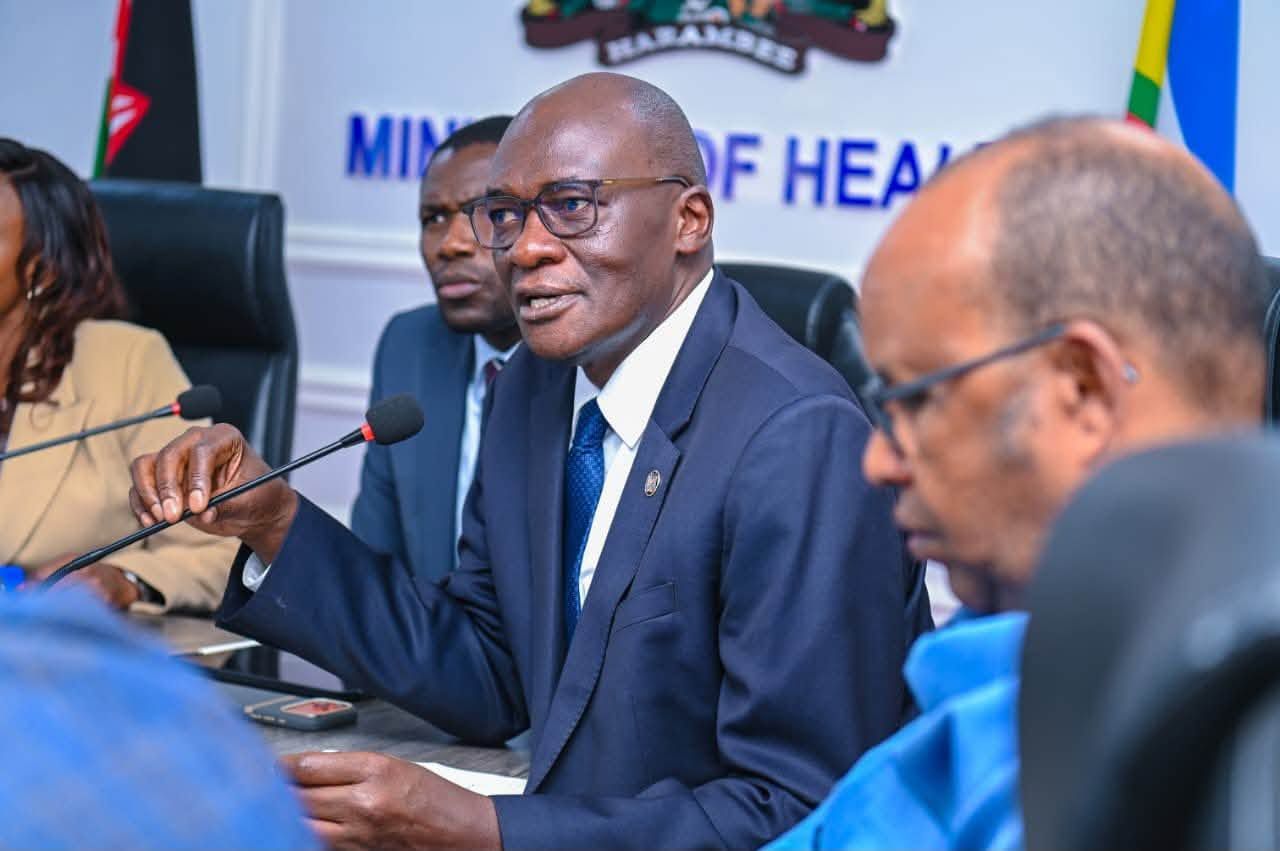
Health Cabinet Secretary Aden Duale said the emergency service would save the lives of patients who had previously been turned away because they lacked money.
Wajir Governor Ahmed Abdullahi said county governments had collectively invested in 586 ambulances to strengthen emergency medical response.
Nairobi Governor Johnson Sakaja said the county’s emergency centre currently operates 18 ambulances, with another 20 expected to be added within two weeks.
SHA Chief Executive Officer Mercy Mwangangi said the 922 call centre would help ensure that Kenyans facing emergencies receive timely medical assistance, regardless of where they live or their financial circumstances.
Follow our social media pages for breaking news updates, in-depth stories and videos.
news@nairobilens.ke