
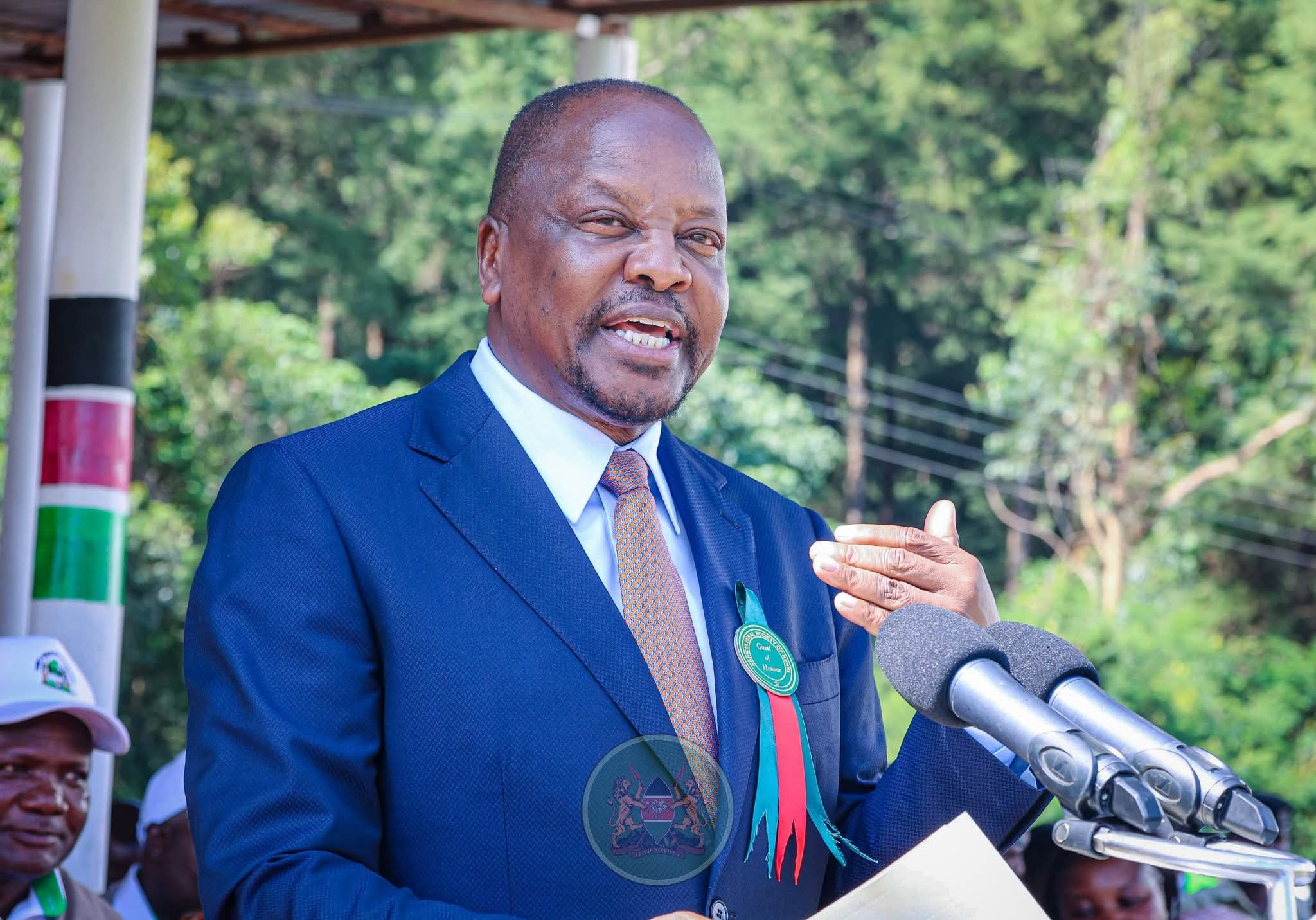
Agriculture and Livestock Development Cabinet Secretary Mutahi Kagwe has strongly defended the new tea levy, telling MPs that Kenya must not retreat from reforms aimed at protecting the identity, value and competitiveness of Kenyan tea in the global market.
Appearing before the National Assembly's departmental committee on Agriculture and Livestock during scrutiny of the ministry’s 2026/27 budget estimates, Kagwe said the tea levy regulations 2026 were designed to raise sustainable funding for marketing, branding and modernization of the tea sector.
The regulations introduced a 0.8 per cent levy on tea exports and a 100 per cent levy on tea imports, triggering concern from some international buyers and stakeholders in the tea value chain.
However, Kagwe told the committee, chaired by Dr John Mutunga, that the resistance from foreign buyers was an indication that Kenya was finally taking steps to protect its strategic interests in one of its most important export sectors.
“Parliament passed this levy for a reason. Kenyan tea is globally known, but in many markets, there are no geographical indicators to show it is Kenyan tea. Some countries are selling Kenyan tea as their own. That is exactly why they are opposing this levy,” Kagwe said.
The Cabinet Secretary said the levy was not meant to punish farmers, but to ensure the industry has resources to promote Kenyan tea as a premium product in international markets. He argued that Kenya has for years produced high-quality tea, only for it to be blended, rebranded and sold by other countries at higher value.
Vice Chairperson Brighton Leonard Yegon raised concerns over complaints from Pakistan-based buyers, but Kagwe dismissed calls to scrap the levy, warning that reversing the policy would weaken Kenya’s position in the global tea trade.
“Going back would be a huge mistake. All countries that trade seriously in tea charge levies to develop their markets. Tea is a business, not a biblical Samaritan activity. It must be supported by funds,” Kagwe told MPs.
He said Kenya’s levy remains lower than what is charged by some competing tea-exporting countries, adding that the government would continue engaging stakeholders to address implementation concerns, including inefficiencies in payment systems.
Kagwe said the government’s broader reform agenda seeks to increase direct tea sales, strengthen geographical indicators and ensure Kenyan tea is recognised and traded as a premium Kenyan product.
Beyond the tea levy, the committee examined the ministry’s Sh79.06 billion budget estimates for the 2026/27 financial year, representing about 2.7 per cent of the national budget.
Kagwe said the ministry’s priorities under the Bottom-Up Economic Transformation Agenda include fertilizer subsidies, irrigation expansion, commercialisation of agriculture, climate-smart farming and livestock transformation.
The ministry told MPs that agriculture remains a key pillar of Kenya’s economy, contributing 22.5 per cent to GDP and employing more than 40 per cent of the country’s labour force.
Kagwe said the government is pursuing a value-chain approach focused on food security, import substitution and export growth. Priority export crops include tea, coffee, avocado, mangoes, vegetables, pyrethrum and nuts.
MPs also raised concerns over governance challenges in tea, coffee and sugar cooperatives and factories. Kagwe warned that repeated debt write-offs without accountability were no longer sustainable.
“Farmers must elect good leaders. In many cases, huge loans are borrowed and later nobody can explain how the money was used. Before any borrowing, there must be proof beyond reasonable doubt on how the money will be repaid,” he said.
The Cabinet Secretary also defended controlled rice importation, saying imports remain necessary to protect consumers from shortages while the government works to increase local production.
MP Yussuf Mohamed Farah backed the ministry’s position, saying import decisions must remain under government control to balance the interests of producers and consumers.
The ministry also proposed a budget realignment to move livestock-related resources currently held under the State Department for Agriculture to the State Department for Livestock Development, arguing that livestock functions should be fully managed under one institution.
Kagwe further appealed for support to recruit 1,450 Ward Agricultural Liaison Officers to strengthen coordination between farmers, counties and the national government through the Joint Agricultural Sector Steering Committee.
The committee session placed tea reforms at the centre of the agriculture budget debate, with the government signalling that it will push ahead with policies aimed at branding, value addition and greater accountability across the sector.
Follow our social media pages for breaking news updates, in-depth stories and videos.
news@nairobilens.ke