
By Amwiine Faisal
South Sudan plans to hold its first general election since independence on December 22, 2026. The African Union and IGAD have endorsed the date, Kenya has reaffirmed support, and Juba calls it a train that cannot reverse. But across the Horn and East Africa, the decision looks less like a milestone and more like a regional gamble — one that could export displacement, food insecurity, and armed violence into Uganda, Kenya, Ethiopia, Sudan and the wider IGAD region.
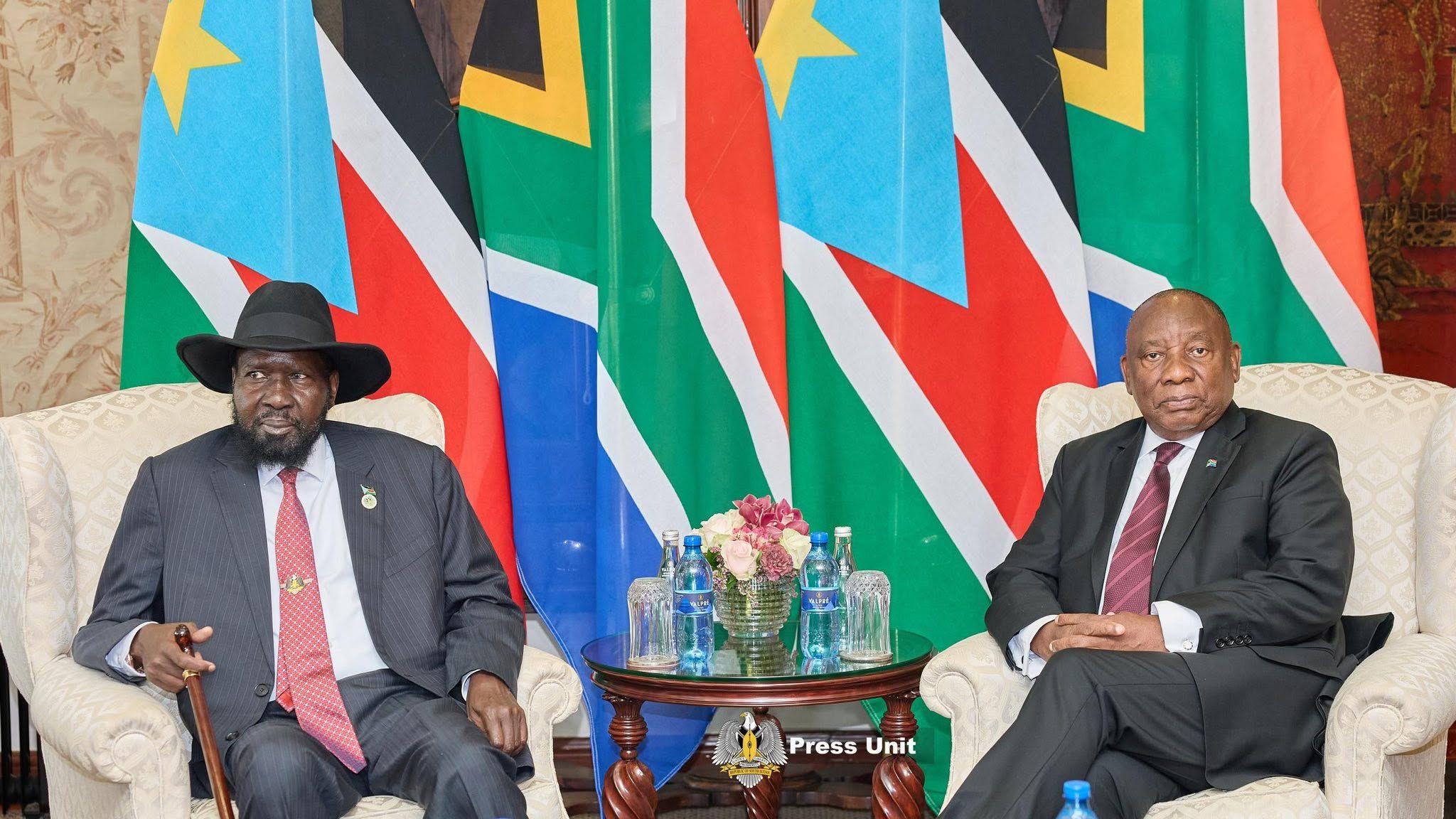
At its Council of Ministers and at the AU High-Level Ad Hoc Committee, chaired by South Africa President Cyril Ramaphosa on September 29, IGAD gave 'full support to South Sudan's planned general election in December and pledged to help mobilize funds and international partners' support,' and congratulated Uganda, Ethiopia and Djibouti for successful polls while expecting South Sudan in December 2026 and Kenya in 2027.
Ambassador Djama Ali emphasized the importance of regional and international support for peaceful, free, fair and credible elections.
The problem is what that endorsement is built on. With less than three months to go, there is no voter registration database, no census, the election law mistakenly provides for 105% of national assembly seats, and constituencies from Sudan's 2010 elections are being reused. Voter education has not started, funding is delayed, and unified security forces have not been fully deployed.
Analysts from Control Risks warn that incomplete registration and unfinished security reforms could undermine legitimacy.
On September 10, the UN Commission on Human Rights in South Sudan warned conditions remain 'unfavorable' — political and civic space has narrowed, safeguards for credible polls are missing, and implementation of the 2018 Revitalized Peace Agreement has stalled, with 407 ceasefire violations recorded between August 2025 and January 2026.
As one Juba civil society leader told The New Humanitarian: 'They won't be allowed to take place in opposition areas, and probably not even outside urban centres.'
South Sudan's civil war cost an estimated 400,000 lives. Last year fighting between SSPDF and SPLA-IO, plus communal violence and militia attacks, collapsed the fragile peace in Upper Nile and Jonglei.
There were 2.5 million internally displaced in 2026, including 964,000 in camps, 2.3 million South Sudanese living as refugees in DRC, Ethiopia, Kenya, Uganda and Sudan (UNHCR 2026). Additionally, 894,800 South Sudanese have fled to neighboring countries since 2013, per UNHCR, with 185,000 fleeing since fresh fighting in Juba on July 8 alone.
Uganda alone hosts 42-43% of South Sudanese refugees — highest in region — followed by Sudan 27.5%, Ethiopia 19.5%, Kenya 8.5% (UNHCR data). 1.3 to 1.4 million people fleeing Sudan's war have entered South Sudan since 2023, reversing the corridor.
On October 13, presidential aspirant Kornelio Kon Ngon told Radio Tamazuj that security officials at Juba International Airport stopped him from boarding a flight to Wau for his sister's memorial prayers, even after receiving a boarding pass, and told him to seek permission from President Salva Kiir's office with no written explanation. Radio Tamazuj reported the National Security Service spokesperson was unavailable.
That airport incident mirrors the national picture: opposition leader Riek Machar under house arrest facing treason charges, SPLM/A-IO fighters clashing with SSPDF, allied militias accused of using incendiary bombs, and relief workers accusing the government of withholding aid from opposition-held areas.
In Akobo, The New Humanitarian found hospitals looted, schools looted, children learning under trees, and women giving birth in grass.
When a candidate cannot fly inside his own country, what does 'inclusive process' mean for refugees in Kakuma (Kenya), Adjumani (Uganda), and Gambella (Ethiopia) who must return to register?
These are the reasons why the region should be worried:
Over 2.3 million South Sudanese refugees already live in Uganda, Kenya, Ethiopia, Sudan, DRC. Uganda alone hosts 43%. A violent election will push new waves across borders just as Uganda, Kenya and Ethiopia face their own food insecurity crises. Eastern Equatoria, which borders Uganda, Kenya and Ethiopia, is already a key transit point. Akobo's recent offensive pushed 100,000+ into Ethiopia in March, where displaced families reported 'nothing to eat, sleeping under trees.'
Secondly, IGAD notes that 40.3 million people across Djibouti, Kenya, Somalia, South Sudan, Sudan, Uganda face acute food insecurity. South Sudan's collapse drives regional markets, cattle raids, and aid diversion. As UNHCR notes, refugees are hosted by the poorest communities — when South Sudan fails to farm, host districts in northern Uganda and Turkana (Kenya) absorb the shock.
Thirdly, is the risk of security spillover: Analyst Sitati Wasilwa notes that South Sudan's crisis intersects with Sudan's war, instability in Ethiopia (Tigray renewed fighting), Somalia/Al-Shabaab, and the Red Sea tensions. Government operations in Upper Nile and Jonglei supported by allied militias risk cross-border militia movement. IGAD, as guarantor of the peace agreement, has called for maximum restraint, but backing a date without enforcing a roadmap — release of political detainees, census, voter registry, unified forces — rewards brinkmanship.
Finally, IGAD pledges to mobilize funds, but the EU ambassador says the union has no funding for December elections. OCHA's logistics cluster warns air operations may stop beyond November 2026 for lack of funding. A vote without money for ballots but also without money for clinics is a choice.
IGAD's 74th Extraordinary Session reaffirmed R-ARCSS as the framework and stressed elections remain anchored in the agreement. That framework requires: permanent constitution, national census, voter registry, inclusive inter-party dialogue (39 parties met Oct 7), freedom of movement for candidates, lifting of aid restrictions, and deployment of unified forces. So far, only the date is firm.
Kenya's Deputy President Kithure Kindiki said AU, IGAD and friends will continue to support transition and 'promote all ingredients of a united, peaceful and democratic Republic.' Those ingredients today are missing in Jonglei's looted schools and Warrap's 87,000 displaced households.
Deputy rapporteur Albino Akol Atak described the election as 'a train that cannot reverse.' Regional experience says a train without tracks derails everyone around it. If December 22 proceeds without registry, without census, without opposition, and without humanitarian access, IGAD will not get a democratic South Sudan — it will get another displacement emergency, another food crisis, another reason for young South Sudanese to remain in Adjumani, Kakuma and Gambella instead of returning home.
The AU and IGAD should treat this as a peace and political transition process, not just an electoral management event — as Global Governance analysis urged — and condition support on verifiable milestones, not just a calendar date.
As the UN Commission warned, without safeguards an election becomes a trigger for violence and disruption. The region cannot afford that trigger.
Amwiine Faisal is a Ugandan digital marketing strategist, media professional, activist, and songwriter based in Kampala.
Follow our social media pages for breaking news updates, in-depth stories and videos.
news@nairobilens.ke