
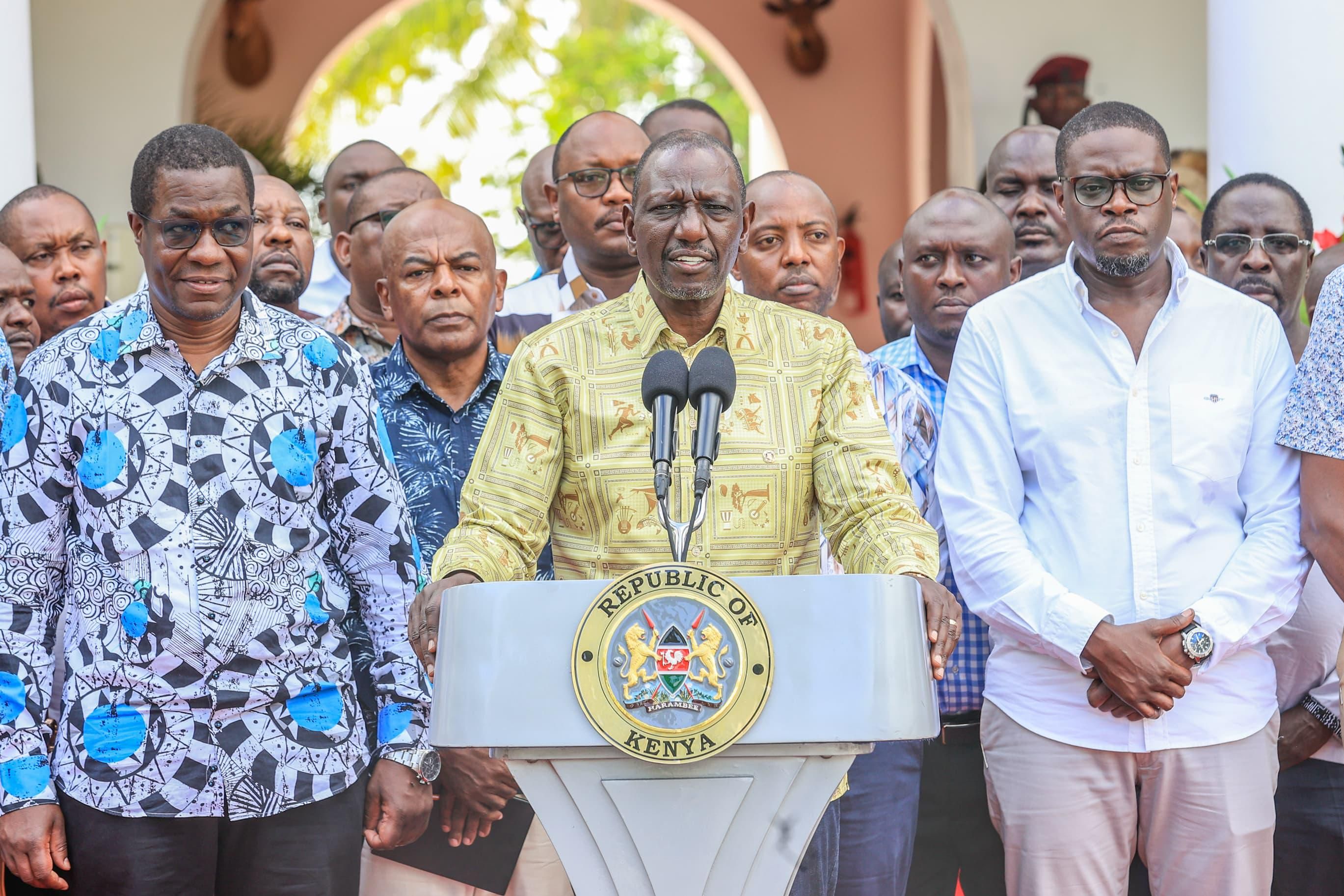
Transport sector officials have called off the nationwide strike after a crisis meeting with President William Ruto at State House, Mombasa, saying most of their demands had been addressed by the government.
The decision followed days of disruption in the public transport sector after operators protested the sharp rise in fuel prices, which they said had pushed up operating costs and threatened livelihoods. The strike had paralysed transport in several parts of the country, with earlier reports indicating deaths, injuries and arrests during the protests.
Speaking after the meeting, President Ruto said the government had heard the concerns of transport operators, and would continue engaging them on practical measures to cushion the sector.
“To our transport operators, drivers and logistics workers, we hear your concerns, we respect the important role you play in keeping our economy moving, and we will continue engaging you to find practical solutions,” Ruto said.
The president attributed the fuel price increases to a global oil supply shock linked to the conflict in the Middle East, saying the disruption had pushed up the landed cost of fuel imported into Kenya.
He said the government had used the Petroleum Development Fund and tax relief measures to cushion consumers, committing Sh28.19 billion in fuel price support across the April-May and May-June 2026 pricing cycles.
Ruto said that without government intervention, super petrol would have retailed at Sh230.12 per litre instead of Sh214.25, diesel at Sh277.75 instead of Sh232.86, and kerosene at Sh270 instead of Sh191.38.
“I have directed that the cost of diesel be further reduced by Sh10 in the June-July cycle to help stabilise pump prices and provide additional relief to consumers,” he said.
Among the measures agreed with transport stakeholders, Ruto said the Ministry of Transport would engage financial institutions to explore relief on lending terms for operators affected by the crisis.
The ministry will also work with the Insurance Regulatory Authority to address complaints over insurance claims affecting public transport operators.
Ruto further directed that the Insurance Act and the Auctioneers Act be reviewed within three months to create what he called a fairer framework for players in the transport sector.
On the ride-hailing sector, the president said the National Transport and Safety Authority, NTSA, would engage digital taxi platforms and drivers to resolve long-running disputes, including the implementation of minimum taxi fare regulations.
He also directed NTSA to allow matatu operators to continue using artwork and graffiti on their vehicles, provided safety and respect for other road users are upheld.
Ruto urged Kenyans to remain calm and reject violence, saying the government would keep the country informed as it works to protect families, businesses and jobs during the fuel crisis.
Follow our social media pages for breaking news updates, in-depth stories and videos.
news@nairobilens.ke