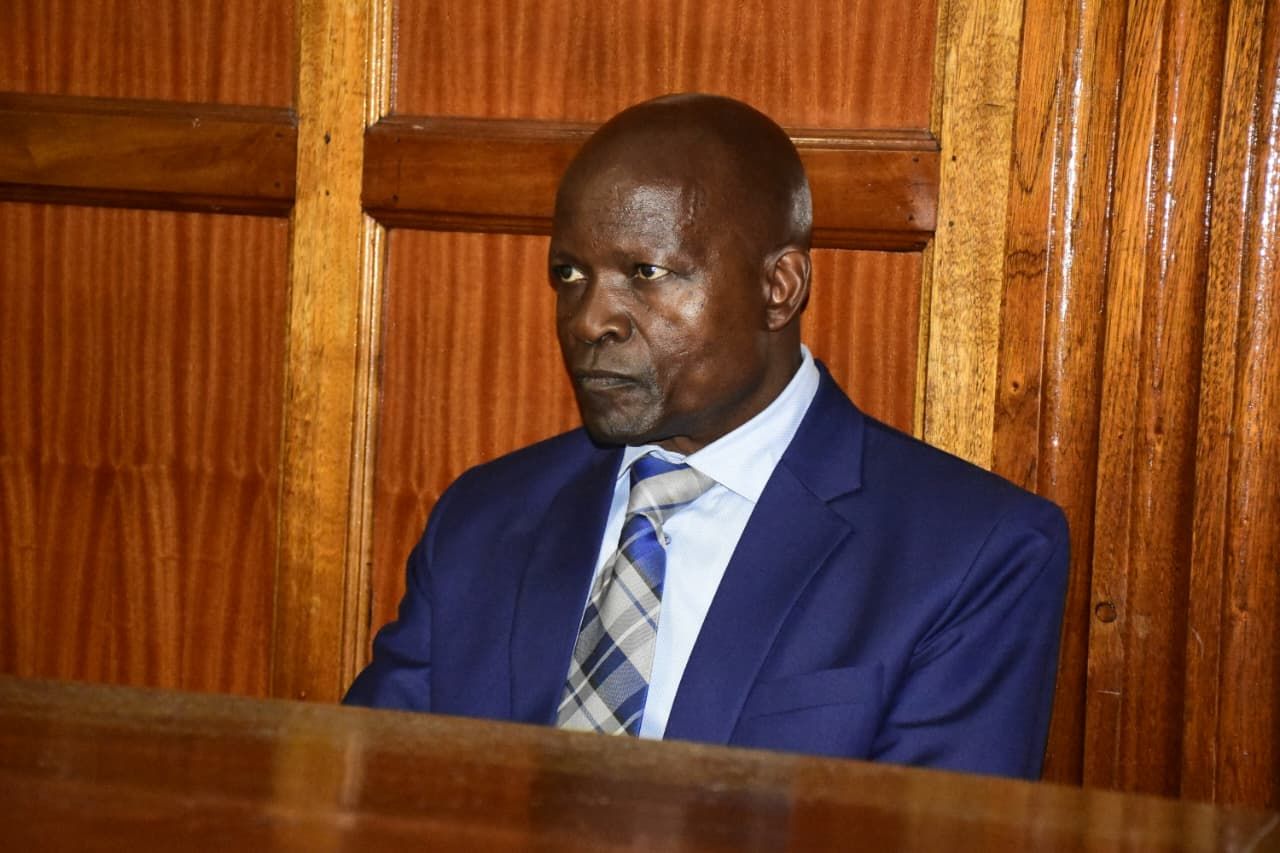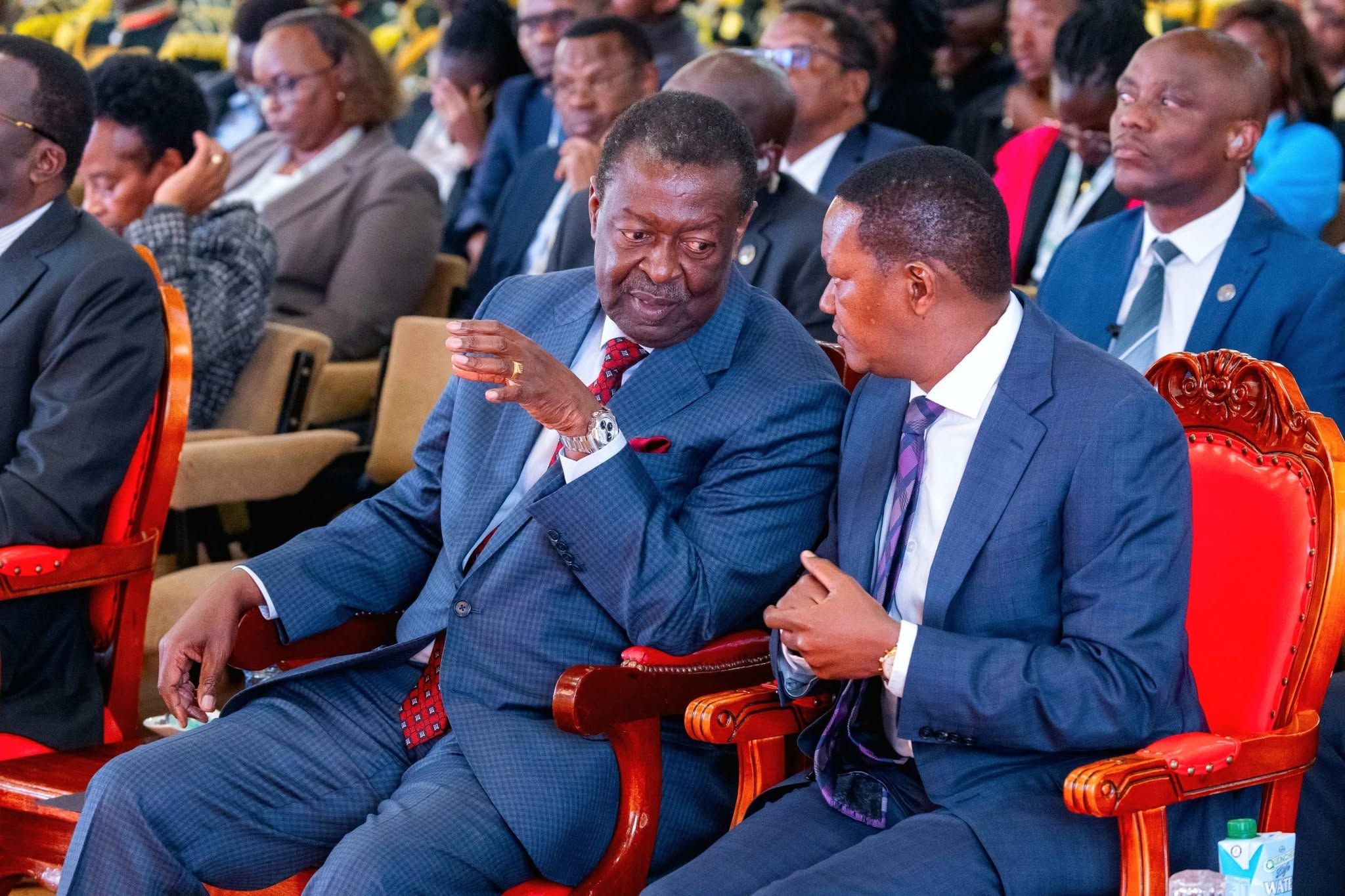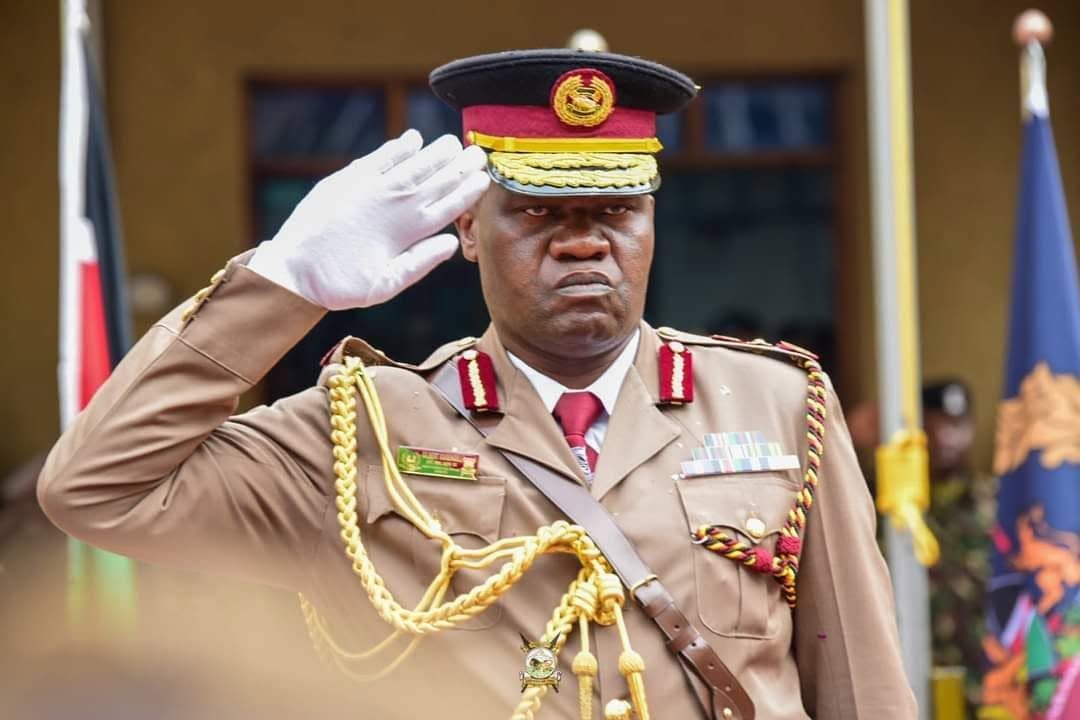

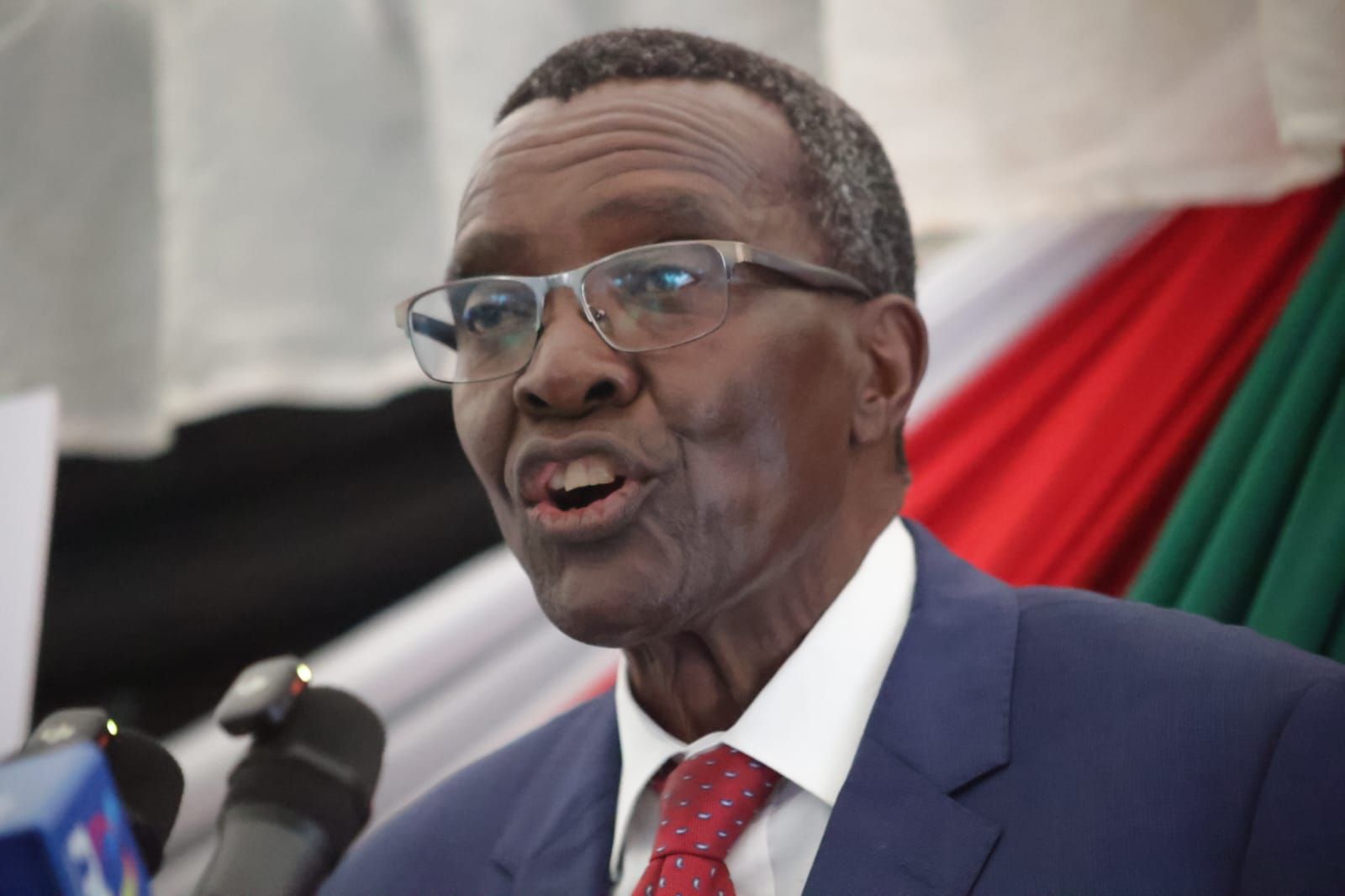
Former Chief Justice and United Green Movement (UGM) presidential aspirant David Maraga has questioned the legality of the continued service of Inspector General of Police Douglas Kanja and Director of Criminal Investigations Mohamed Amin, while accusing the government of undermining the constitutional independence of the National Police Service.
In a strongly worded address, Maraga argued that changes introduced to police laws in 2014 weakened safeguards designed to shield senior police appointments from political interference.
He also renewed calls for President William Ruto to make public the report of the task force on police reforms.
Maraga said he wrote to Ruto following incidents of political violence in Homa Bay, demanding the report's release and implementation.
“The central finding in the report is a constitutional command. The National Police Service must be independent,” Maraga said.
He argued that the independence of security institutions was deliberately entrenched in the 2010 Constitution following Kenya's experience with politically controlled policing.
Maraga cited Article 239(3) of the Constitution, which bars national security organs and their officers from acting in a partisan manner, advancing the interests of political parties or prejudicing legitimate political interests.
He also pointed to Article 244, which requires the police service to uphold human rights, human dignity, professionalism, integrity and discipline.
According to Maraga, Article 245 establishes the Inspector General as an independent office, while the constitutional framework originally gave the National Police Service Commission a central role in the recruitment of senior police officers.
“The national security organs shall not act in a partisan manner,” he said, citing the Constitution.
Maraga took particular issue with amendments introduced through the Security Laws (Amendment) Act of 2014.
Before the amendments, he said, Section 12 of the National Police Service Act required the National Police Service Commission to advertise a vacancy for Inspector General, conduct interviews and submit shortlisted candidates for presidential nomination.
Similar procedures, he said, applied to Deputy Inspectors General and the Director of Criminal Investigations.
Maraga argued that the amendments gave the presidency considerably greater influence over the appointment process.
“The current Section 12 lets the President pick a name and send it to Parliament for vetting,” he said.
He claimed that the present provisions governing the appointment of deputy inspectors general and the DCI had similarly weakened the commission's role.
“That is not reform. That is capture,” Maraga said.
According to the former Chief Justice, the police reforms task force also questioned the constitutionality of the 2014 amendments and recommended their repeal alongside fresh vetting and appointment procedures for senior officers.
He accused the government of failing to implement that recommendation.
Maraga further challenged the continued service of Kanja and Amin on the basis of public service retirement rules.
He cited Section 80 of the Public Service Commission Act, which provides for retirement at the prescribed age while allowing continued service under contract in specified circumstances.
Maraga alleged that in February 2024, the tenures of Kanja, who was then serving as Deputy Inspector General, and Amin were extended after they had reached the applicable retirement threshold.
“What rare skills do they have?” he asked, questioning the justification for the extensions.
Maraga also linked his concerns over police leadership to recent cases of political violence, accusing the security agencies of failing to act impartially during confrontations in Homa Bay and other parts of the country.
He referenced incidents in Homa Bay, Keumbu, Ol Kalou, Kisumu, Nairobi and Witima, alleging that violence in some of the cases had occurred for political benefit.
“A partisan police force was a root cause of the slaughter that we had in 2007/2008,” Maraga said.
He argued that the independence provisions contained in the 2010 Constitution were informed by lessons from the 2007-08 post-election violence and should therefore not be weakened.
“Kenyans should not forget that the 2010 Constitution's independent institutions clauses were written in that blood,” he said.
Maraga also cited figures which he said showed thousands of deaths linked to police brutality during successive administrations, claiming the annual number had risen sharply under the Ruto government.
He put the figure under Ruto at 3,958 in four years, compared with 4,035 during former President Mwai Kibaki's 10 years and 4,150 during former President Uhuru Kenyatta's decade in office.
Follow our social media pages for breaking news updates, in-depth stories and videos.
news@nairobilens.ke