
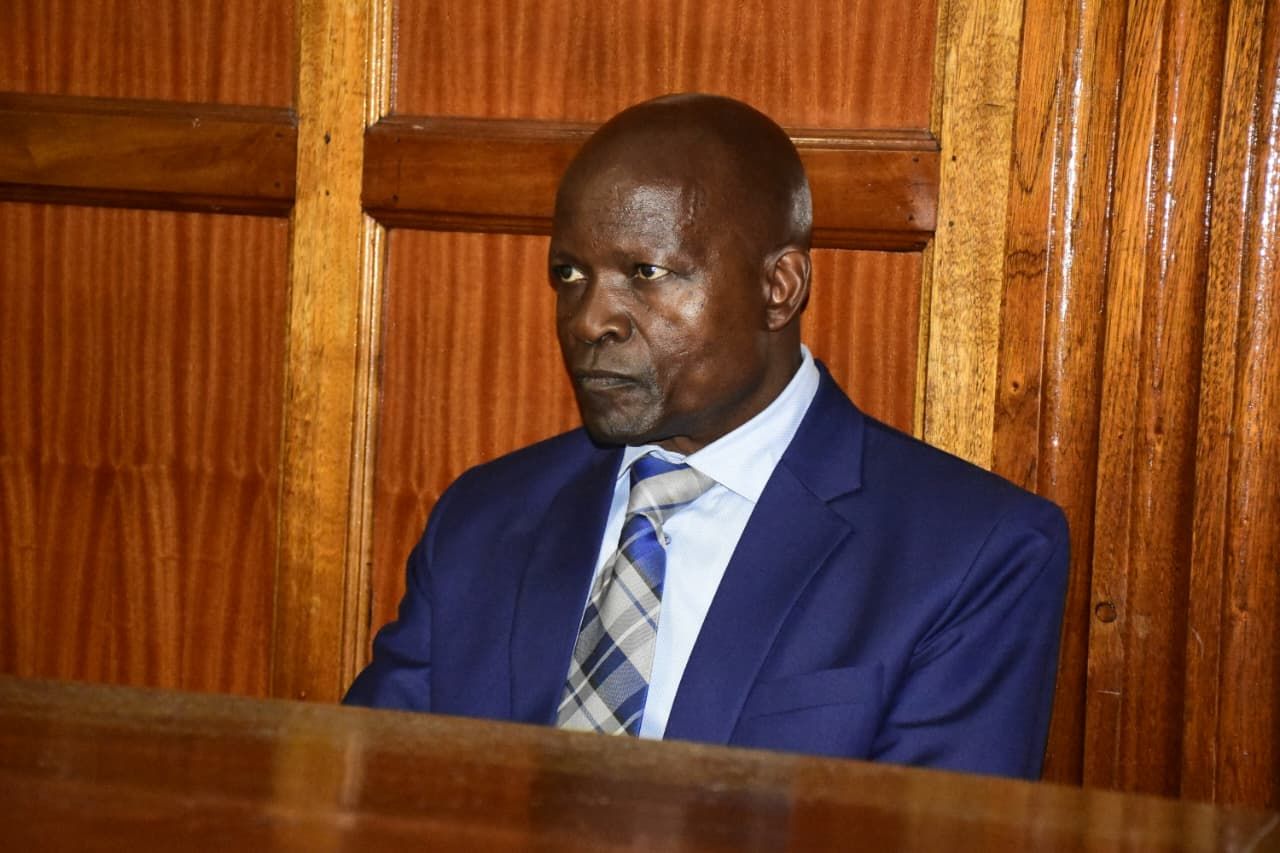
The mother of slain university student Sharon Otieno has urged the High Court to spare former Migori Governor Okoth Obado a custodial sentence, saying sending him to prison for life or sentencing him to death would amount to “another death” in her family.
Melida Auma made the emotional plea before Justice Cecilia Githua on Wednesday as the court heard mitigation and sentencing submissions for Obado, Michael Oyamo and Caspal Obiero, who were convicted in July over Sharon’s 2018 murder.
Appearing personally before the court, Auma said her family had forgiven Obado and appealed for reconciliation, drawing on biblical references as she urged the judge to show him mercy.
“Don’t crucify Obado in this case,” she told the court, referring to the crucifixion of Jesus before Pontius Pilate.
Auma said a death or life sentence would deepen the pain her family has endured since Sharon’s killing.
“If he goes for death, I will see another death in my family. I ask the court to do me another justice by releasing him,” she said.
Sharon’s father, Douglas Zachariah Otieno, also told the court that his position towards Obado had softened following reconciliation efforts initiated after the former governor’s conviction.
“After the judgment you gave, Obado sent his relatives and brothers to my house for a reconciliation attempt. That is why I have calmed down,” he said.
The family, however, did not extend the same forgiveness to Oyamo and Obiero.
Otieno accused the two of failing to show remorse, telling the court: “If I could become a dog, I would bite them and lick their blood just like dogs licked the blood of my daughter.”
The family’s lawyer, Anthony Opondo, backed their request for leniency, arguing that Kenyan courts have previously considered non-custodial sentences where reconciliation has taken place and victims’ families were willing to receive an offender back into the community.
The prosecution opposed a non-custodial sentence and asked the court to consider the maximum penalty, arguing that while the family’s position was relevant, it could not determine the sentence imposed by the court.
“We respect the views of the parents. Their views are relevant and must be given consideration. However, they are not the determinant of the sentence,” Senior State Prosecutor Wangui Gichuhi told the court.
The prosecution maintained that sentencing must also consider the seriousness of the offence, accountability, deterrence and the wider public interest.
Justice Githua said she would consider the mitigation arguments, prosecution submissions and views of the victims before issuing the sentences.
Obado, Oyamo and Obiero will return to court on November 27, 2026, when the High Court is expected to deliver its decision on sentencing.
Follow our social media pages for breaking news updates, in-depth stories and videos.
news@nairobilens.ke