
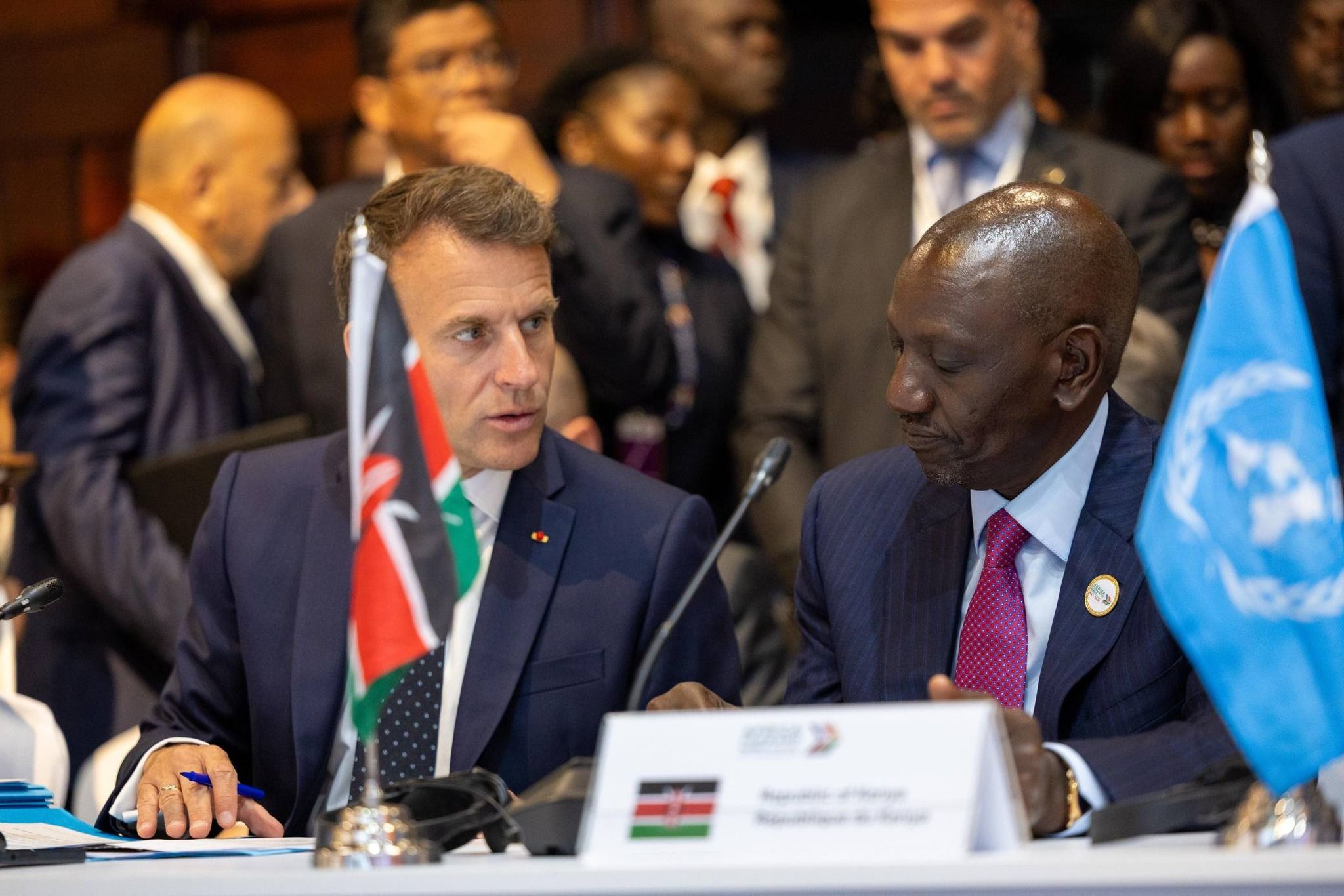
French President Emmanuel Macron and his Kenyan counterpart William Ruto opened the inaugural Africa Forward Summit in Nairobi on Monday with a bold declaration that Africa’s future partnerships must move beyond aid, dependency, and old colonial structures into what both leaders described as a new era of investment, innovation and geopolitical realignment.
However, beneath the summit’s polished language on fintech, infrastructure, Artificial Intelligence and climate finance lies a deeper diplomatic story – France’s strategic pivot toward Anglophone Africa.
For the first time in modern Franco-African diplomacy, Paris is hosting its flagship Africa engagement forum in an English-speaking African country, a symbolic and calculated shift that reflects how dramatically the continent’s geopolitical landscape has changed for France in recent years.
The Nairobi summit comes after France suffered a wave of diplomatic setbacks across Francophone West Africa, where military coups in Mali, Burkina Faso and Niger triggered fierce anti-France sentiment, expulsions of French troops, and accusations that Paris had maintained exploitative post-colonial influence over its former territories.
France has since withdrawn military forces from several Sahel states, dramatically shrinking its once-dominant regional footprint.
Against that backdrop, Kenya has emerged as an attractive alternative partner for Paris, as the East African nation is stable, reform-oriented, outward-looking, strategically located, and increasingly influential in continental diplomacy.
“This summit represents a significant opportunity for a paradigm shift to a more balanced, equitable, and mutually respectful partnership,” the summit organizers said in the official opening statement released in Nairobi.
Macron appeared keenly aware of the symbolism of choosing Nairobi.
Speaking during the opening sessions, the French President praised Kenya’s growing diplomatic influence and framed the partnership as one built on equality rather than hierarchy.
“I do believe in the future of Africa,” Macron said during engagements on the sidelines of the summit.
The French leader also described President Ruto as a key voice in global conversations on finance, climate reform, and African development, praising Kenya’s role in shaping international debates.
For Ruto, the summit represented both a diplomatic victory and a statement of Kenya’s growing geopolitical relevance.
Over the past three years, Kenya has aggressively positioned itself as a continental hub for mediation, climate diplomacy, technology investment, and multilateral engagement. Nairobi has increasingly become the preferred destination for global powers seeking influence in East Africa.
At the summit, Ruto projected Kenya as a bridge between Africa and global capital, repeatedly emphasizing innovation, digital transformation and financial reform.
“We are now manufacturing phones and computers in Kenya,” Ruto said in one of the summit sessions while pushing Kenya’s technology credentials. “The future is about technology and AI.”
The Africa Forward Summit itself reflects this new strategic direction.
Unlike previous France-Africa engagements that were heavily centred on security cooperation and military intervention in Francophone states, the Nairobi summit focused largely on investment, entrepreneurship, infrastructure, digital finance, energy transition and private sector partnerships.
African leaders used the forum to demand reforms to the global financial architecture, arguing that African economies continue to face punitive borrowing costs driven by unfair risk perceptions and outdated credit rating systems.
Macron backed proposals for new financing mechanisms to de-risk investment in Africa and pledged to champion some of the reforms at the upcoming G7 summit in France.
The summit also reportedly mobilised billions of euros in investment commitments and commercial partnerships targeting sectors such as clean energy, transport, digital infrastructure and manufacturing.
Analysts say France’s outreach to Kenya is not accidental.
Unlike many West African nations where France’s historical baggage remains politically explosive, Kenya has no direct colonial relationship with Paris. That gives France an opportunity to rebuild influence without the emotional and political burden associated with “Françafrique” — the controversial system of French political and economic dominance in its former colonies.
Instead, Paris appears to be crafting a new African strategy anchored on commercial diplomacy, innovation partnerships and cooperation with reform-minded governments.
Kenya fits neatly into that agenda.
Nairobi is already home to regional UN headquarters, international finance institutions, global tech firms and a booming fintech ecosystem led by mobile money innovation. Kenya also plays a central role in regional peace processes in Sudan, eastern Congo and the Horn of Africa.
The summit therefore became more than a diplomatic gathering. It was effectively a public rebranding exercise for France’s future in Africa.
For Macron, the challenge remains enormous.
Anti-France sentiment in parts of Africa remains deeply entrenched, particularly among younger populations who increasingly view traditional Western powers with suspicion. Russia, China, Turkey, Gulf states and other emerging players have also aggressively expanded their footprint across the continent.
Yet in Nairobi, France appeared determined to project a different image – less military-heavy, more commercially driven and more willing to engage Africa as a strategic equal rather than a dependent partner.
Whether African leaders and citizens fully buy into that shift remains uncertain.
But as day one of the Africa Forward Summit closed in Nairobi, one thing was unmistakably clear: France’s African strategy is being rewritten, and Kenya now sits at the centre of that recalibration.
Follow our social media pages for breaking news updates, in-depth stories and videos.
news@nairobilens.ke