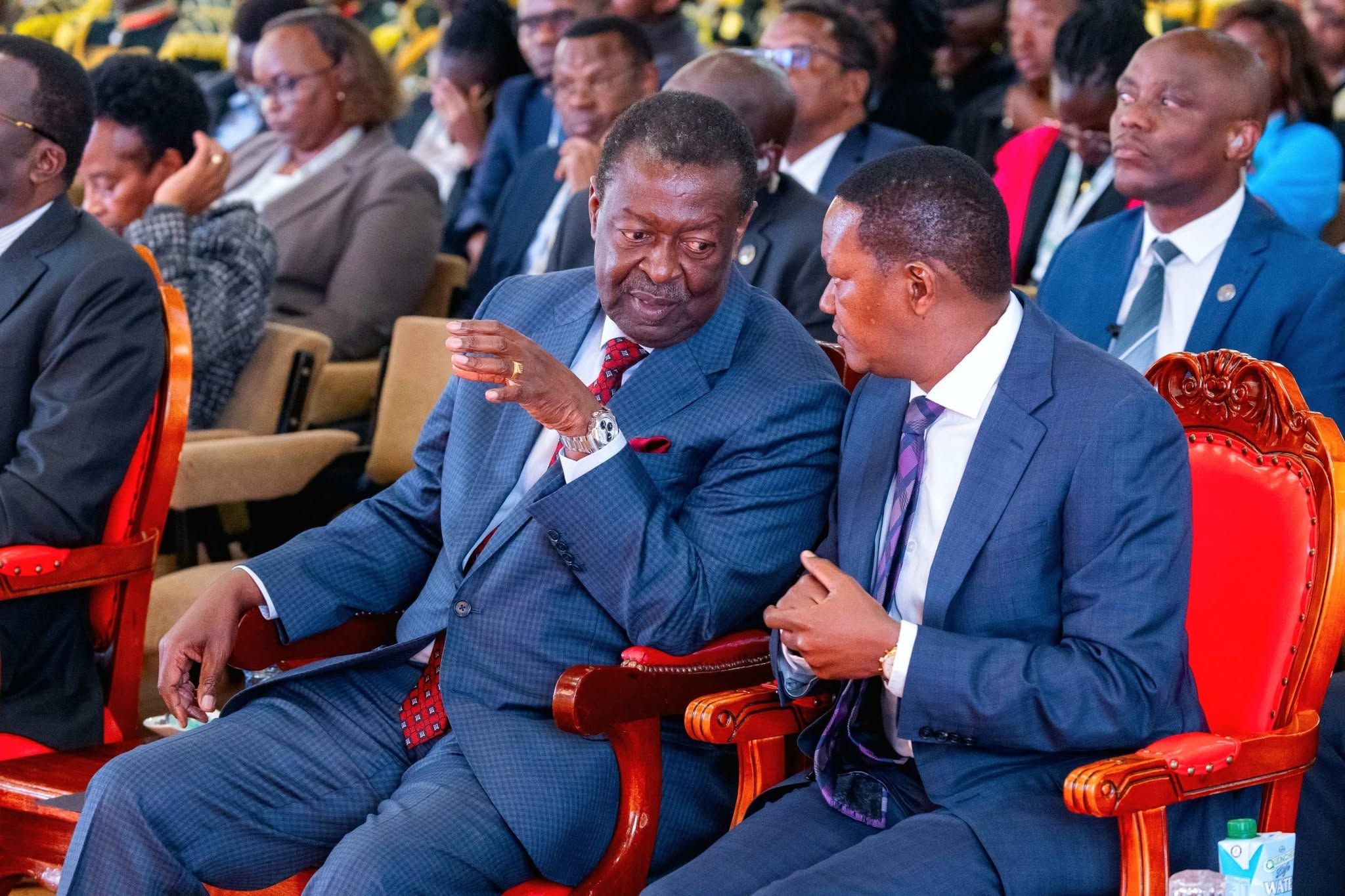


Kenya is stepping up efforts to protect election rallies, critical infrastructure and strategic national assets amid concerns that terrorist groups are shifting towards softer, more disruptive targets, Prime Cabinet Secretary Musalia Mudavadi has warned.
Mudavadi said crowded political gatherings, telecommunications networks, ports, energy systems and digital infrastructure were increasingly exposed as terrorist tactics evolve beyond attacks on traditional security installations.
Speaking in Nairobi at the Fifth Nairobi Caucus on Protecting Critical Infrastructure Systems and Public Spaces, he warned that the threat could become more pronounced as Kenya approaches the 2027 General Election.
“As we head towards the general elections, protecting public spaces is crucial, given the large public gatherings that characterize campaigns in Kenya,” Mudavadi said.
He warned that terrorists could exploit large crowds to inflict mass casualties and spread fear, making political rallies, stadia and other heavily populated spaces a key security concern.
Mudavadi said the threat landscape had become more complex, with violent extremism increasingly intersecting with organised crime, cyber threats, regional conflict and geopolitical instability.
He said Africa had become a major theatre of terrorist activity, with the Horn of Africa particularly vulnerable because of prolonged conflicts and weakening institutions in parts of the region.
The Prime Cabinet Secretary also raised concerns over organised criminal gangs acquiring greater firepower and evolving into groups capable of challenging State authority and attacking strategic infrastructure.
He said Kenya’s expanding infrastructure network must now be viewed as part of the country’s national security architecture.
Dams, railways, telecommunications networks, ports, health facilities, energy systems, stadia and digital platforms were among the assets he said required stronger protection.
“Critical infrastructure systems form the backbone of governance and the delivery of essential services,” Mudavadi said.
“Destruction or degradation of these systems can paralyse economies, compromise public safety, and gravely undermine institutions and State stability.”
He cited the July 2026 attack on a telecommunications mast in Garissa by Al-Shabaab as an example of how attacks on infrastructure can disrupt communication, economic activity and security operations.
Mudavadi said Kenya’s increasing reliance on technology had also widened the threat to include cyberattacks capable of disrupting electricity, transport, water, banking and other essential services.
“We therefore need to protect not only the physical asset, but also the data, networks, software and human systems upon which that asset depends,” he said.
He pointed to the draft Critical Infrastructure Protection Bill, 2024, as one of the measures aimed at creating a framework for identifying and securing critical national assets.
“Ultimately, a nation that understands the foreign forces shaping its decisions is a nation that safeguards its sovereignty,” he said.
Regional transport infrastructure is also receiving increased attention, with Mudavadi singling out the Port of Mombasa because of its importance to Kenya and neighbouring countries.
“The security of shared global logistics networks, including ports and aviation hubs, requires greater attention and investment,” he said.
Mudavadi urged government agencies and the private sector to shift from responding to attacks after they occur towards preventing and preparing for them.
“It is imperative that we collectively move beyond reactive defence and establish proactive and resilient protective security frameworks,” he said.
He proposed a five-point security approach based on anticipating threats, preparedness, mitigation, coordinated response and recovery.
Mudavadi also called for stronger intelligence and information-sharing between government and private-sector operators of critical infrastructure.
“Protective security must be a shared responsibility, supported by effective information-sharing arrangements, to enable Government and industry to act together before a threat becomes a crisis,” he said.
Follow our social media pages for breaking news updates, in-depth stories and videos.
news@nairobilens.ke