
Nairobi became the centre of a major diplomatic reset on Tuesday as president William Ruto and his French counterpart Emmanuel Macron opened the Africa Forward Summit with a clear message that Africa-France relations must move beyond aid, extraction and old power hierarchies.
The summit, co-hosted at KICC, comes at a defining moment for France’s Africa policy. Paris has lost influence in parts of Francophone West Africa following coups, military withdrawals and rising anti-French sentiment. By bringing the summit to Kenya, an English-speaking regional power, France is signalling a deliberate pivot towards new alliances in East Africa, investment diplomacy and reform-focused partnerships.
Ruto framed the Nairobi meeting as a chance to build a partnership anchored on equality, not dependency.
“What Africa requires is not charity, but investments; not extraction, but value creation; not dependency, but mutually beneficial partnerships capable of unlocking shared prosperity,” he said.
The President said Africa’s priorities are clear – domestic resource mobilisation, reform of the global financial system, stronger transport and logistics infrastructure, green industrialization, youth skills development and artificial intelligence-led transformation.
Ruto said the current international financial system remains structurally unequal, with African countries facing high borrowing costs, limited access to affordable financing and credit rating systems that often distort the continent’s actual economic realities.
“This imbalance is neither sustainable nor just,” Ruto said, adding that Africa’s ability to finance infrastructure, industrialization and climate adaptation remains constrained by unfair perceptions of risk.
Macron, on his part, sought to present France as a partner willing to move away from the old Françafrique model that defined Paris’ post-colonial relations with parts of the continent. He said the new partnership must be built on respect, courage and shared ambition.
“Your success is our success,” Macron said.
The French leader announced major investment commitments worth €23 billion, with €14 billion from French companies and €9 billion from African entities, targeting areas including energy, agriculture and artificial intelligence.
That announcement gave the summit a strong economic edge, but also raised the bigger political question. Can France truly rebuild trust in Africa through investment, or is this simply a strategic repositioning after losing ground in its former colonies?
For Kenya, the summit strengthens Nairobi’s place as a diplomatic gateway to the continent. It also reinforces Ruto’s attempt to position Kenya as a convening power for debates on climate finance, debt reform, private capital and Africa’s role in global governance.
UN Secretary-General António Guterres added weight to Africa’s long-standing demand for reform, saying the global system was designed without Africa’s involvement and continues to operate without its full participation.
He described the absence of permanent African representation at the UN Security Council as a “century-old injustice.”
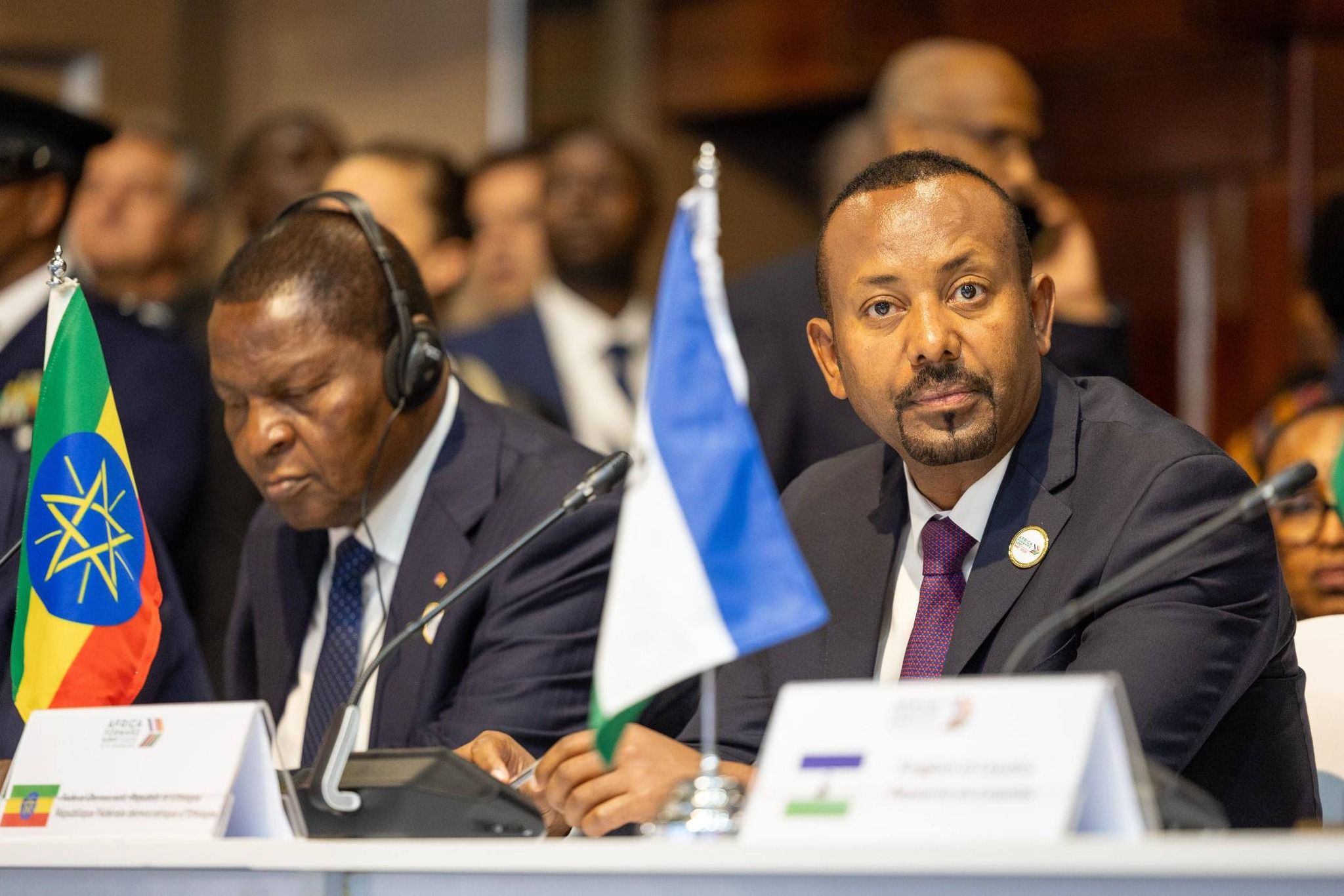
The summit was attended by more than 30 African leaders, including heads of state and government, alongside the African Union and international partners.
Ruto said Africa must now look inward as much as outward. He pointed to more than $4 trillion in long-term domestic savings across the continent, including pension and insurance assets, as proof that Africa has internal capital that can be mobilised for transformation.
He cited Kenya’s National Infrastructure Fund, which he said has already mobilised about $1 billion, as an example of how African economies can use domestic and private capital to finance strategic projects.
“Africa cannot trade effectively with itself while its economies remain disconnected from one another,” he said.
The Nairobi summit therefore carried two messages at once. For Africa, it was a demand for fairer rules, cheaper capital and respect in global decision-making. For France, it was an attempt to redefine its place on a continent where old assumptions no longer hold.
Whether the summit becomes a genuine turning point will depend on what follows the speeches.
Follow our social media pages for breaking news updates, in-depth stories and videos.
news@nairobilens.ke