
President William Ruto has directed the Kenya Revenue Authority (KRA) to reduce the applicable benchmark for general consolidated cargo from Sh2.5 million to Sh2 million following talks with traders over taxation and clearance costs.
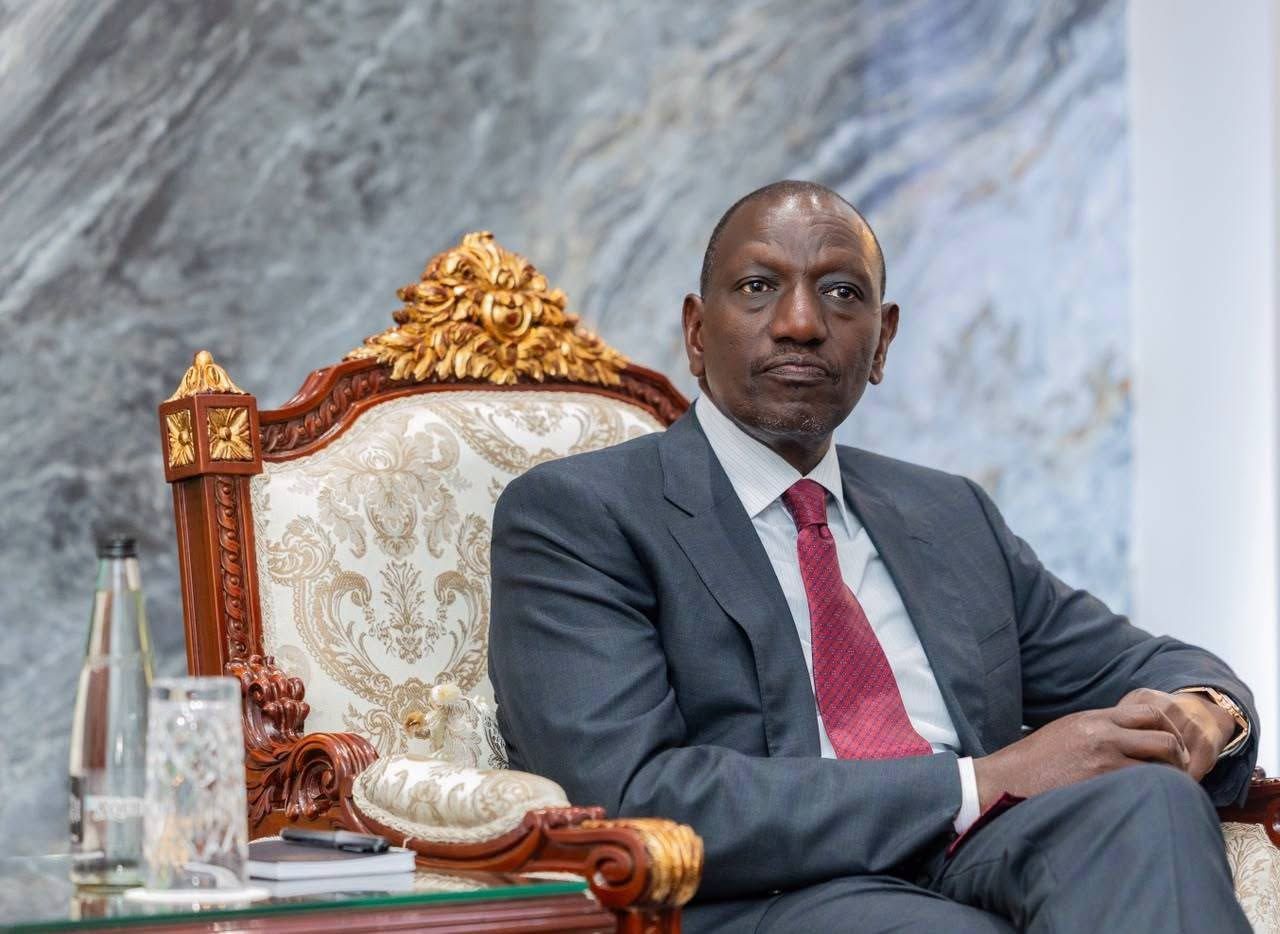
Ruto announced the Sh500,000 reduction on Wednesday after meeting representatives of traders and stakeholders in the consolidated cargo sector at State House, Nairobi.
The President said the new rate will apply on condition that consignments cleared under the general consolidated cargo framework do not contain high-value goods.
“We are going to reduce the applicable benchmark for general consolidated cargo from Sh2.5 million to Sh2 million on condition that there will be no goods of high value,” Ruto said.
Rates currently applied to ready-made garments, footwear and fabrics will remain unchanged. The recently negotiated rates for air cargo will also not be affected.
The government will also remove the Advance Cargo Declaration requirement in another move aimed at easing the clearance of consolidated imports and reducing barriers faced by legitimate traders.
The measures follow disagreements between traders and KRA over taxation, clearance and handling of consolidated cargo, with traders raising concerns that higher charges were increasing the cost of doing business, particularly for small and medium-sized enterprises.
Implementation of the new framework will begin after KRA develops and publishes a list of goods excluded from the Sh2 million benchmark.
Ruto said the exclusion list will consider the value and nature of goods, applicable tax rates, excisable products and other customs and revenue considerations.
“The exclusion list will be informed by the value and nature of the goods, specific tax rates, excisable goods and other relevant Customs and revenue considerations,” he said.
The government said the list is expected to give traders and cargo consolidators greater certainty over goods that qualify for consolidated clearance while ensuring consistent application of the new rules.
KRA will also conduct fresh registration and vetting of all cargo consolidators.
“All cargo consolidators will be vetted and registered afresh by KRA and will be required to submit a comprehensive list of the individual traders and importers whose goods they consolidate,” Ruto directed.
According to resolutions announced after the meeting, consolidators have until October 15, 2026, to complete registration, vetting and submission of trader details.
Industry Principal Secretary Juma Mukhwana said the measures form part of an agreement reached between the government, traders and other players in the sector.
The government will also facilitate designated de-consolidation centres in Nairobi and Mombasa, where imported consolidated cargo can be separated and cleared for individual traders.
The centres are expected to improve cargo handling, speed up clearance and cut logistical and administrative costs.
In another major cost-cutting measure, Kenya Railways will reduce the cost of transporting cargo from the Inland Container Depot to the Bomaline De-Consolidation Centre in Nairobi from Sh58,000 to Sh10,000.
The government also plans to amend existing laws to reserve retail trade and specified lower-level jobs for Kenyans while defining areas where foreigners can participate.
Ruto, however, said foreign investment bringing capital, technology, value addition and quality jobs would continue to be encouraged.
A multi-agency committee chaired by Investments, Trade and Industry Cabinet Secretary Lee Kinyanjui will oversee implementation of the resolutions. It will include KRA, traders, consolidators and other relevant government agencies and will report to the President quarterly.
“The agreement reached today establishes a new partnership based on consultation, predictability, compliance and mutual responsibility,” Ruto said.
Follow our social media pages for breaking news updates, in-depth stories and videos.
news@nairobilens.ke