
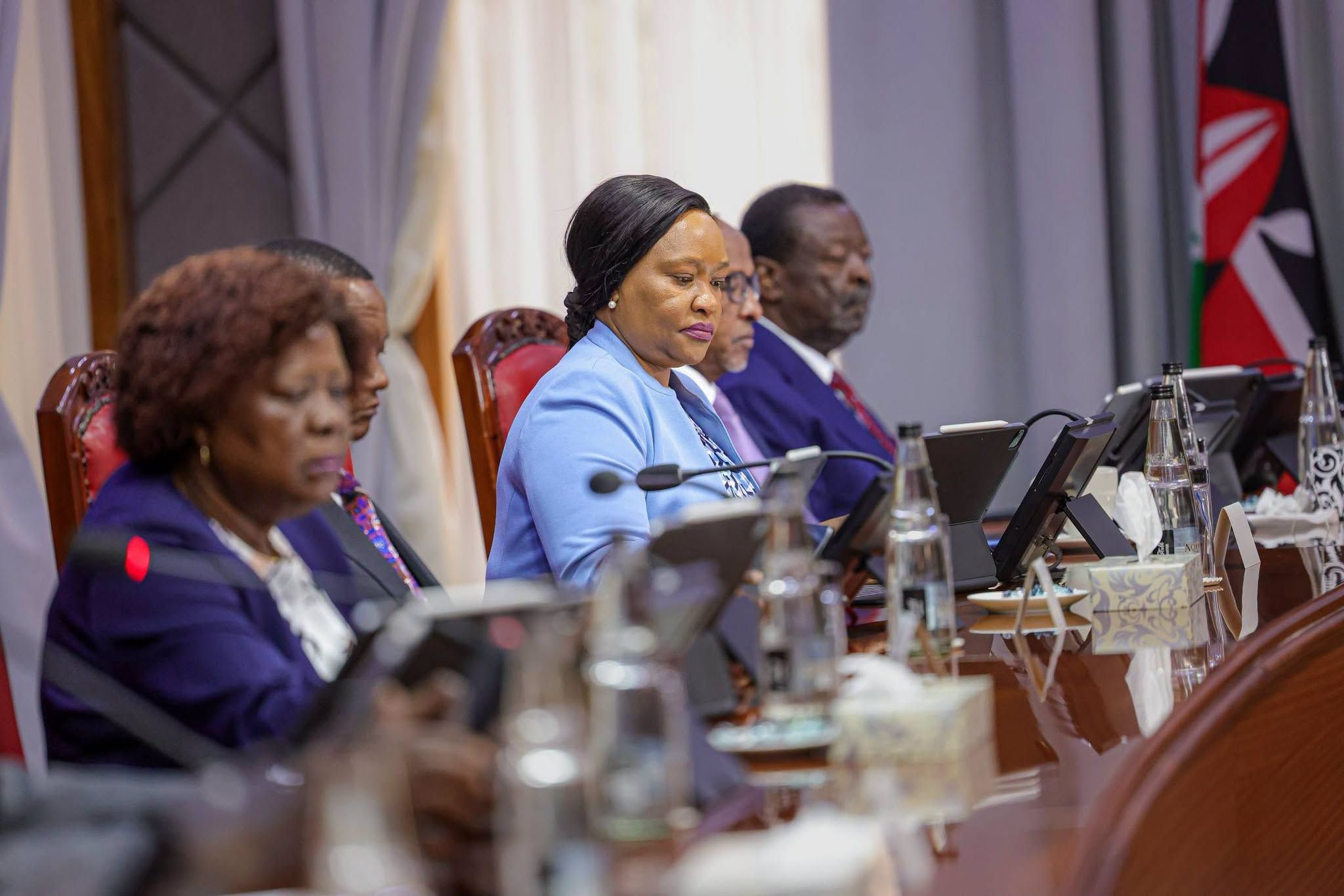
President William Ruto is facing renewed pressure to reshuffle his Cabinet after the High Court certified as urgent an application seeking to stop Cabinet Secretaries from exercising executive powers over the government's failure to comply with the constitutional two-thirds gender rule.
The latest legal challenge follows the expiry of a 120-day deadline issued by the High Court on June 30, 2026, directing the President to reconstitute his Cabinet in line with the Constitution.
The deadline expired on October 28 without the required changes being made, exposing the President and his Cabinet to fresh legal action.
In directions issued on Monday, November 9, Justice Eric Ogola, sitting at the Malindi High Court, certified the application as urgent and directed the petitioners to serve the respondents and interested parties within three days.
The respondents have until November 19 to file their responses, ahead of a virtual mention before a three-judge bench on December 1.
The application was filed by five civil society organisations, including Katiba Institute, the Centre for Rights Education and Awareness (CREAW) and Transparency International Kenya.
The organisations want the court to bar Cabinet Secretaries from carrying out official duties, including attending Cabinet meetings, issuing directives, making appointments and signing government agreements.
They also want the Secretary to the Cabinet stopped from convening meetings and communicating Cabinet decisions.
In a further move that could disrupt government operations, the petitioners are seeking orders restraining the Controller of Budget from approving public funds for Cabinet salaries and related expenditure.
The dispute stems from a June 30 judgment in which a three-judge bench found that the composition of Ruto's Cabinet violated Article 27(8) of the Constitution.
The provision requires the State to take measures to ensure that no more than two-thirds of members of elective or appointive bodies are of the same gender.
At the time of the judgment, the 25-member Cabinet comprised 18 men and seven women, falling short of the constitutional threshold.
The Cabinet would require at least nine women to satisfy the gender requirement, assuming its membership remains unchanged.
The petitioners argue that the President's failure to act within the prescribed period amounts to disregard of a binding court judgment.
They are also seeking a declaration that the continued exercise of executive powers by Cabinet members violates constitutional requirements.
The Attorney-General has previously sought to suspend the June judgment at the Court of Appeal, arguing that its enforcement could disrupt government operations.
The latest development adds to the growing legal uncertainty surrounding the Cabinet, although the court has not yet issued orders stopping Cabinet Secretaries from performing their duties.
The matter now places the spotlight on the President's next move as the government faces mounting pressure to comply with the Constitution while maintaining continuity in executive operations.
The petitioners further want the court to find that the President's failure to comply with its judgment amounts to "wilful disobedience and contempt of court," although they have proposed deferring any personal punishment until after his presidency.
Follow our social media pages for breaking news updates, in-depth stories and videos.
news@nairobilens.ke